There is nothing quite like the aroma of a fresh pesto parmesan sourdough pulling out of a hot oven, filling your kitchen with the scent of toasted cheese and aromatic basil. This isn’t just a loaf of bread; it is a visual and culinary masterpiece featuring a deeply blistered golden crust and a crumb so airy it practically melts in your mouth.
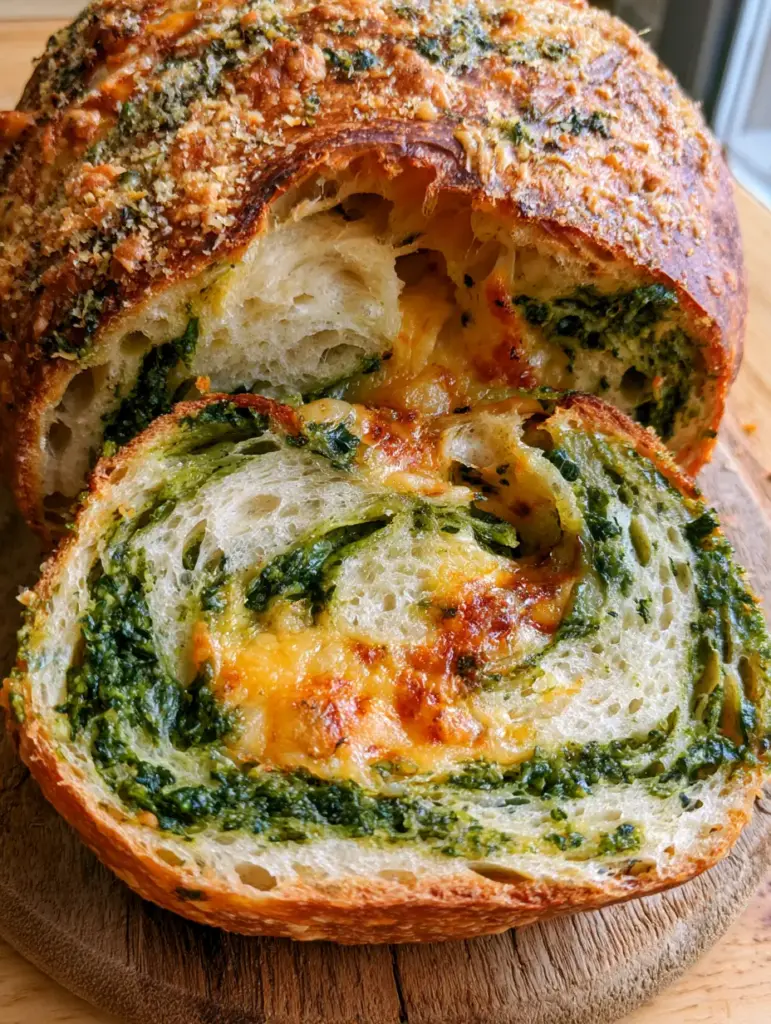
Imagine slicing into a rustic loaf to reveal vibrant, emerald green swirls of basil pesto intertwined with molten pockets of gooey golden Parmesan cheese. Every bite offers a perfect balance of tangy sourdough fermentation, salty cheese, and the peppery punch of fresh basil, all resting on a rustic wooden board under the soft glow of morning light.
Whether you are an experienced baker or just starting your fermentation journey, this recipe is designed to help you achieve that elusive “perfect loaf” with professional-grade results. Let’s dive into the science and soul of this incredible savory bread.
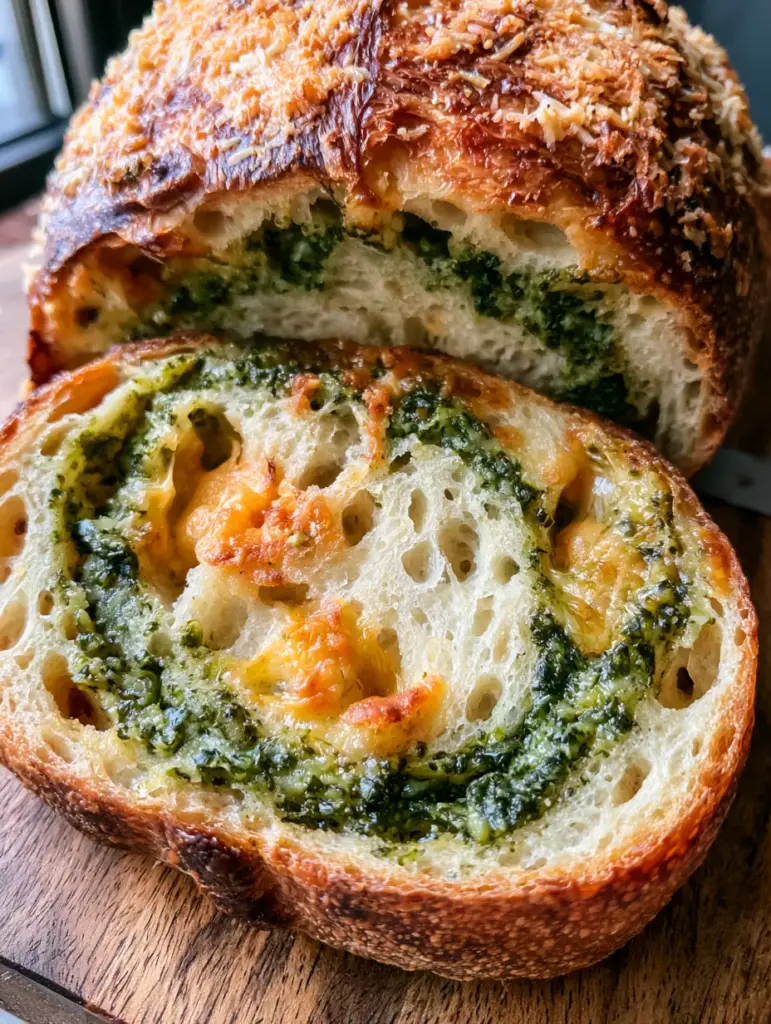
Why You’ll Obsess Over This Basil-Infused Artisan Bread
- Visual Masterpiece: The striking contrast between the deep golden, blistered crust and the vibrant emerald green pesto swirls makes this the ultimate centerpiece for any brunch or dinner table.
- Texture Contrast: Achieve a professional “shatter” when you bite into the crust, followed by a pillowy, airy crumb filled with melted cheese pockets.
- Savory Depth: By using aged Parmesan and fresh basil, we create layers of umami that elevate a simple sourdough dough into a gourmet experience.
- Gooey Pockets: Unlike store-bought loaves, our technique ensures large pockets of melted cheese are distributed throughout every single slice.
Essential Components for a Golden Parmesan Crust
Active Sourdough Starter: This is the heartbeat of your pesto parmesan sourdough, providing the lift and that signature tangy flavor profile. Ensure it is bubbly and at its peak height before mixing to guarantee an airy crumb.
Bread Flour (High Protein): Use a flour with at least 12-13% protein content to provide the structural integrity needed to hold the heavy pesto and cheese inclusions. This strength allows for those beautiful “airy crumb pockets” seen in the visual prompt.
Filtered Water: Chlorine can inhibit yeast activity, so using filtered water at roughly 80°F (27°C) ensures a consistent and predictable fermentation environment. Proper hydration is key for that soft, fluffy interior.
Fresh Basil Pesto: We use 1/2 cup (120ml) of high-quality pesto to create the vibrant emerald swirls that define the interior of this loaf. The oil in the pesto also contributes to a more tender crumb texture.
Shredded Parmesan Cheese: You will need 1 cup (100g) of shredded Parmesan, using half inside for gooey pockets and the other half on top for a toasted, blistered finish. Aged Parmesan provides the best salty punch and melting characteristics.
Extra Virgin Olive Oil: A small amount, 1 tbsp (15ml), is used to coat the bulk fermentation container, preventing sticking and adding a subtle richness to the exterior crust. It helps achieve that “blistered golden crust” during the bake.
Fine Sea Salt: We use 2 tsp (10g) to regulate the fermentation and enhance the natural flavors of the wheat and basil. Salt is the “invisible” essential that prevents the bread from tasting flat.
The Baker’s Toolkit for Airy Pockets
To achieve the professional look of a pesto parmesan sourdough, you will need a few specific tools. A heavy Dutch oven is non-negotiable for creating the steam necessary for a blistered, thin crust.
A sharp bread lame or a razor blade is essential for scoring the dough, allowing it to expand predictably and create that beautiful “ear.” You will also want a bench scraper for handling the high-hydration dough and a wooden cutting board for that aesthetic, rustic presentation.
Mastering the Pesto Swirl Technique
Phase 1: The Initial Mix and Autolyse
In a large glass bowl, combine 100g of active starter with 350g of warm filtered water and whisk until milky. Add 500g of bread flour and 10g of sea salt, mixing by hand until no dry flour remains. Cover and let rest for 30 minutes to allow the flour to fully hydrate, a process known as autolyse.
Phase 2: Developing Strength with Stretch and Folds
Over the next 2 hours, perform 4 sets of “stretch and folds” every 30 minutes. Reach under the dough, pull it upward until you feel resistance, and fold it over the center. This builds the gluten network required to support the weight of the pesto and cheese.
Phase 3: The Lamination and Inclusions
Turn the dough onto a lightly dampened surface and gently stretch it into a large rectangle. Spread 1/2 cup (120ml) of basil pesto evenly across the surface and sprinkle with 1/2 cup (50g) of shredded Parmesan. Fold the dough into thirds like a letter, then roll it up tightly to trap the pesto in swirls.
Phase 4: Cold Ferment and The Final Bake
Place the shaped dough into a proofing basket (banneton) and refrigerate for 12-24 hours. Preheat your oven and Dutch oven to 450°F (230°C). Score the top of the cold dough, sprinkle with the remaining Parmesan, and bake covered for 20 minutes, then uncovered for 20-25 minutes until the crust is deep golden-brown and blistered.
Pro Tips for a Flawless Blistered Finish
- Cold Scoring: Always score your dough straight from the fridge; the temperature contrast helps the bread “pop” in the oven for a better ear.
- Steam is Secret: If your Dutch oven isn’t creating enough steam, drop two ice cubes between the parchment paper and the pot before closing the lid.
- Avoid Pesto Leakage: Don’t over-apply the pesto near the edges of the dough rectangle, or it may seep out and prevent the dough from sealing properly.
- The Tap Test: Flip the loaf over and tap the bottom; it should sound hollow, indicating the moisture has evaporated and the crumb is set.
Keeping Your Loaf Fresh and Flavorful
Sourdough has a natural shelf life thanks to its acidity, but the addition of cheese and oil changes things slightly. Store your pesto parmesan sourdough in a breathable paper bag for up to 2 days at room temperature.
For longer storage, slice the loaf once it has completely cooled and freeze the slices in a freezer-safe bag. To reheat, simply pop a slice into the toaster to revive the “gooey melted golden Parmesan cheese” pockets and the crisp exterior.
Perfect Pairings for Your Savory Slice
This bread is a meal in itself, but it truly shines when paired with complementary flavors. For a Mediterranean-inspired lunch, serve a thick toasted slice alongside a creamy feta olive dip.
If you are serving this for dinner, it acts as the perfect vessel for soaking up the juices of tender slow cooker chicken thighs. For a lighter option, pair it with a crisp salad and some roasted honey balsamic brussels sprouts to balance the salty Parmesan.
Frequently Asked Questions
Absolutely! Sourdough freezes beautifully. Slice the loaf once completely cool, wrap tightly, and freeze. Toasting directly from frozen will bring back the gooey cheese and crisp crust.
Yes, you can use store-bought pesto, but ensure it is high quality and thick. If the pesto is too oily, it may interfere with the dough’s ability to hold its shape during lamination.
Inclusions like Parmesan can weigh the dough down slightly. To combat this, we use high-protein bread flour and perform ‘lamination’ to fold the cheese into layers rather than mixing it in roughly.
Blisters are created by a combination of a long cold fermentation in the fridge and baking with steam. The cold temperature allows gases to surface, which then puff up in the hot oven.
A dense crumb is usually caused by an under-active starter or under-proofing. Ensure your starter is bubbly and has doubled in size before use, and let the dough proof until it feels light and jiggly.
The Complete Pesto Parmesan Sourdough Recipe
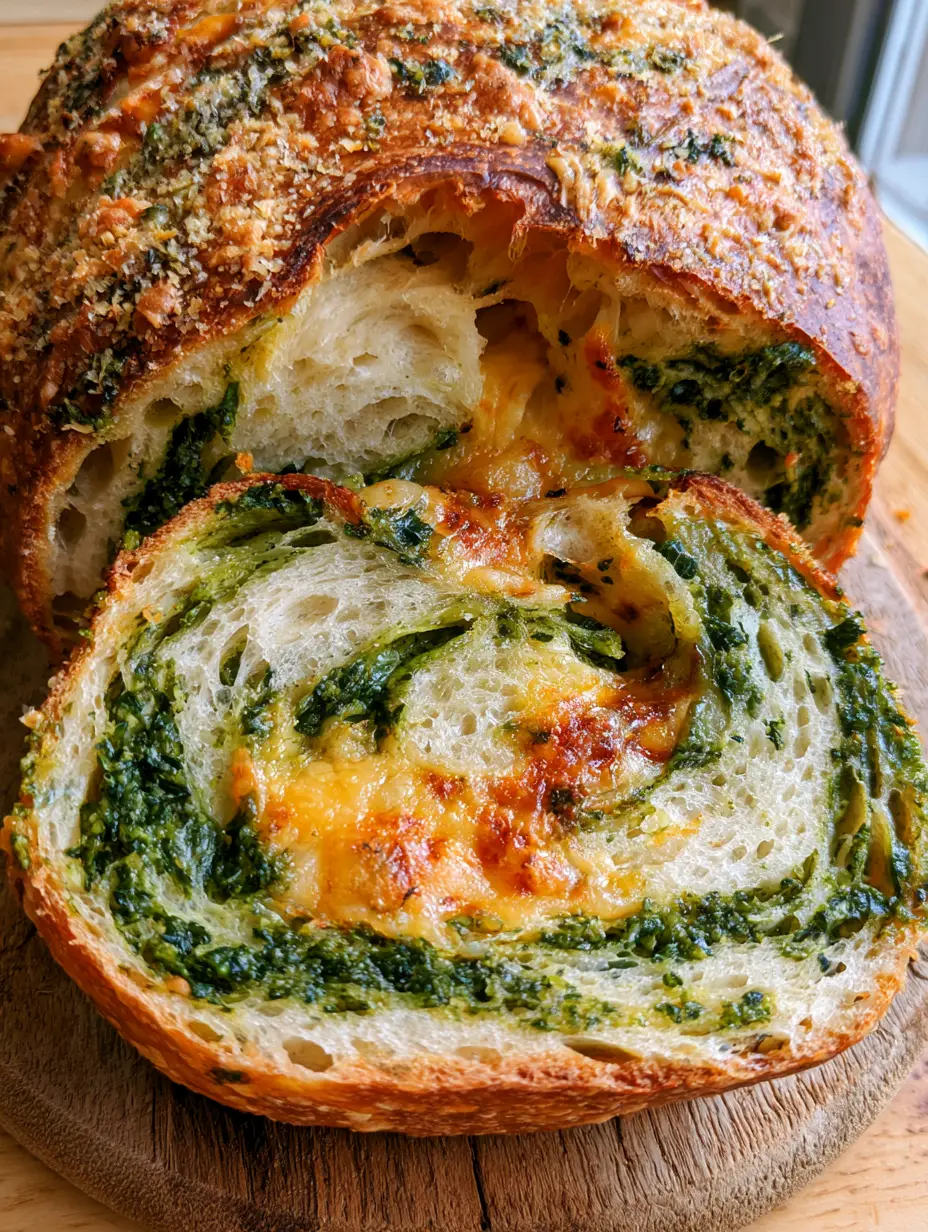
Pesto Parmesan Sourdough: The Ultimate Artisan Loaf with Emerald Swirls
Ingredients
Equipment
Method
- Whisk starter and water, then add flour and salt. Mix until a shaggy dough forms and rest for 30 minutes.
- Perform 4 sets of stretch and folds every 30 minutes to build gluten strength.
- Stretch dough into a rectangle, spread pesto and half the cheese, then roll tightly into a loaf.
- Place in a banneton and ferment in the fridge for 12-24 hours for flavor development.
- Preheat Dutch oven to 450°F. Score dough, top with remaining cheese, and bake covered for 20 mins, then uncovered for 25 mins until blistered and golden.
Notes
Score deep enough (1/2 inch) to allow for the 'oven spring'.

Closing & Call to Action
Making a pesto parmesan sourdough is a rewarding labor of love that results in a loaf far superior to anything you’ll find at a bakery. The combination of fermented tang, aromatic herbs, and toasted cheese creates a sensory experience that is truly unmatched.
If you enjoyed this recipe, please leave a comment below and tell me how your swirls turned out! Don’t forget to follow thewholesomeskillet on Pinterest and share your beautiful bread photos with our community. Happy baking!