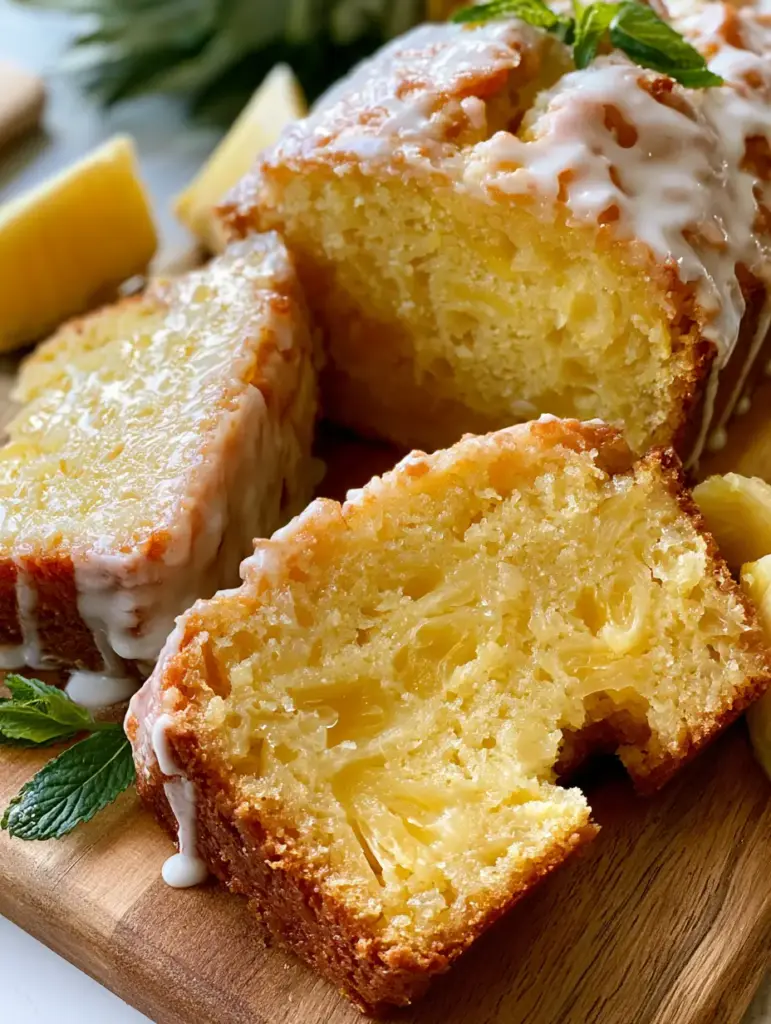
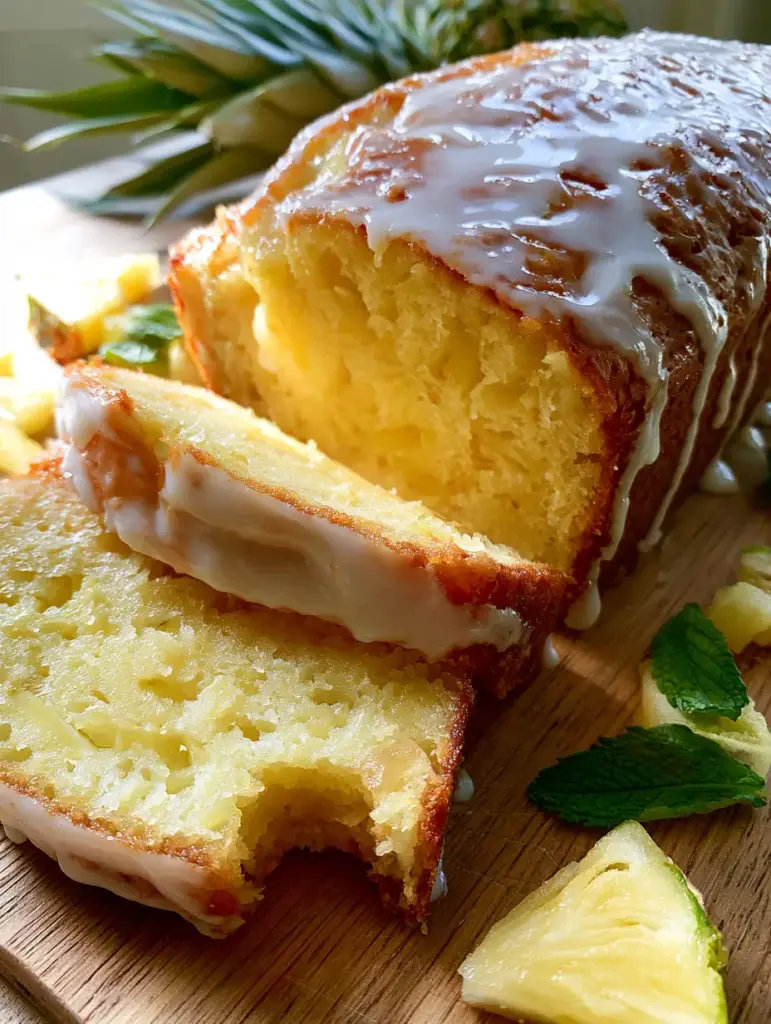
There is something undeniably nostalgic about a slice of pineapple quick bread resting on a rustic wooden cutting board, catching the soft glow of morning light. This isn’t just a simple loaf; it is a tropical escape baked into a golden-brown crust, featuring a moist, vibrant yellow crumb that celebrates the bright acidity of crushed pineapple. Whether you are serving this for a weekend brunch or a mid-afternoon treat, the sight of that glossy white vanilla glaze dripping down the sides is enough to make anyone reach for a second slice.
The beauty of a pineapple quick bread lies in its texture—a delicate balance between a light, airy sponge and a dense, fruit-forward crumb. In this recipe, we focus on forensic visual accuracy, ensuring your loaf looks exactly like a high-end bakery masterpiece, complete with tender pieces of pineapple peeking through every bite. By following professional culinary logic, we transform humble pantry staples into a decadent, sun-drenched loaf that is as beautiful as it is delicious.
Why You Will Fall in Love with This Tropical Loaf
- Visual Perfection: A stunning golden-brown exterior contrasts beautifully with a glossy, white vanilla bean glaze.
- Complex Textures: You get a soft, airy crumb punctuated by juicy, tender chunks of crushed pineapple.
- Effortless Elegance: This recipe uses the “quick bread” method, meaning no yeast and no rising time—just pure, instant gratification.
- Garnish Galore: Fresh pineapple wedges and vibrant mint leaves elevate this from a simple snack to a center-piece dessert.
The Secret Ingredients for a Moist, Vibrant Crumb
To achieve the specific yellow crumb and sturdy structure seen in our visual blueprint, we must select ingredients that offer both flavor and functional stability. The moisture content of the pineapple is the most critical variable to manage in this pineapple quick bread.
Crushed Pineapple (Canned): 1 ½ cups (350g) of crushed pineapple, well-drained. The fruit provides the signature “distinct tender pieces” seen in the crumb while adding natural sweetness and acidity to tenderize the gluten.
All-Purpose Flour: 2 cups (250g) of high-quality flour. This provides the structural foundation; be sure to measure by weight to avoid a dry, crumbly loaf that lacks that “soft, airy quality.”
Granulated Sugar: 1 cup (200g) of sugar. Beyond sweetness, sugar is hygroscopic, meaning it holds onto moisture to ensure the bread stays tender for days.
Unsalted Butter (Melted): ½ cup (115g) of butter. Fat is essential for a rich mouthfeel and helps create the “golden-brown crust” during the Maillard reaction in the oven.
Large Eggs: 2 eggs (room temperature). Eggs provide leavening and contribute to the beautiful yellow interior color that makes this bread pop on a wooden cutting board.
Baking Powder & Baking Soda: 1 tsp (5g) each. This dual-leavening approach ensures a high rise and a light texture, preventing the fruit from weighing the batter down.
Vanilla Bean Paste: 1 tsp (5ml). Unlike extract, the paste contains those iconic black specks that will be visible in your glossy glaze, signaling high-end quality.
Whole Milk or Heavy Cream: 2 tbsp (30ml) for the glaze. This creates the “glossy white” appearance and the perfect viscosity for those characteristic drips.
Essential Tools for Bakery-Style Results
Achieving the perfect pineapple quick bread requires a few specific tools to ensure even baking and a beautiful presentation. First, a standard 9×5 inch (23x13cm) loaf pan is non-negotiable for achieving the correct height and slice thickness.
You will also need a fine-mesh strainer to drain the pineapple thoroughly. If you leave too much juice in the fruit, the bottom of your loaf will become “gummy” and won’t match the soft, airy crumb we are aiming for. A wire cooling rack is also vital; if the bread sits in the hot pan for too long, the steam will soften the crust, ruining that golden-brown exterior.
Crafting the Perfect Pineapple Batter
Prepping the Tropical Foundation
Start by preheating your oven to 350°F (175°C). Grease your loaf pan generously with butter or non-stick spray, and line the bottom with parchment paper for an easy release. In a medium bowl, whisk together your flour, baking powder, baking soda, and a pinch of salt to ensure the leavening agents are evenly distributed.
Mixing for a Light and Airy Crumb
In a separate large bowl, whisk the melted butter and sugar until combined. Add the eggs one at a time, beating well after each addition until the mixture is pale and slightly frothy. Fold in the well-drained crushed pineapple and vanilla bean paste. The smell at this stage should be intensely tropical and sweet.
The Folding Technique
Gently fold the dry ingredients into the wet ingredients using a spatula. Stop the moment you no longer see streaks of flour. Over-mixing is the enemy of a pineapple quick bread; too much agitation develops gluten, which will turn your light, airy crumb into something tough and rubbery.
Baking to Golden-Brown Perfection
Pour the batter into your prepared pan and smooth the top. Bake for 55-65 minutes. You are looking for a deep golden-brown crust and a toothpick inserted into the center should come out clean or with just a few moist crumbs. The visual cue here is a slight crack down the center, which is characteristic of a well-leavened quick bread.
While your bread is baking, you might find yourself craving more tropical flavors. If you’re looking for a savory way to use up extra fruit, try this one-pan tropical chicken and pineapple for a quick weeknight dinner. Or, if you want to keep the baking marathon going, our decadent southern pecan bread offers a wonderful nutty contrast to this fruity loaf.
Whisking the Glossy Vanilla Bean Glaze
The crowning glory of this pineapple quick bread is the glaze. In a small bowl, whisk together 1 cup (120g) of powdered sugar, 1 tsp (5ml) of vanilla bean paste, and 2 tablespoons of heavy cream. You want a consistency that is thick enough to be opaque and “glossy white,” but fluid enough to create those slow-moving drips down the sides of the loaf.
Wait until the bread is completely cool before glazing. If the bread is even slightly warm, the glaze will melt and become transparent, losing that “glistening” quality described in the visual prompt. Once glazed, let it set for 10 minutes before slicing.
Expert Tips for Visual and Culinary Success
- Drain the Pineapple Twice: After using a strainer, press the pineapple with a paper towel. This ensures the crumb stays “yellow and moist” without becoming soggy.
- Room Temperature Eggs: Cold eggs can re-solidify your melted butter, leading to an uneven texture.
- The “Speck” Factor: Use vanilla bean paste instead of extract in the glaze. The tiny black seeds against the white glaze provide a gourmet aesthetic.
- Precision Slicing: Use a serrated bread knife to cut thick slices. This prevents squashing the soft crumb and keeps those “tender pieces of pineapple” intact.
Storing and Reviving Your Quick Bread
This pineapple quick bread actually tastes better on the second day as the pineapple moisture redistributes. Store it in an airtight container at room temperature for up to 3 days. For longer storage, you can refrigerate it for up to a week, though the glaze may soften slightly.
To freeze, wrap the unglazed loaf tightly in plastic wrap and aluminum foil for up to 3 months. Thaw at room temperature before adding the fresh glaze. If you love the idea of fruity, moisture-rich breads, you should also check out our decadent apple zucchini bread for another seasonal favorite.
What to Serve with Pineapple Quick Bread
To truly embrace the tropical theme, serve this bread alongside a spread of fresh fruit and maybe even a savory protein. It pairs beautifully with zesty pineapple ginger pork chops for a themed brunch. If you have leftovers, this bread makes an incredible base for a tropical twist on our easy banana foster bread pudding.
Frequently Asked Questions
Absolutely. Swap the butter for melted coconut oil and use almond or oat milk for the glaze. The coconut oil actually enhances the tropical flavor profile!
Yes, but you must finely chop it and sauté it briefly to remove excess moisture and deactivate the enzyme bromelain, which can interfere with the bread’s structure.
Ensure your bread is completely cool. The glaze should be thick—if it’s too thin, add more powdered sugar until it coats the back of a spoon and falls slowly.
This usually happens if the pineapple wasn’t drained well enough, adding too much weight and moisture, or if the oven door was opened too early during the baking process.
The Ultimate Pineapple Quick Bread Recipe
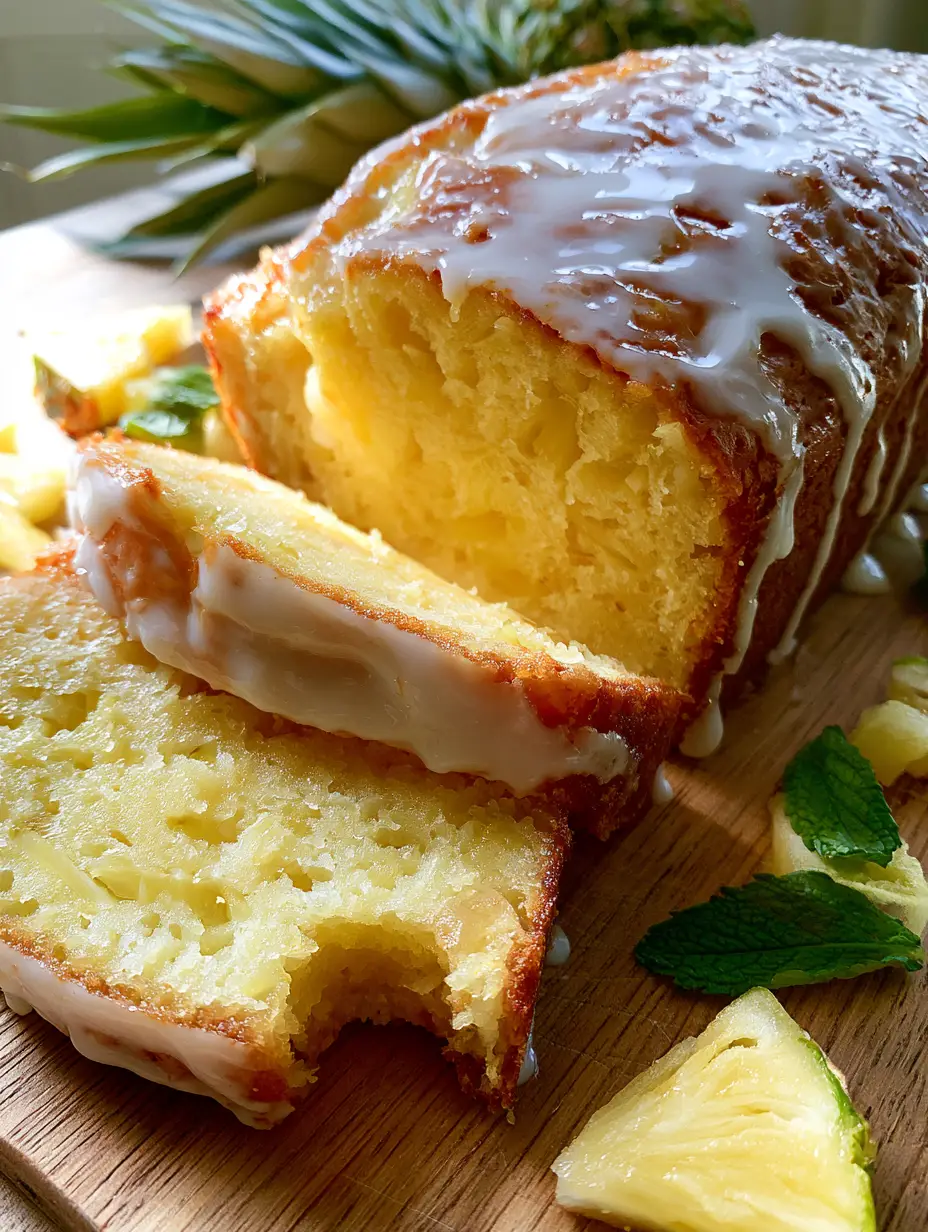
Pineapple Quick Bread with Glossy Vanilla Bean Glaze
Ingredients
Equipment
Method
- Preheat your oven to 350°F (175°C). Grease a 9x5 inch loaf pan and line the bottom with parchment paper.
- Whisk together the flour, baking powder, baking soda, and a pinch of salt in a medium bowl.
- In a large bowl, whisk the melted butter and sugar. Add eggs one at a time, then stir in the drained pineapple and vanilla bean paste.
- Gently fold the dry ingredients into the wet ingredients until just combined. Do not overmix.
- Pour into the pan and bake for 55-65 minutes until the crust is golden-brown and a toothpick comes out clean.
- Cool in the pan for 10 minutes, then transfer to a wire rack to cool completely.
- Whisk glaze ingredients until glossy and thick. Pour over the cooled loaf, allowing it to drip down the sides.
Notes
Use vanilla bean paste for visible black specks in the glaze.
Closing & Call to Action
Creating the perfect pineapple quick bread is an exercise in balancing bright, tropical acidity with a rich, buttery crumb. By focusing on the visual cues—like the glistening glaze and the golden crust—you ensure a result that is as pleasing to the eye as it is to the palate. We invite you to share your baking results and tag us on social media! For more stunning recipe inspiration, be sure to follow us on Pinterest and save this recipe to your “Tropical Favorites” board.