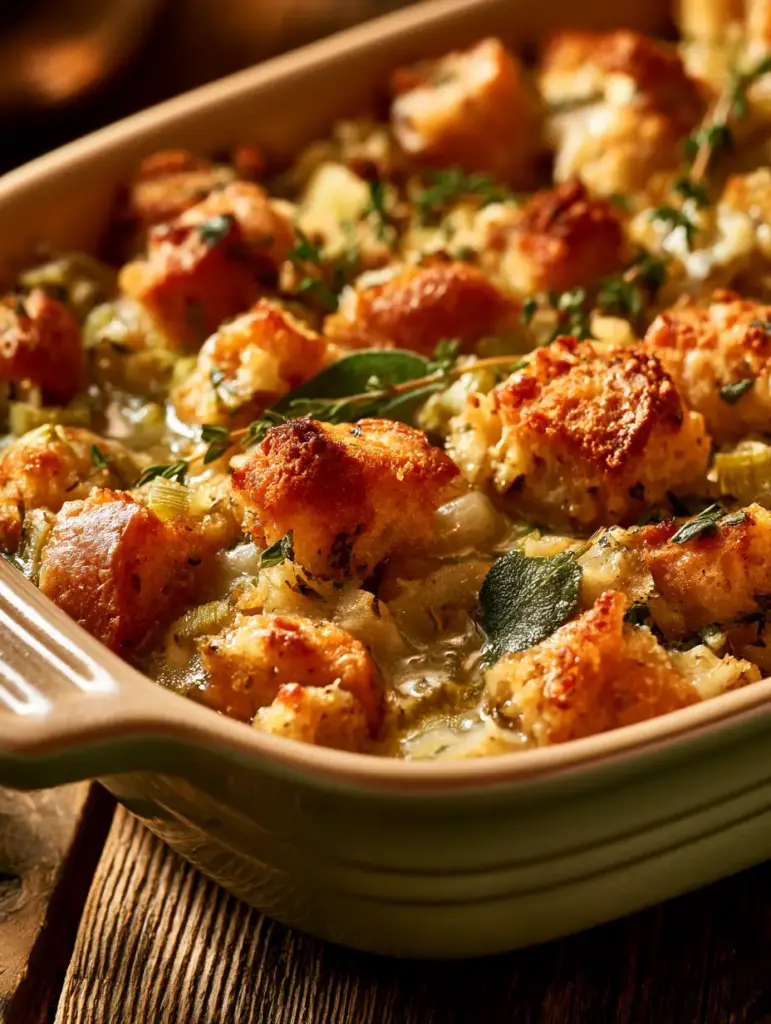
The perfect stuffing bake is a study in textural contrasts: the shattered-glass crunch of a golden-brown top layer giving way to a savory, custard-like center that carries the deep aroma of autumn. When you pull this dish from the oven, the sight of glistening butter and steam rising from the ceramic dish is enough to make anyone reach for a fork before it even hits the table. This recipe isn’t just a holiday side; it is a meticulously engineered comfort dish designed to capture the essence of a rustic, handheld smartphone photo taken in the soft glow of golden hour.
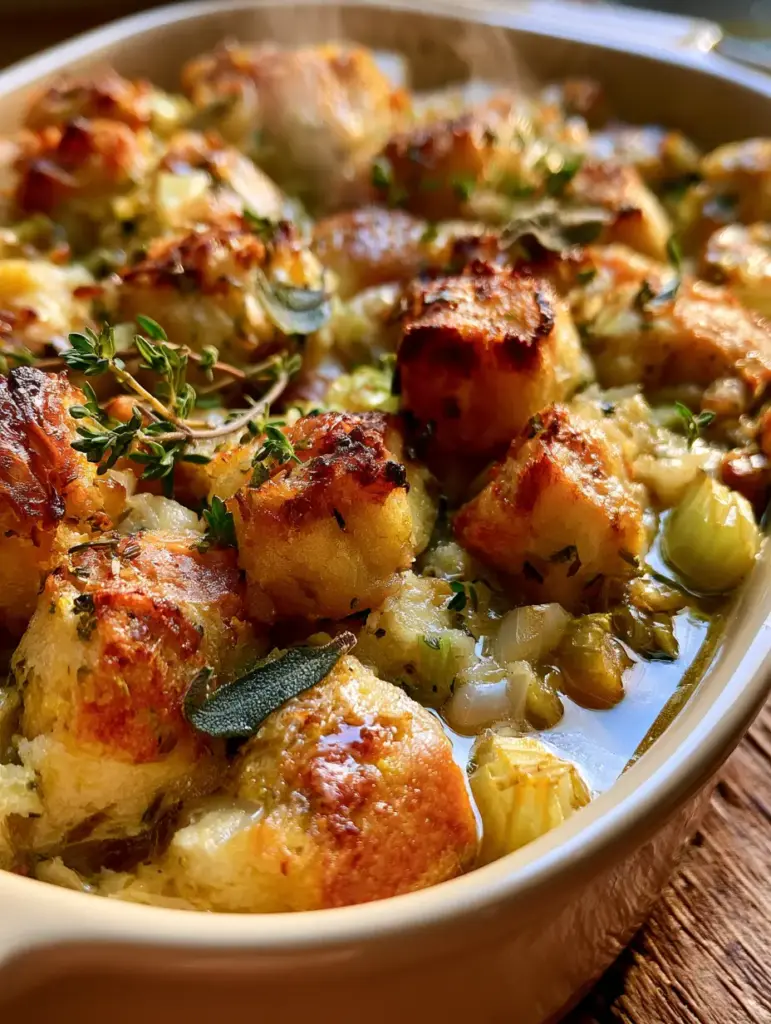
Achieving that specific “glistening” look and the “crispy golden-brown cubes” described in our visual blueprint requires more than just tossing bread in a bowl. It demands a specific ratio of high-quality broth to melted butter, ensuring every crevice of the bread is hydrated without becoming soggy. By focusing on fresh thyme and sage leaves, we create a vibrant green contrast against the toasted bread, making this stuffing bake a centerpiece worthy of any gathering.
Why This Herb-Forward Casserole Works
- Unrivaled Texture: We use a dual-temperature baking method to ensure the bottom remains moist while the top achieves a “shattered glass” crispness.
- Aromatic Depth: By sautéing the celery and onions in a generous amount of butter, we release the essential oils in the fresh sage and thyme, infusing every bite.
- Visual Brilliance: The combination of golden-brown bread cubes and bright green herbs creates a stunning, rustic aesthetic perfect for your social media feed.
- Scientifically Balanced Moisture: We use a precise ratio of broth and egg to create a structural bind that keeps the bake light and airy, never dense or gummy.
Essential Components for the Ultimate Bread Bake
Dried Sourdough or French Bread Cubes: You need 8-10 cups (approx. 500g) of bread. Sourdough provides a subtle tang that cuts through the richness of the butter, while its sturdy crust ensures the cubes hold their shape rather than turning into mush.
Unsalted Butter: You will need 3/4 cup (170g) of high-quality butter. Butter is the primary flavor carrier here, and it provides that “glistening” finish seen in professional culinary photography.
Yellow Onion: Use 2 medium onions (approx. 300g), finely diced. Yellow onions have a higher sugar content than white onions, allowing them to caramelize slightly and provide a foundational sweetness to the stuffing bake.
Fresh Celery: 3 large stalks (approx. 150g), diced. Celery provides the essential “crunch” and earthy undertone that balances the heavy herbaceous notes of the sage.
Fresh Sage and Thyme: 2 tbsp (6g) of chopped sage and 1 tbsp (3g) of fresh thyme leaves. Fresh herbs are non-negotiable for achieving the vibrant, “peeking through” look of the aromatic leaves in the final dish.
Low-Sodium Chicken or Vegetable Broth: 2.5 to 3 cups (600-720ml). The broth provides the necessary steam and moisture to hydrate the bread cubes from the inside out.
Large Eggs: 2 eggs, beaten. Eggs act as the “invisible” binder, creating a light, souffle-like structure within the moist layers of the bake.
Kosher Salt and Cracked Black Pepper: To taste. Salt is a flavor enhancer that wakes up the dull notes of the bread and broth.
Must-Have Tools for a Professional Finish
To achieve the “shallow depth of field” look where every herb leaf is visible, you need the right equipment. A 9×13 inch (23x33cm) ceramic baking dish is vital; ceramic retains heat more evenly than metal, preventing the bottom from burning before the top is crispy. You will also need a large stainless steel skillet for sautéing the aromatics to ensure even browning. A large mixing bowl and a silicone spatula are essential for folding the ingredients together without crushing the delicate bread cubes.
The Culinary Blueprint: Step-by-Step Execution
Preparing the Bread Foundation
If you aren’t using pre-dried cubes, cut your loaf into 1-inch (2.5cm) pieces. Spread them on a baking sheet and toast at 300°F (150°C) for 15-20 minutes until they feel like croutons. This “stale” texture is what allows the bread to soak up the broth and butter without losing its structural integrity in the stuffing bake.
Sautéing the Aromatic Base
In your large skillet, melt 1/2 cup (115g) of the butter over medium heat. Add the diced onions and celery. Sauté for 8-10 minutes until the onions are translucent and the celery is tender but still holds its shape. You want to see the “tender sautéed celery and onion pieces” peeking through the bread later, so do not over-brown them at this stage.
Infusing the Herbs
Once the vegetables are soft, stir in the chopped fresh sage and thyme. Cook for just 60 seconds. You will immediately smell the oils releasing—a sensory cue that the flavor is being locked into the butter. Season the mixture generously with salt and pepper.
The Folding Technique
Place your dried bread cubes in a massive mixing bowl. Pour the butter and vegetable mixture over the top. In a separate small bowl, whisk the eggs into 2 cups (480ml) of the broth. Gradually drizzle this over the bread while gently folding with a spatula. You want the cubes to be moist but not swimming in liquid. If the bread feels dry, add the remaining broth 1/4 cup (60ml) at a time.
The Final Bake for Maximum Crispness
Transfer the mixture to your buttered ceramic dish. Dot the top with the remaining 1/4 cup (55g) of butter, cut into small pieces. Cover with foil and bake at 350°F (175°C) for 20 minutes. This creates the steam that softens the interior. Remove the foil and bake for another 20-25 minutes. Watch for the “golden-brown crispy bread cubes” to form on the surface—they should look like toasted nuggets glistening with fat.
Pro-Tips for an Elite Stuffing Bake
- The Hydration Test: Before baking, squeeze a cube of bread. It should feel like a damp sponge. If it crumbles, add more broth. If it leaks liquid, you’ve added too much; add a few more dry bread cubes to balance it.
- Herb Placement: For the most photogenic result, save a teaspoon of fresh thyme leaves and whole sage leaves to scatter on top during the last 10 minutes of baking.
- Avoid the Mush: Never use fresh, soft bread. It will collapse into a pudding-like consistency that lacks the professional texture of a true stuffing bake.
- Butter Quality: Since butter is a primary fat source, use European-style butter with a higher fat content for a richer mouthfeel and better “glistening” effect.
Perfect Pairings and Serving Suggestions
This stuffing bake is the ultimate companion to roasted meats, but it also sits beautifully alongside other comfort classics. If you are looking to create a full spread, consider serving this with a savory kielbasa and potato side for a hearty winter meal. For those who love a variety of textures, the crunch of this stuffing pairs excellently with a creamy mashed potato meatloaf.
If you’re planning a brunch-style gathering, this savory bake acts as a wonderful side to a farmhouse breakfast spread. The herbal notes also complement the richness of a creamy chicken noodle casserole, making for a truly indulgent family dinner.
Storing and Reheating Your Herb Bake
Store leftovers in an airtight container in the refrigerator for up to 4 days. To maintain the crispy top during reheating, avoid the microwave. Instead, place the stuffing bake in an oven-safe dish, cover with foil, and heat at 350°F (175°C) for 15 minutes. Remove the foil for the last 5 minutes to re-crisp the bread cubes.
To freeze, wrap the unbaked dish tightly in plastic wrap and foil. It will stay fresh for up to 3 months. Thaw in the refrigerator overnight before proceeding with the standard baking instructions, adding an extra 10 minutes to the covered baking time.
Frequently Asked Questions
Yes! You can assemble the stuffing up to 24 hours in advance. Keep it covered in the refrigerator and add 10-15 minutes to the initial covered baking time when you’re ready to cook.
While you can, fresh sage and thyme provide the vibrant green color and superior aromatic profile shown in our visuals. If using dried, reduce the amount by two-thirds as dried herbs are more concentrated.
The key is using completely dried or toasted bread cubes. Fresh bread absorbs too much liquid too quickly and collapses. Toasting the bread creates a protective shell that holds its shape.
Sourdough or a thick-crusted French loaf is best. These breads have a sturdy crumb structure that withstands the broth and butter without turning into a paste.
Eggs act as a binder, providing a light, slightly custardy structure that prevents the stuffing from crumbling apart when scooped.
The Ultimate Crispy Herb Stuffing Bake Recipe
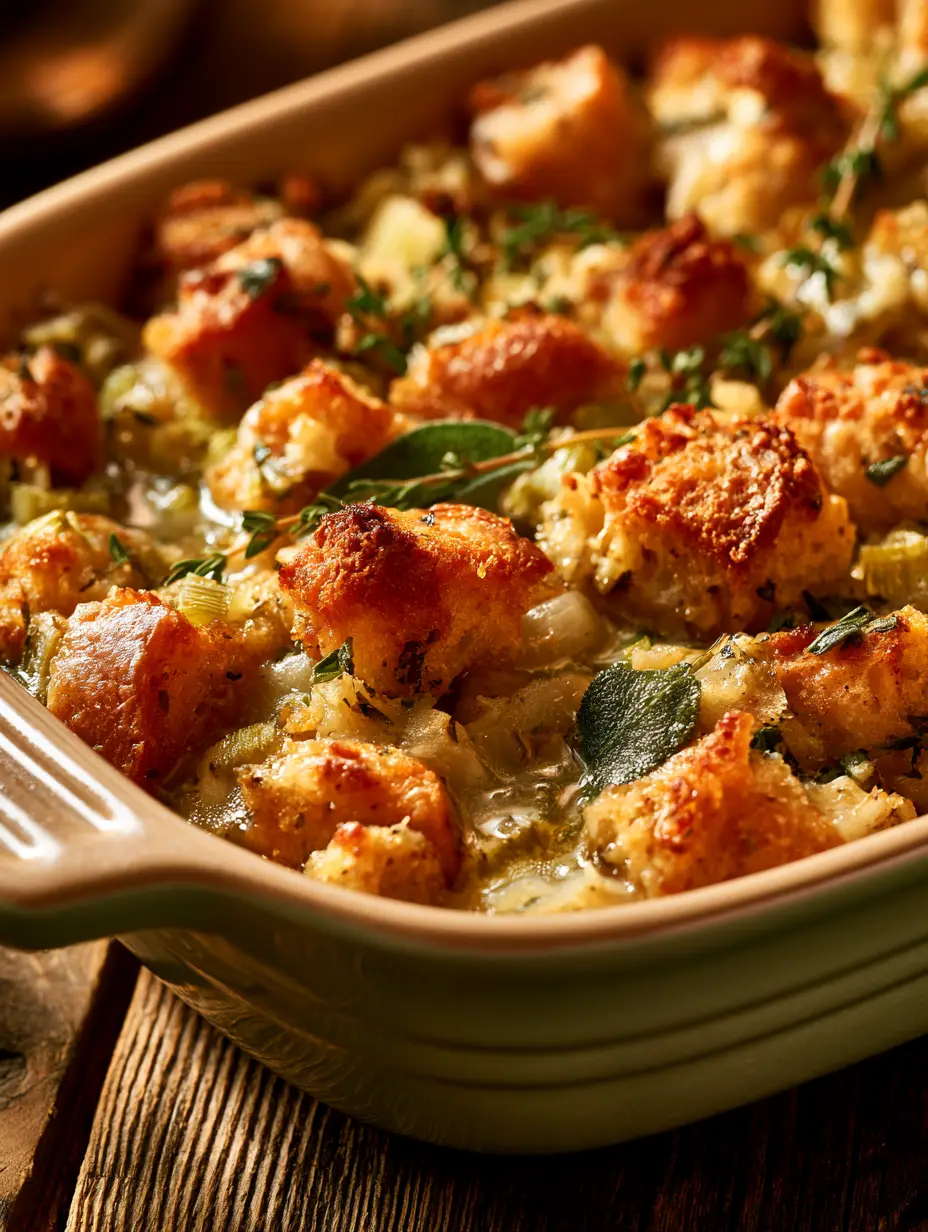
Stuffing Bake with Crispy Herb-Infused Bread Cubes
Ingredients
Equipment
Method
- Preheat oven to 300°F (150°C). Toast fresh bread cubes for 15-20 minutes until dry and crispy.
- In a large skillet, melt 1/2 cup (115g) butter. Add onion and celery, sautéing until translucent (8-10 mins).
- Stir in chopped sage and thyme; cook for 60 seconds until fragrant.
- Place bread cubes in a large bowl. Fold in the vegetable mixture. Whisk eggs and broth together, then drizzle over bread, folding gently until absorbed.
- Transfer to a buttered ceramic dish. Top with remaining 1/4 cup butter. Cover with foil and bake at 350°F (175°C) for 20 minutes.
- Remove foil and bake for an additional 20-25 minutes until the top cubes are deep golden-brown and crispy.
Notes
Always use fresh herbs rather than dried to achieve the bright, aromatic profile seen in the photos.
Join The Wholesome Skillet Community
We hope this stuffing bake brings warmth and incredible aroma to your kitchen. There is nothing quite like the sound of a crispy bread crust breaking under a spoon. If you enjoyed this recipe, please leave a comment below and let us know how your herb infusion turned out! Don’t forget to snap a photo of your glistening golden cubes and share it with us on Pinterest. For more comforting bakes, sign up for our newsletter and never miss a savory update!