Creating an environment that fosters curiosity and a love for learning is the cornerstone of a successful home education journey. When we integrate high-quality homeschool books with a serene, organized workspace, we unlock a child’s natural desire to explore the world. The Julia Rothman Anatomy series—comprising Farm, Nature, and Ocean Anatomy—serves as the perfect visual and educational foundation for this creative process.
Imagine a desk where the grain of light oak wood catches the morning sun, and the scent of steaming herbal tea fills the air. This isn’t just a study session; it’s a sensory experience designed to deepen retention and inspire artistic expression. By following this curated “recipe” for a study nook, you aren’t just setting up a desk; you are building a sanctuary for the mind.
Why the Julia Rothman Series is the Gold Standard for Education
The visual appeal of homeschool books is often just as important as the text itself, especially for younger learners who thrive on imagery. The Julia Rothman series stands out for several reasons that make it a staple in modern households. These books bridge the gap between technical science and whimsical art, making complex topics like marine biology or agricultural science accessible to all ages.
- Visual Engagement: The hand-drawn illustrations provide a “candid, authentic feel” that feels more approachable than sterile textbooks.
- Broad Subject Coverage: Moving seamlessly from the depths of the Pacific to the rows of a cornfield, these books offer a comprehensive worldview.
- Integration Potential: These books pair perfectly with companion notebooks, allowing students to sketch and label their findings in real-time.
- Aesthetic Harmony: The bright, vibrant covers act as decor themselves, especially when arranged on a light oak wood surface.
Essential Components for a Creative Learning Space
To achieve the exact look and feel of a professional, serene homeschool environment, you need more than just the books. You need the “invisible ingredients” of atmosphere—lighting, comfort, and organization. Below are the specific components required to replicate the inspiring flat-lay setup seen in our visual blueprint.
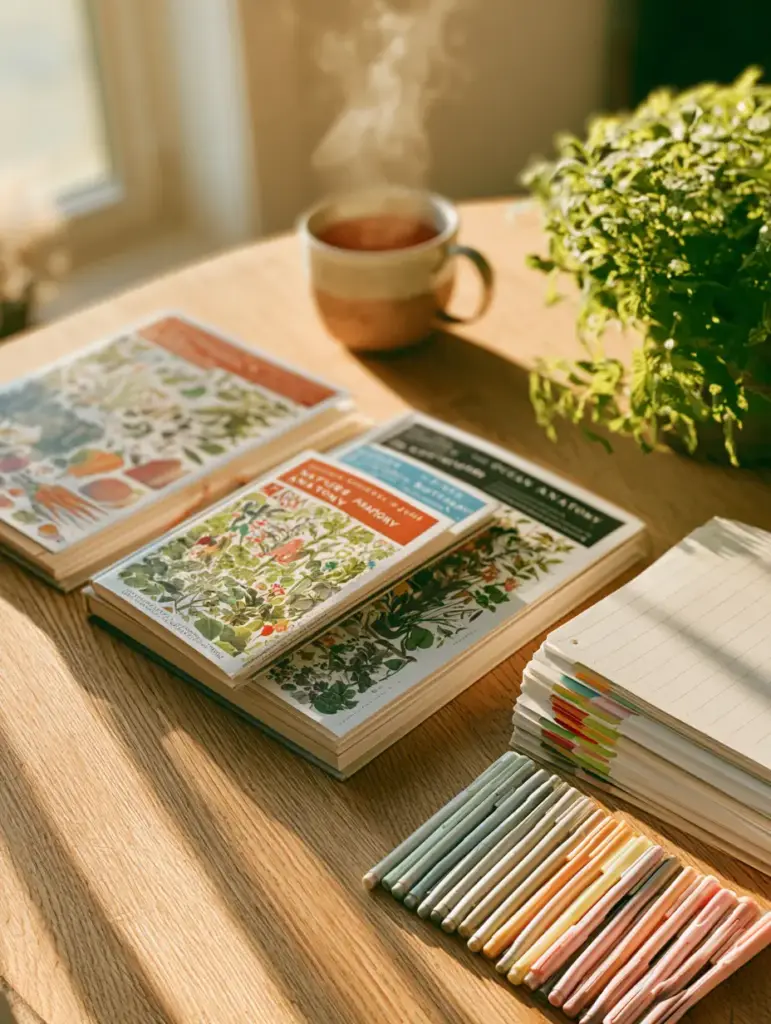
Julia Rothman Anatomy Trilogy: The core of our setup. You will need 1 copy of Farm Anatomy, 1 copy of Nature Anatomy, and 1 copy of Ocean Anatomy. These provide the primary educational “flavor” of the nook.
Minimalist Companion Notebooks: A stack of 2-3 notebooks with subtle, colorful tabs. These serve as the canvas for your student’s thoughts and sketches, mirroring the organized yet creative vibe of the room.
Pastel Gel Pens: A neat array of 6-8 pens in soft hues. Unlike standard ballpoints, these allow for smooth, artistic flowing lines that match the delicate illustrations in the homeschool books.
Steaming Herbal Tea: 8 oz (240ml) of hot water steeped with 1 bag (2g) of herbal tea in a ceramic mug. The steam provides a kinetic visual element that suggests a “calm learning environment.”
Small Green Potted Plant: 1 vibrant succulent or small leafy plant. This adds “natural life and freshness,” grounding the wood and paper elements with a touch of organic green.
Light Oak Wood Desk: A clean, natural wood surface. The subtle grain of the oak provides the necessary texture and warmth to make the pastel colors of the books and pens pop.
Tools for Building an Inspiring Workspace
Before you begin arranging your homeschool books, ensure you have these functional tools on hand. Proper preparation is the secret to a workspace that stays organized long after the first lesson is over.
- Natural Light Source: A nearby window is essential to create those “inviting highlights and gentle, elongated shadows” that make the space feel alive.
- Electric Kettle: For precise heating of your tea water to exactly 200°F (93°C) to avoid scorching delicate herbal leaves.
- Desktop Organizer: A small tray to keep the pastel gel pens in a “neat array” rather than rolling across the oak grain.
Curating the Perfect Study Atmosphere: A Step-by-Step Guide
1. Prepping the Foundation and Light
Position your light oak desk near a window where soft, diffused natural light can stream in. You want to avoid harsh, direct midday sun; instead, aim for the gentle glow of morning or late afternoon to create a serene mood. Wipe the surface to ensure the natural grain is visible and free of dust, providing a clean slate for your homeschool books.
2. Arranging the Anatomy Trilogy
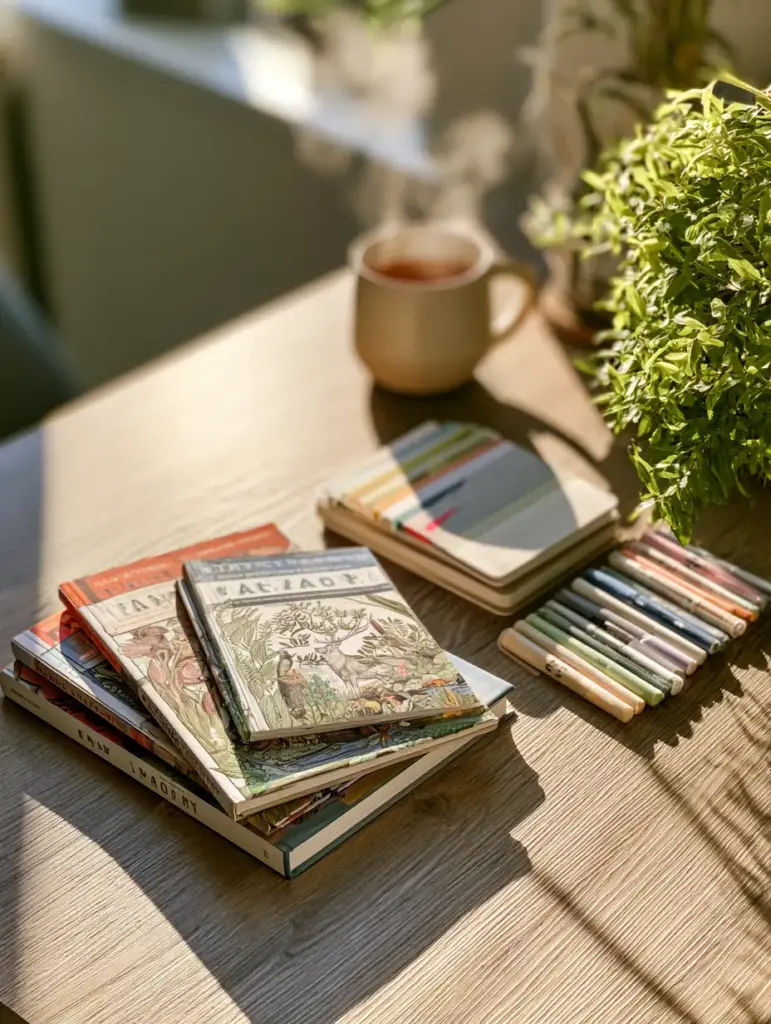
Place the three Julia Rothman books (Farm, Nature, and Ocean Anatomy) in the center of the desk. Artfully arrange them so they are slightly open. This is a critical visual cue: an open book invites the reader in. Ensure the colorful, detailed illustrations are visible, showing the vibrant reds of farm life and the deep blues of the ocean. This layout mimics the “Top-down flat lay” perspective that is so popular in educational styling.
3. Organizing the Companion Materials
Stack your minimalist companion notebooks to the side of the books. Use colorful, subtle tabs to mark specific sections—perhaps “Forest Dwellers” in Nature Anatomy or “Tidal Pools” in Ocean Anatomy. Lay your pastel gel pens in a neat, parallel line next to the notebooks. The goal is to suggest readiness; the space should look like a creative session is just about to begin.
4. Adding the Sensory “Invisible” Ingredients
Prepare your herbal tea by pouring 8 oz (240ml) of boiling water over your tea bag in a ceramic mug. Place the mug in the background so it is slightly out of focus. This creates depth in your setup and provides the “steaming” visual that signals comfort. Finally, place your small green potted plant in the upper corner to add a pop of vibrant life that complements the nature-themed homeschool books.
Pro Tips for a High-Vibe Learning Environment
- Visual Consistency: Keep your color palette cohesive. The pastel pens should reflect the colors found in the book illustrations to create a sense of harmony.
- Temperature Matters: Serve the herbal tea at a drinkable 140°F (60°C). This ensures the student isn’t distracted by a tongue burn while trying to identify types of clouds in Nature Anatomy.
- Rotation is Key: To keep homeschool books feeling fresh, rotate which book is open to a new page each morning. This small change can spark new questions and daily curiosity.
- Maximize Texture: Don’t be afraid to let the oak grain show. The contrast between the smooth paper, the ceramic mug, and the textured wood adds professional depth to your homeschool photos.
Sustaining Focus Throughout the School Day
A beautiful desk is only half the battle; maintaining focus is where the real work happens. Encouraging productivity through successful homeschool habits ensures that these beautiful homeschool books actually get read and utilized. We find that breaking for a high-protein snack can prevent the mid-morning slump.
If you’re looking for something sweet to pair with your tea during a particularly long lesson on “Ocean Anatomy,” these banana blondie squares provide the perfect energy boost. Alternatively, for a more festive study day, you might try these cinnamon apple fries which are always a hit with younger students.
Frequently Asked Questions
While not strictly required, they encourage ‘narrative through drawing,’ which helps reinforce the concepts found in the main anatomy books.
You can use them for nature journaling, ‘find and seek’ activities for younger kids, or as a visual reference while writing reports on specific ecosystems.
Assign each child their own ‘color’ of pastel pens and a designated spot for their notebooks to keep the light oak surface clutter-free.
The Julia Rothman series is incredibly versatile, suitable for children ages 6 to 12 as a primary text, though older students and adults often enjoy them for their artistic inspiration.
The Julia Rothman Learning Experience “Recipe”
Homeschool Books: Curating the Ultimate Julia Rothman Anatomy Study Nook
Ingredients
Equipment
Method
- Position the light oak desk near a natural light source and ensure the surface is clean to show the subtle grain.
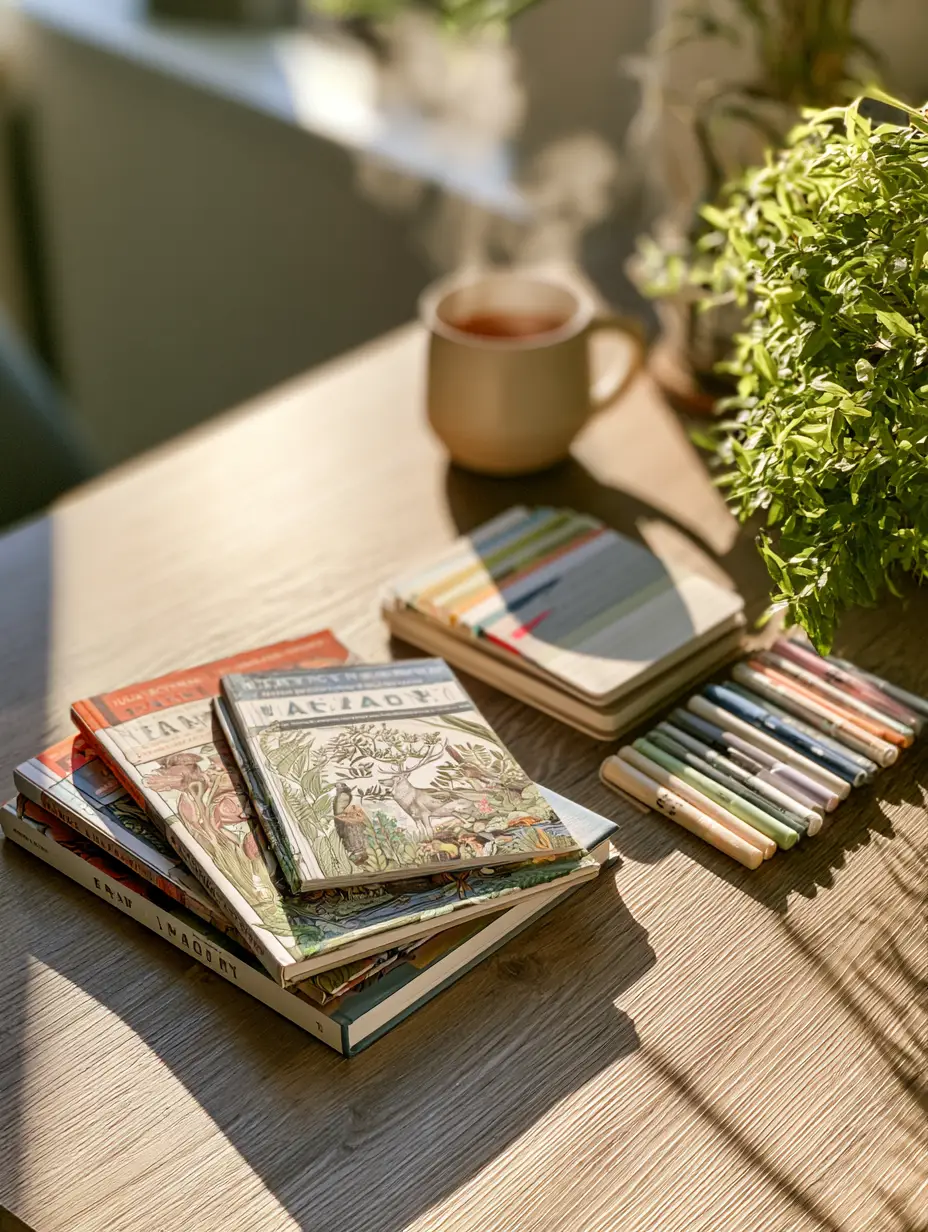
- Place the homeschool books in a flat lay arrangement, slightly open to reveal the detailed illustrations.
- Stack notebooks with tabs facing outward and align pastel gel pens neatly alongside.
- Steep tea in the ceramic mug for 3-5 minutes until steaming, then place in the background for a calm effect.
Notes
Change the open pages daily to maintain interest.
Closing & Call to Action
Building an inspiring learning environment with the right homeschool books is one of the greatest gifts you can give your student. The Julia Rothman series provides a perfect blend of art and science that turns a simple oak desk into a gateway to the natural world. By focusing on sensory details—like the warmth of herbal tea and the softness of pastel pens—you create a space where education feels like an invitation rather than a chore.
If you found this guide helpful, we would love to hear from you! Leave a comment below with your favorite homeschool book recommendations or share your desk setups with us. Don’t forget to follow us on Pinterest for more educational inspiration and family-friendly recipes!