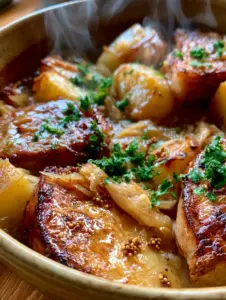
The pork sauerkraut bake is more than just a meal; it is a masterclass in balancing textures and flavors within a single, rustic ceramic dish. Imagine lifting a heavy baking dish from the oven, the air filling with the scent of savory seared meat and the bright, fermented tang of warm sauerkraut. As the steam clears, you see it: perfectly golden-brown pork chops with crispy edges, resting atop a bed of glistening, translucent caramelized onions and tender diced yellow potatoes. This is comfort food at its most refined, a dish that bridges the gap between old-world tradition and modern culinary precision.
When you prepare this pork sauerkraut bake, you are creating a visual and sensory experience that mirrors the most appetizing home-cooked photography. The vibrant green of freshly chopped parsley contrasts against the deep gold of the potatoes and the shimmering juices of the pork. The addition of whole grain mustard seeds provides not just a pop of flavor, but a sophisticated visual texture that indicates a recipe made with intention. Whether it is a chilly Sunday afternoon or a busy weeknight where you crave substance, this bake delivers a satisfying, multi-layered dinner that looks as good as it tastes.
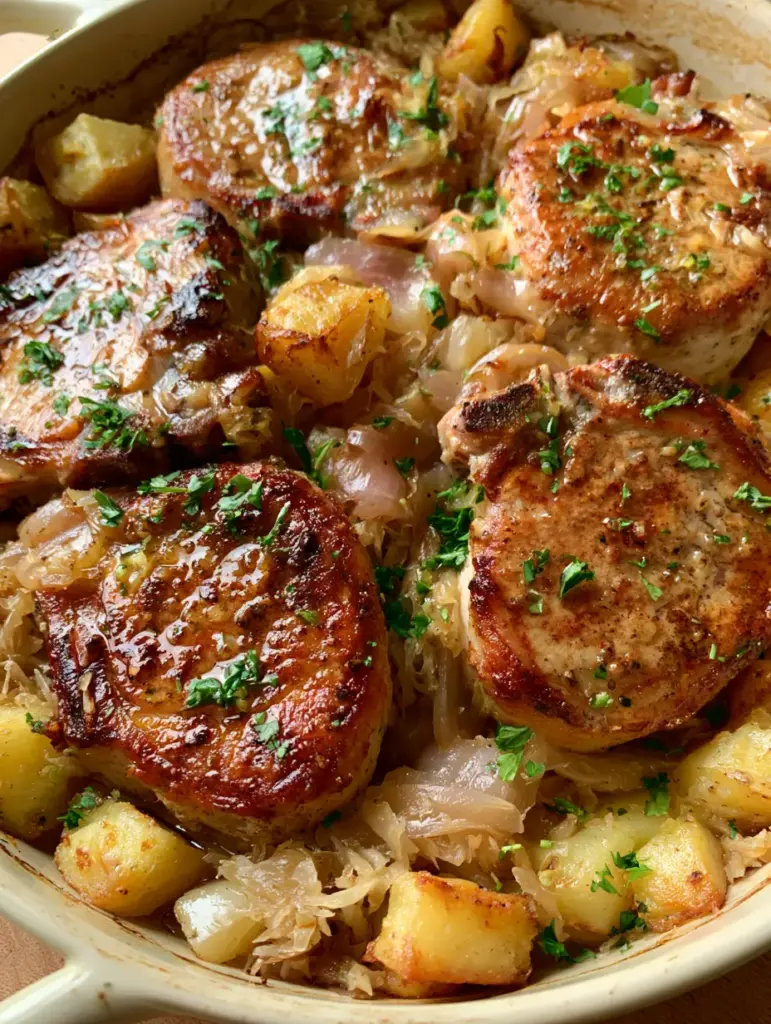
The Visual Promise: Why This Pork Sauerkraut Bake Stands Out
- Perfectly Seared Protein: We prioritize the Maillard reaction, ensuring every pork chop has a deep, golden-brown crust that locks in moisture.
- Textural Harmony: The contrast between the tender, diced yellow potatoes and the slightly crunchy, tangy sauerkraut creates a dynamic mouthfeel.
- Aromatic Foundation: Caramelized onions provide a sweet, translucent base that balances the natural acidity of the kraut.
- Gourmet Accents: Whole grain mustard seeds and fresh parsley elevate this from a simple casserole to a visually stunning centerpiece.
The Essential Pantry: Ingredients for a Perfect Pork Sauerkraut Bake
Selecting the right ingredients is the first step in ensuring your pork sauerkraut bake achieves the high-detail, appetizing look described in our blueprint. Each component serves a scientific and aesthetic purpose in the final dish.
Pork Chops: We recommend 4 thick-cut, bone-in pork chops (about 1-inch or 2.5cm thick). The bone adds flavor during the bake, while the thickness ensures they remain juicy even after searing and roasting.
Sauerkraut: You will need 2 cups (450g) of high-quality sauerkraut. Look for a brand that is crisp rather than mushy; rinsing it slightly can help control the saltiness while maintaining that signature tang.
Yellow Potatoes: 3 large yellow potatoes (approximately 1.5 lbs or 680g) provide a naturally buttery flavor. Dicing them into 1/2-inch (1.25cm) cubes ensures they cook through at the same rate as the pork.
Yellow Onions: 2 medium yellow onions (300g) are essential for that sweet, translucent layer. When caramelized, they provide the “glisten” that defines a high-quality pork sauerkraut bake.
Whole Grain Mustard: 2 tablespoons (30g) of whole grain mustard provide the “mustard seeds” mentioned in our visual blueprint. This adds a peppery bite and a beautiful, rustic appearance.
Chicken Broth: 1/2 cup (120ml) of low-sodium chicken broth acts as the braising liquid. This prevents the sauerkraut from drying out and creates those “glistening pan juices” we desire.
Invisible Essentials: 2 tablespoons (30ml) of high-smoke point oil (like avocado oil) for searing, 1 tablespoon (15g) of unsalted butter for the onions, and a generous pinch of kosher salt and cracked black pepper.
Fresh Parsley: 1/4 cup (15g) of finely chopped flat-leaf parsley is the final garnish. It adds a burst of freshness and the vibrant green color needed to break up the golden hues of the dish.
The Tool Kit: Equipment for Casserole Success
To achieve the “crispy-edged” result and “rustic ceramic dish” look, you need the right tools. A heavy-bottomed cast iron skillet is the best choice for searing the pork chops, as it retains heat evenly and creates a superior crust.
For the baking phase, a 9×13 inch (23x33cm) ceramic baking dish is ideal. Ceramic provides gentle, even heat distribution, which is perfect for tenderizing the potatoes without burning the sauerkraut. You will also need a sharp chef’s knife for dicing the potatoes and onions into uniform pieces, ensuring a professional, high-detail finish.

Mastering the Technique: A Step-by-Step Culinary Guide
1. Prepping the Foundation
Start by preheating your oven to 375°F (190°C). While the oven warms, dice your yellow potatoes into uniform 1/2-inch cubes. If the cubes are too large, they won’t soften in time; if too small, they will lose their shape. Rinse the sauerkraut in a fine-mesh sieve and squeeze out the excess moisture to ensure the bake isn’t overly watery.
2. The Science of the Sear
Season your pork chops generously with salt and pepper on both sides. Heat the oil in your skillet over medium-high heat until it just begins to shimmer. Place the chops in the pan—listen for a loud, aggressive sizzle. Sear for 3-4 minutes per side until a deep golden-brown crust forms. Remove the chops and set them aside; they will finish cooking in the oven.
3. Caramelizing the Aromatics
In the same skillet, lower the heat to medium and add the butter. Toss in the sliced onions. Sauté them, stirring frequently, until they become translucent and start to take on a light amber color. This process releases the sugars that will eventually glaze the sauerkraut and potatoes.
4. Assembling the Layers
In your ceramic baking dish, combine the diced potatoes, caramelized onions, sauerkraut, whole grain mustard, and chicken broth. Toss them together until the mustard seeds are evenly distributed. Spread the mixture into an even bed. Place the seared pork chops on top, pressing them slightly into the mixture so the juices can mingle with the kraut during the bake.
5. The Final Bake
Cover the dish with foil and bake for 25 minutes. Then, remove the foil and bake for another 15-20 minutes. This second phase is crucial: it allows the edges of the pork chops to become crispy and the potatoes to develop those “slightly browned” edges described in our visual prompt. The sauerkraut should be shimmering and the juices bubbling.
Pro Secrets for the Ultimate Golden Crust
If you want to truly master the pork sauerkraut bake, pay attention to moisture control. Too much liquid in the dish will steam the pork rather than roast it, preventing that crispy edge. Always pat your pork chops dry with paper towels before seasoning; moisture is the enemy of a good sear.
Another tip is the “rest” period. Once the dish comes out of the oven, let it sit for 5-10 minutes. This allows the pan juices to thicken and be reabsorbed by the meat, ensuring every bite is succulent. Don’t forget the parsley garnish right before serving—the heat of the dish will wake up the oils in the herb, providing a fresh aroma that cuts through the richness of the pork.
Preserving the Flavor: Storage and Reheating
This dish stores remarkably well, as the flavors of the sauerkraut and mustard seeds continue to meld overnight. Store leftovers in an airtight container in the refrigerator for up to 3 days. When reheating, avoid the microwave if possible, as it can make the pork rubbery.
Instead, place the leftovers in a small oven-safe dish, add a splash of broth to keep things moist, and heat at 325°F (160°C) until warmed through. This preserves the texture of the potatoes and the integrity of the pork chops. Freezing is not recommended for this specific recipe, as the potatoes can become grainy upon thawing.
Completing the Feast: What to Serve Alongside
While this pork sauerkraut bake is a complete meal on its own, it pairs beautifully with other rustic sides. For a truly hearty spread, consider serving it alongside a savory kielbasa cheesy potato bake if you are feeding a large crowd. The smoky flavors of the sausage complement the tang of the kraut perfectly.
If you prefer more variety in your weekly meal plan, this dish follows a similar comfort-food profile to our hearty beef potato bake or the popular effortless cheesy beef rice bake. A simple side of dark rye bread with cultured butter is the traditional way to enjoy this German-inspired feast, allowing you to soak up every drop of those shimmering pan juices.
Common Questions About Pork and Kraut
While red potatoes work, yellow (Yukon Gold) potatoes are preferred for their buttery texture and ability to absorb the savory pan juices.
Searing them quickly over high heat locks in juices, while the chicken broth in the baking dish creates a moist environment for the final roast.
Yes, we recommend a light rinse to control the saltiness and acidity, ensuring the pork and potato flavors still shine through.
Removing the foil for the final 15-20 minutes of baking allows the direct heat to crisp the fat and edges of the seared pork chops.
The seeds provide a subtle pop of texture and a sharp, peppery flavor that cuts through the richness of the pork and caramelized onions.
The Ultimate Pork Sauerkraut Bake Recipe
Prepare yourself for a dish that defines home-cooked comfort. This recipe combines technical precision with rustic charm, resulting in a meal that is as visually stunning as it is delicious. Follow the steps below to achieve the perfect balance of golden-brown pork and tangy, shimmering sauerkraut.
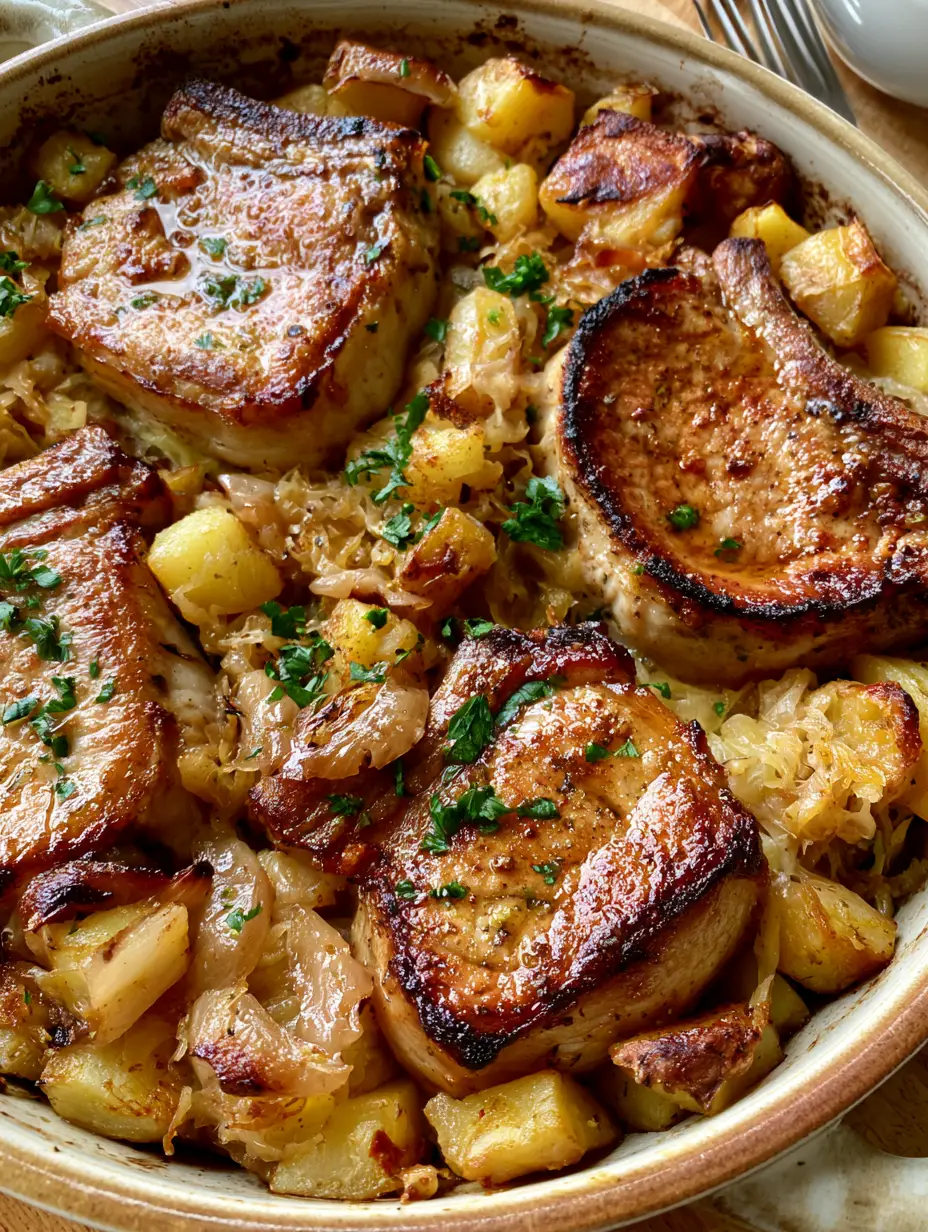
Pork Sauerkraut Bake with Golden Potatoes and Tangy Mustard Seeds
Ingredients
Equipment
Method
- Preheat your oven to 375°F (190°C). Dice the yellow potatoes and rinse the sauerkraut.
- Heat oil in a skillet. Season pork chops and sear for 3-4 minutes per side until deep golden-brown.
- Remove pork. Melt butter in the same skillet and sauté onions until translucent and slightly browned.
- Mix potatoes, onions, kraut, mustard, and broth in a ceramic dish. Place pork chops on top.
- Cover with foil and bake for 25 minutes. Uncover and bake for another 15-20 minutes until edges are crispy.
Notes
Let the dish rest for 10 minutes after baking to allow juices to set.

Join the Wholesome Skillet Community!
We hope this pork sauerkraut bake becomes a new staple in your kitchen. There is nothing quite like the combination of savory pork and tangy kraut to warm the soul. If you enjoyed this recipe, please leave a comment below and let us know how your crispy edges turned out!
Don’t forget to follow us on Pinterest for more rustic dinner inspiration. Sharing is caring—pin this recipe to your favorite “Comfort Food” or “One-Pan Dinners” board so you always have it on hand when the craving for a traditional traditional pork sauerkraut bake hits!