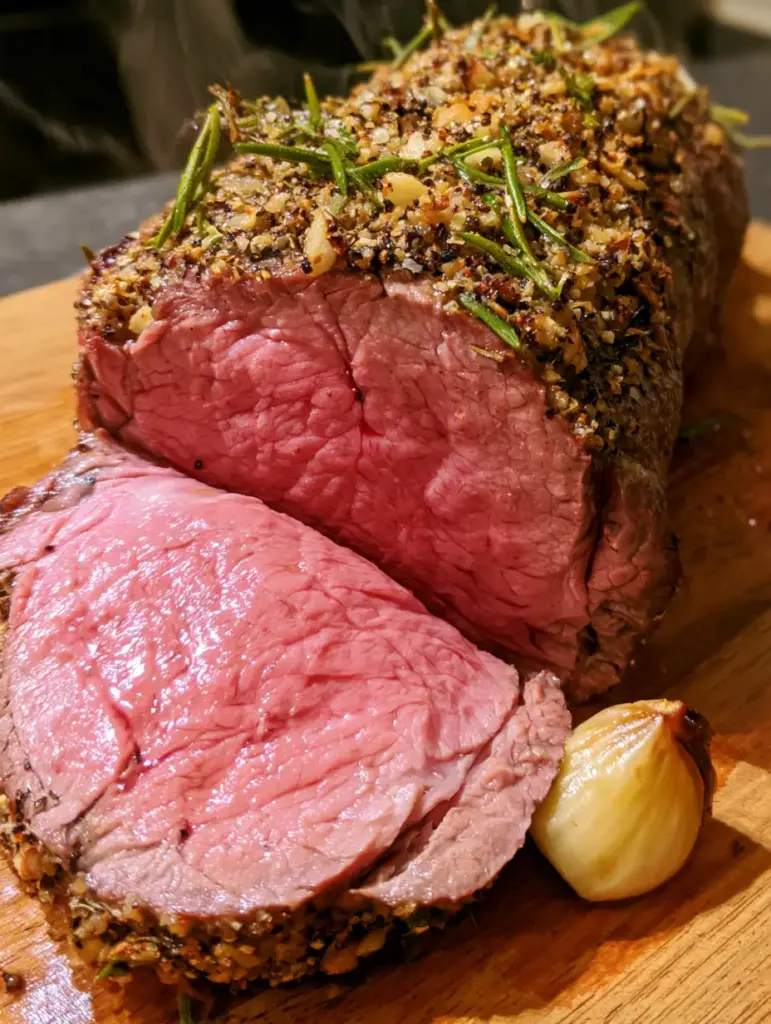
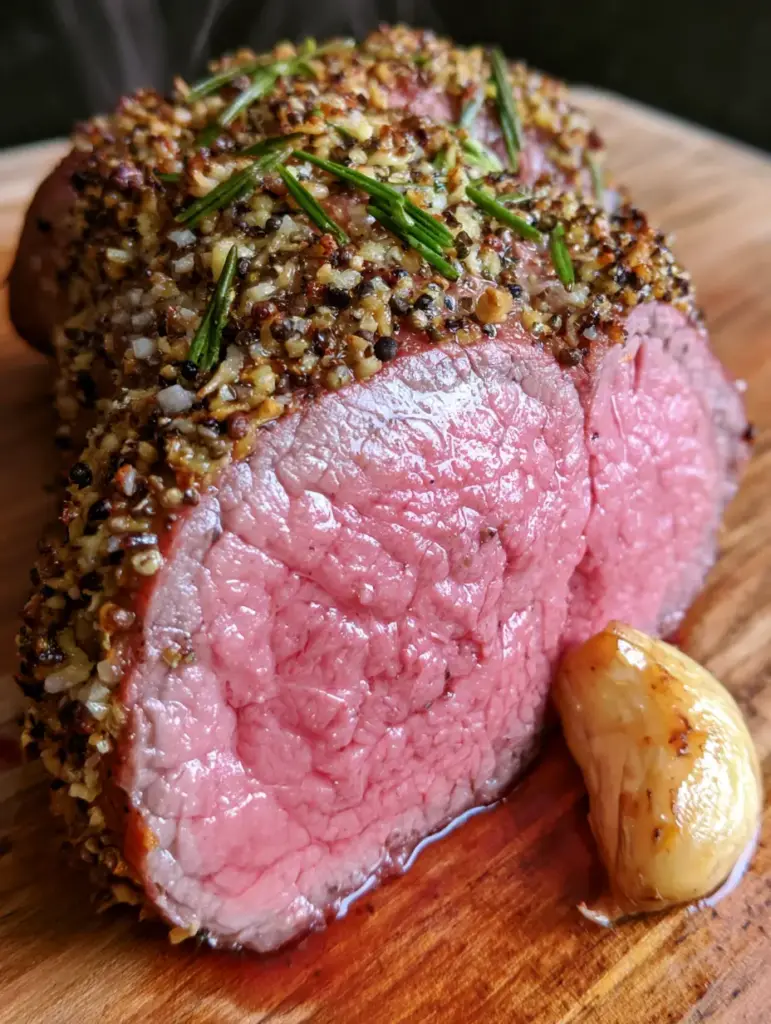
The perfect roast beef tenderloin is the undisputed crown jewel of the culinary world, and achieving that restaurant-quality result at home is simpler than you think. Imagine a thick slice of beef, glistening with natural juices, boasting a vibrant medium-rare pink center that contrasts beautifully with a heavy, textured, golden-brown crust.
This isn’t just a meal; it is a sensory experience. As the roast rests on your wooden cutting board, light steam rises from the meat, carrying the intoxicating aroma of toasted black pepper and earthy rosemary needles. Every bite offers a crunch from the sea salt flakes and a buttery softness from the roasted garlic cloves tucked alongside the roast.
Whether you are hosting a holiday feast or a special Sunday dinner, this roast beef tenderloin recipe delivers the visual and flavorful “wow factor” you deserve. Let’s dive into the science and technique behind this masterpiece.
Why This Garlic Rosemary Roast is the Ultimate Showstopper
- The Textural Contrast: We use a specific wet-rub technique to create a heavy, textured crust that stays crisp while the interior remains incredibly tender.
- Visual Perfection: Following this method ensures that iconic “edge-to-edge” pink medium-rare center seen in professional food photography.
- The Flavor Profile: A bold combination of cracked black pepper, fresh rosemary, and minced garlic creates a savory profile that enhances, rather than masks, the premium beef flavor.
- Infused Aromatics: By roasting whole garlic cloves in the same pan, we create a side garnish that spreads like butter over every slice.
The Anatomy of a Premium Peppery Herb Crust
To achieve the result described in our visual blueprint, we must select ingredients that provide both flavor and structural integrity during the high-heat roasting process.
Center-Cut Beef Tenderloin: Choose a 4 lb (1.8 kg) roast, preferably the Chateaubriand cut, for even cooking and a beautiful presentation. Ensure it is trimmed of silver skin and tied with kitchen twine to maintain its cylindrical shape.
Cracked Black Pepper: Use 2 tbsp (12g) of coarsely cracked peppercorns rather than fine ground pepper. This provides the “heavy textured” look and a localized heat that defines the crust.
Sea Salt Flakes: Use 1.5 tbsp (18g) of flaky sea salt (like Maldon). The larger surface area of the flakes creates those glistening white crystals seen in high-end macro photography.
Fresh Rosemary Sprigs: You will need 3 tbsp (6g) of minced fresh rosemary needles. Fresh herbs are essential here; dried rosemary will burn and become bitter in the high-heat environment.
Minced Garlic: 4 cloves (12g) of freshly minced garlic act as the “glue” for our crust. It caramelizes into a golden-brown hue that is visually stunning and aromatically intense.
Extra Virgin Olive Oil: 3 tbsp (45ml) of high-quality oil is necessary to bind the rub and facilitate the Maillard reaction (browning) on the meat’s surface.
Whole Garlic Cloves: Reserve 6-8 whole unpeeled garlic cloves. Roasting these alongside the beef softens them into a sweet, spreadable treat that looks beautiful on a wooden serving board.
Essential Tools for Professional Meat Roasting
To mirror the handheld smartphone photo of a perfect roast, you need a few key pieces of equipment. A heavy-bottomed roasting pan or a large cast-iron skillet is crucial for heat retention and achieving a golden-brown sear.
An instant-read digital thermometer is non-negotiable. Because beef tenderloin is a lean muscle, the window between “perfect pink” and “overcooked” is narrow. Finally, a sharp carving knife will allow you to cut those thick, clean slices without tearing the delicate fibers of the meat.
The Step-by-Step Path to a Glistening Medium-Rare Center
1. Tempered Meat and Surface Preparation
Remove your 4 lb (1.8 kg) beef tenderloin from the refrigerator at least 60 minutes before cooking. Bringing the meat to room temperature ensures the heat penetrates the center evenly, preventing a cold, raw middle.
Pat the meat extremely dry with paper towels. Any moisture on the surface will create steam, which prevents the heavy, textured golden-brown crust from forming. Seasoning a wet roast is the most common mistake home cooks make.
2. Constructing the Herb and Pepper Crust
In a small bowl, combine the cracked black pepper, sea salt flakes, minced garlic, and minced rosemary. Add 2 tbsp (30ml) of olive oil to create a thick, gritty paste. This is the “Visual Recipe Blueprint” in action.
Rub the paste over the entire surface of the beef. Use your hands to press the mixture into the meat firmly. You want a thick coating that won’t fall off during the searing process. This is what creates that “heavy, textured” appearance in the final slice.
3. The High-Heat Sear
Preheat your oven to 425°F (220°C). Heat 1 tbsp (15ml) of olive oil in a large oven-safe skillet over medium-high heat. Wait until the oil is shimmering and just beginning to smoke.
Carefully place the beef in the pan. Sear for 2-3 minutes per side. Look for the “Visual Cue”: a deep, golden-brown crust should form, and the garlic in the rub should smell toasted, not burnt. Use tongs to rotate the roast, ensuring the ends are seared as well.
4. The Precision Roast
Scatter the whole garlic cloves around the beef in the skillet. Transfer the skillet directly into the preheated oven. Roast for 20-25 minutes, or until an internal thermometer registers 125°F (51°C) for medium-rare.
Remember, the temperature will rise about 5-10 degrees while resting. If you wait until it hits 135°F in the oven, you will lose that perfect pink center and the glistening juices shown in the Midjourney prompt.
5. The Critical Resting Period
Transfer the roast to a wooden cutting board. Pour any remaining meat juices from the pan over the top. Tent loosely with foil and let the meat rest for at least 15 minutes.
This allows the muscle fibers to relax and reabsorb the juices. If you cut too early, the juices will run out onto the board, leaving you with dry meat rather than the “glistening” result we are aiming for.
Expert Tips for a Flawless Holiday Roast
- Trust the Texture: If your crust feels soft, crank the heat during the final 2 minutes of searing. The “heavy, textured” look comes from the coarse pepper and salt flakes.
- The Garlic Secret: Don’t peel the whole garlic cloves before roasting. The skin protects the garlic from burning, allowing the interior to turn into a sweet paste.
- Identify the Grain: Always slice against the grain. On a tenderloin, the grain runs lengthwise, so you should be cutting thick cross-section slices.
- Savor the Juices: Those juices on the cutting board are liquid gold. Spoon them back over the slices before serving to enhance the natural beef flavor.
Mastering Storage and Reheating
Leftover roast beef tenderloin is a luxury. Store any remaining meat in an airtight container in the refrigerator for up to 3 days. To maintain the medium-rare pink center, avoid the microwave when reheating.
Instead, wrap slices in foil with a teaspoon of water or beef broth and warm them in a 300°F (150°C) oven just until heated through. Alternatively, cold slices are incredible in a sandwich with horseradish cream.
Perfect Pairings for Your Beef Centerpiece
A roast this magnificent deserves sides that complement its richness. For a classic vegetable pairing, these honey glazed roasted carrots provide a sweetness that balances the cracked pepper crust.
If you are looking for a more indulgent meal, consider serving the roast alongside a vegetable white lasagna for a multi-course dinner party. For a lighter touch, a side of lemon ricotta spaghetti adds a bright acidity that cuts through the savory garlic notes.
Got leftovers? Chop the beef into small pieces and create gourmet beef and broccoli bowls for a quick weeknight lunch that feels like a five-star meal.
Common Questions About Roasting Beef Tenderloin
It is not recommended. Dried rosemary is woody and can become bitter when seared at high temperatures. Fresh rosemary needles provide the bright green color and aromatic oils needed for the crust.
Yes. Tying the roast ensures it maintains a uniform cylindrical shape, which is essential for even cooking and creating those perfect round slices.
The secret is using coarsely cracked black pepper and sea salt flakes mixed with minced fresh rosemary and garlic into a thick paste, then pressing it firmly into the dry meat surface.
For a perfect medium-rare pink center, remove the beef from the oven when it reaches an internal temperature of 125°F (51°C). Carryover cooking while resting will bring it to the final 130-135°F.
This usually happens if the meat wasn’t tempered to room temperature before cooking or if the oven temperature was too low, leading to a long cook time that ‘steams’ the inside.
The Ultimate Roast Beef Tenderloin Recipe
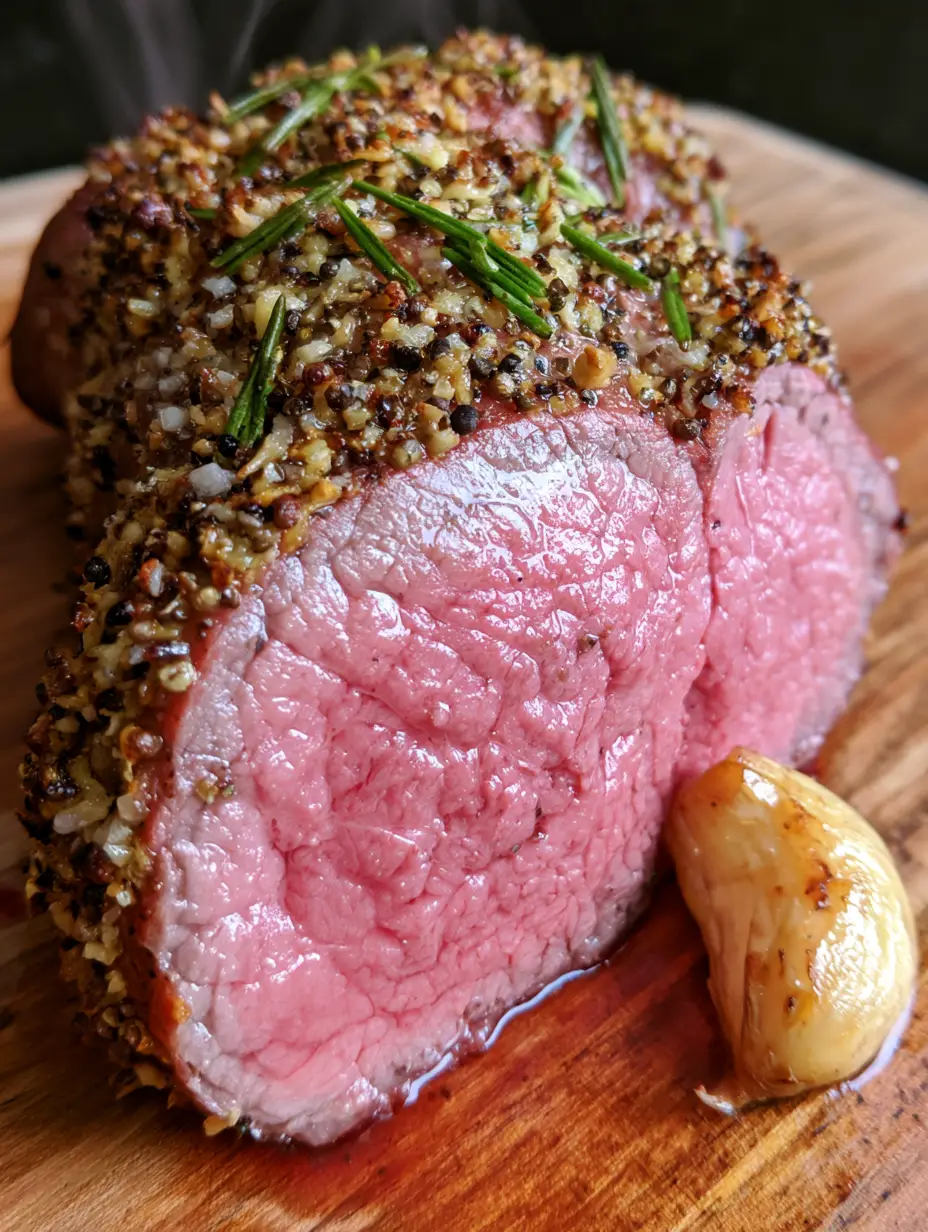
Roast Beef Tenderloin with a Garlic Rosemary Crusted Finish
Ingredients
Equipment
Method
- Bring the beef tenderloin to room temperature for 60 minutes. Pat extremely dry with paper towels.
- Mix cracked pepper, salt flakes, minced garlic, rosemary, and 2 tbsp olive oil into a paste. Press firmly onto the entire surface of the beef.
- Heat 1 tbsp oil in a skillet. Sear the beef until a deep golden-brown crust forms on all sides (about 8-10 minutes total).
- Add whole garlic cloves to the pan. Transfer to a 425°F (220°C) oven for 20-25 minutes until internal temp hits 125°F (51°C).
- Let rest on a wooden board for 15 minutes before slicing. Serve with roasted garlic and meat juices.
Notes
Letting the meat rest is the secret to the glistening juices.
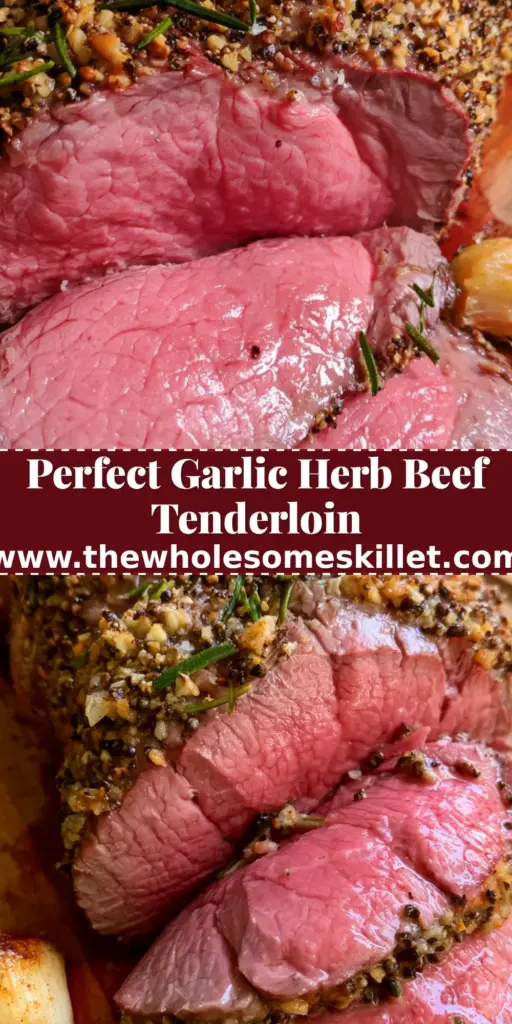
There is nothing quite like the sight of a perfectly crusted roast beef tenderloin being sliced on a wooden board. The combination of the rosemary-scented crust and the tender pink interior makes it the ultimate recipe for those who appreciate the finer points of home cooking.
If you enjoyed this guide to the perfect roast, please leave a comment below and let us know how your crust turned out! Don’t forget to share your photos and tag @thewholesomeskillet on social media. For more inspiration, follow us on Pinterest and save this recipe to your favorite holiday boards!