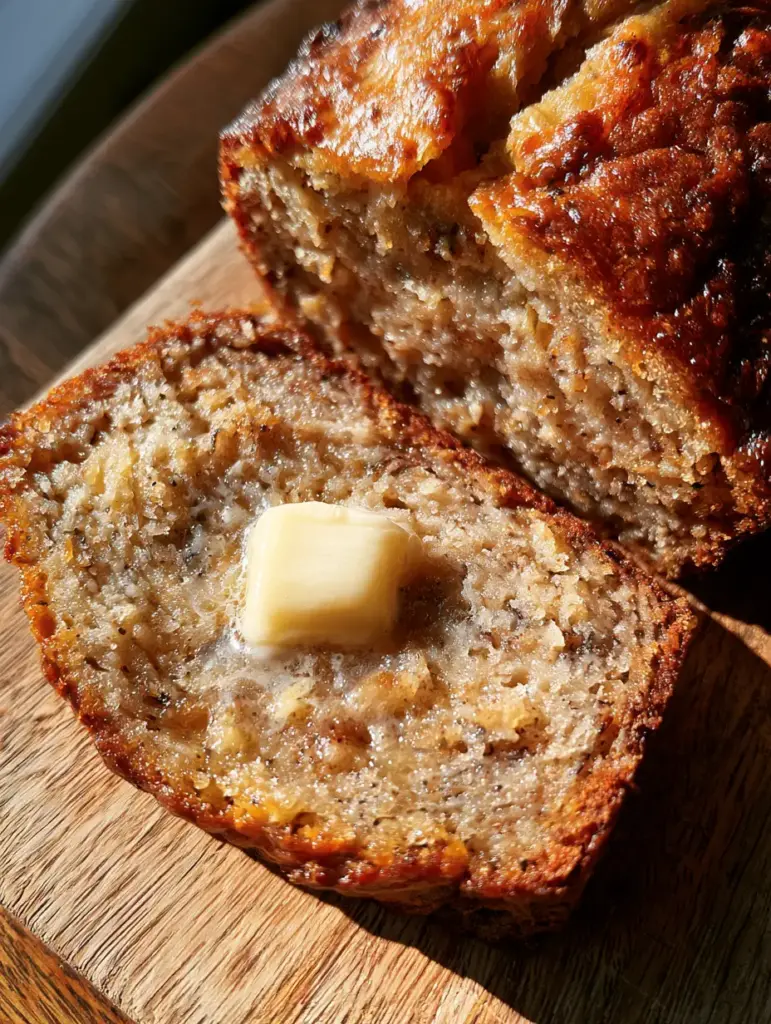
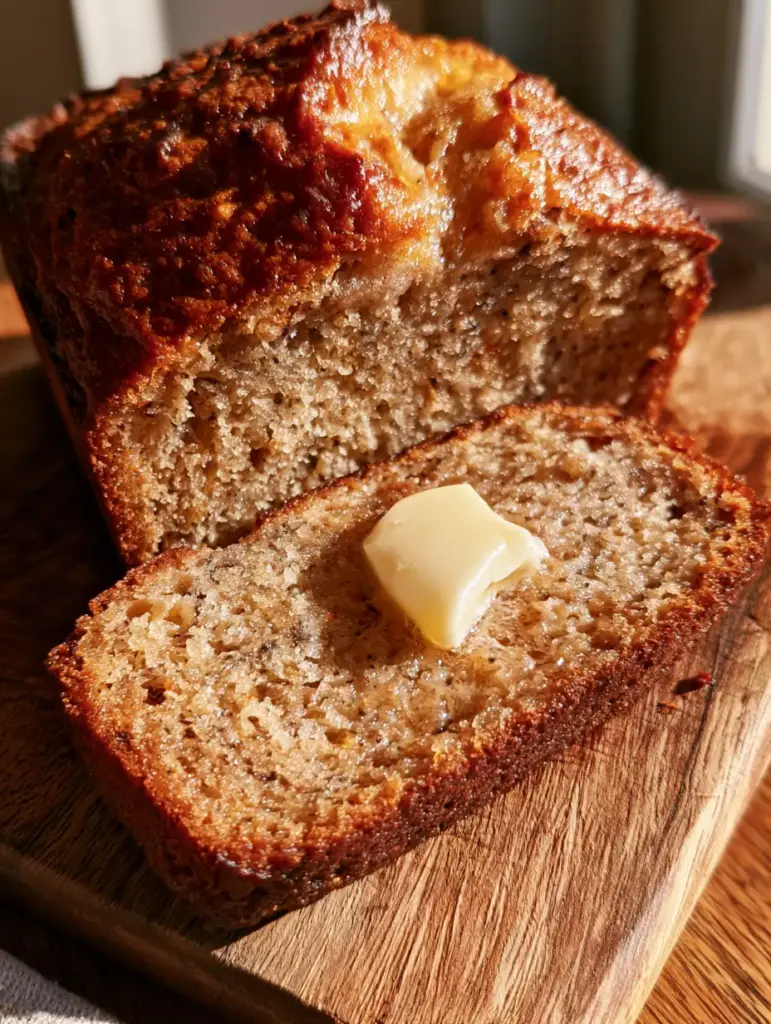
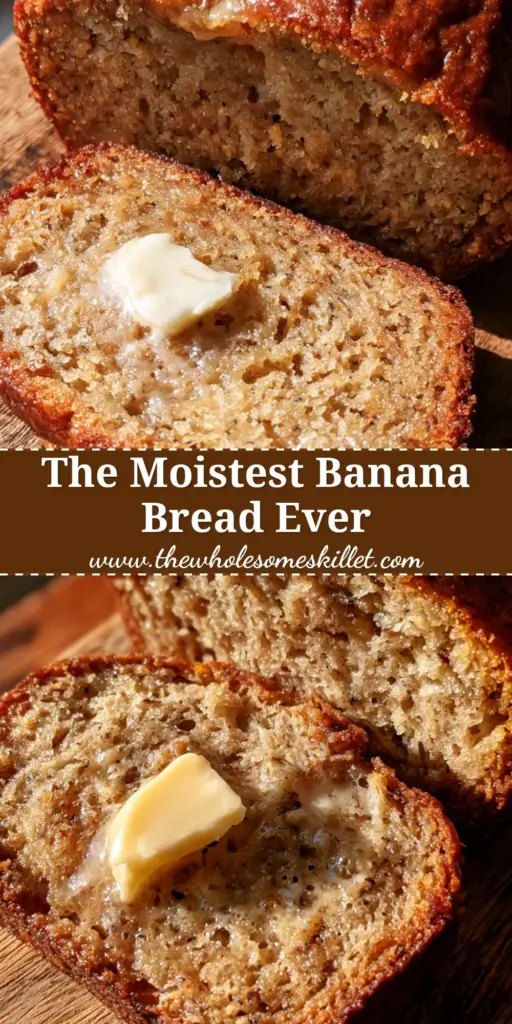
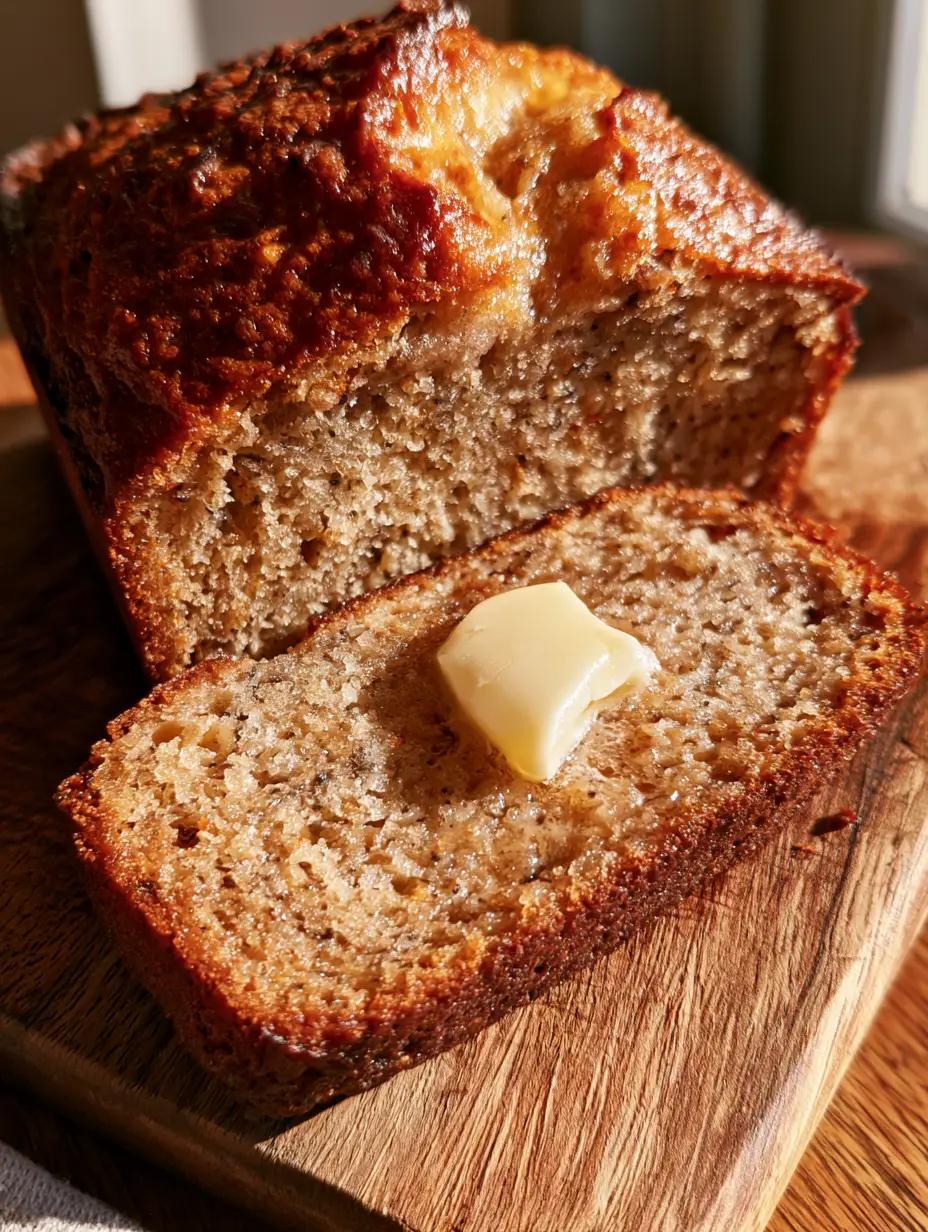
There is nothing quite like the aroma of fresh banana bread wafting through a sunlit kitchen. Imagine a thick, warm slice resting on a rustic wooden board, the tender crumb still releasing wisps of steam as a slab of salted butter slowly melts into the golden texture. This isn’t just a basic loaf; it is a masterclass in moisture, flavor, and that elusive, deeply caramelized exterior that shatters slightly under your fork.
Achieving the perfect banana bread requires a balance of chemistry and high-quality ingredients. By focusing on the sugar-to-fat ratio and the specific ripeness of your fruit, you can recreate the handheld smartphone photo aesthetic of a professional bakery right in your own home. Whether you are looking for a comforting breakfast or a decadent afternoon snack, this recipe delivers on every sensory promise.
The Secrets Behind an Ultra-Moist Banana Bread Crumb
The hallmark of an elite banana bread is its interior structure. We are looking for a crumb that is dense enough to hold a slab of melting butter but light enough to feel tender on the palate. The moisture in this recipe comes from a two-fold approach: heavily mashed ripe bananas and the inclusion of melted butter rather than oil.
While oil provides a consistent moisture level, melted butter contributes to the Maillard reaction, which is essential for that caramelized flavor profile. If you find yourself with extra bananas, you might also enjoy experimenting with banana brownies or even banana oatmeal cookies for a different textural experience. However, for the classic loaf, butter is king.
- Caramelized Crust: A specific blend of granulated and brown sugars ensures the exterior browns beautifully without burning.
- Steam-Fresh Texture: By baking at a precise temperature, we trap just enough moisture to create that signature steam when sliced.
- Rustic Appeal: This loaf looks just as good as it tastes, featuring a naturally cracked top and a deep mahogany hue.
- Flavor Depth: We use pure vanilla and a hint of salt to balance the intense sweetness of the overripe fruit.
The Essential Pantry Staples for Your Golden Loaf
To achieve the result seen in our visual blueprint, every ingredient must serve a specific culinary purpose. We don’t just use flour; we use the right amount to support the heavy weight of the bananas. We don’t just use sugar; we use a combination that promotes browning.
Overripe Bananas: You need 1 ½ cups (350g) of mashed bananas, which is roughly 3 to 4 large fruits. They should be covered in brown spots, as this indicates the starches have converted to sugar, providing the best flavor and moisture.
Melted Unsalted Butter: ½ cup (115g) of butter provides the fat necessary for a silky mouthfeel. Melting the butter before mixing ensures it incorporates fully into the sugars, creating a smooth batter that leads to a uniform crumb.
Granulated & Brown Sugar: We use ½ cup (100g) of each. The granulated sugar helps with the structure and the crust’s crispness, while the brown sugar adds moisture and a hint of molasses for that dark, caramelized color.
Large Egg: 1 large egg acts as the primary binder. Ensure it is at room temperature so it emulsifies properly with the melted butter, preventing the batter from breaking.
Pure Vanilla Extract: 1 tsp (5ml) enhances the natural aromatics of the banana. It acts as a bridge between the sweetness of the fruit and the richness of the butter.
Baking Soda: 1 tsp (5g) is the leavening agent that reacts with the acids in the bananas and brown sugar. This creates the lift and the airy pockets that catch the melting butter.
Fine Sea Salt: ½ tsp (3g) is the “invisible” hero that cuts through the sugar. It makes the banana flavor pop and balances the overall sweetness of the loaf.
All-Purpose Flour: 1 ½ cups (190g) provides the structural framework. Be careful not to overmix, as developing too much gluten will turn your moist bread into a tough, rubbery brick.
Salted Butter (For Serving): A thick slab of high-quality salted butter is essential for the final presentation. The salt crystals against the sweet, steaming bread create a perfect flavor contrast.
Tools Required for a Bakery-Style Finish
Achieving a professional-grade banana bread isn’t just about the ingredients; the equipment plays a vital role in heat distribution. A standard 9×5 inch (23x13cm) loaf pan is the preferred vessel for this recipe. If you use a glass pan, you may need to lower the temperature slightly as glass conducts heat differently than metal.
You will also need a sturdy wire whisk and a silicone spatula. The whisk helps aerate the wet ingredients, while the spatula is necessary for “folding” the flour. Folding is a gentle technique that preserves the air bubbles created by the baking soda, ensuring the bread remains light and tender rather than dense.
The Scientific Method for a Perfect Banana Loaf
Mashing and Emulsifying the Base
Start by preheating your oven to 350°F (175°C). In a large mixing bowl, mash your overripe bananas until they are mostly smooth with only a few small chunks remaining. These small chunks will melt during the baking process, creating pockets of intense banana flavor. Pour in the melted butter and whisk vigorously until the mixture looks pale and emulsified.
Balancing the Sweetness and Structure
Whisk in the brown sugar, granulated sugar, egg, and vanilla extract. At this stage, you want to ensure the sugars have mostly dissolved into the wet ingredients. This step is crucial for the caramelized golden crust; if the sugar is well-distributed, it will migrate toward the edges of the pan during baking, creating that crisp, sweet exterior.
The Gentle Fold Technique
Sprinkle the baking soda and salt over the wet mixture and stir to combine. Finally, add the flour. Using your silicone spatula, fold the flour in until just combined. You should stop the moment you see no more white streaks of flour. Over-mixing at this stage is the number one reason for dry, tough banana bread. If you want to get creative, you could even add a buttery crumble topping at this stage for extra texture.
Baking for Maximum Caramelization
Pour the batter into your prepared loaf pan, smoothing the top. Bake for 50 to 60 minutes. Look for the visual cues: the top should be a deep golden brown with a prominent crack down the center. A toothpick inserted into the middle should come out clean or with just a few moist crumbs. The smell will be intoxicatingly sweet and caramelized.
Expert Tips for Success
- The Ripeness Rule: If your bananas aren’t spotted yet, you can roast them in their skins at 300°F (150°C) for 15 minutes until black. This mimics the natural ripening process.
- Don’t Peek: Avoid opening the oven door during the first 40 minutes of baking. A sudden drop in temperature can cause the center of the loaf to collapse.
- Temperature Check: For perfect accuracy, use an instant-read thermometer. The internal temperature of a finished banana bread should be between 200°F and 205°F (93°C-96°C).
- The Resting Period: Let the bread cool in the pan for 10 minutes before moving it to a wire rack. This allows the structure to set so it doesn’t fall apart when you slice it.
Storage, Reheating, and Freezing Advice
This banana bread keeps remarkably well due to its high moisture content. Store it at room temperature in an airtight container for up to 3 days. For longer storage, wrap the loaf tightly in plastic wrap and then foil; it can be frozen for up to 3 months. To reheat, place a slice in the toaster oven or sear it in a pan with a little butter for a “fried” banana bread experience.
If you find yourself with leftover slices that are starting to dry out, they make an incredible base for French toast. You can also crumble them over banana cupcakes for an extra layer of flavor and texture. The high sugar content means it toasts beautifully, recapturing that caramelized crust even days later.
What to Pair with Your Warm Loaf
While a slice of this bread is a meal in itself, it pairs beautifully with other brunch favorites. Serve it alongside a fresh fruit platter or a dollop of biscoff spread for a decadent twist. If you are hosting a larger gathering, consider offering a variety of treats, such as carrot cake banana bread or even a light cranberry mousse parfait to balance the richness.
For a truly indulgent dessert, top a warm slice with a scoop of vanilla bean ice cream and a drizzle of caramel. The contrast between the cold ice cream and the steaming, tender crumb of the bread is world-class. You might also enjoy serving it with a side of air fryer bananas for a double dose of fruit flavor.
Common Questions About Baking the Perfect Loaf
Yes! Thaw them completely first and ensure you include all the liquid that leaches out during thawing, as that juice contains significant flavor and moisture.
The top should have a deep crack and a dark golden color. An instant-read thermometer inserted into the center should read between 200°F and 205°F (93°C-96°C).
The combination of brown sugar and melted butter, along with a full hour of baking time, allows the sugars to undergo the Maillard reaction, creating a crisp, mahogany exterior.
This usually happens if the oven door is opened too early or if there is too much leavening agent. Ensure your baking soda is fresh and keep the oven door closed for at least the first 40 minutes.
Dry banana bread is usually caused by over-measuring the flour or over-mixing the batter. Always spoon and level your flour, and fold the dry ingredients in just until no white streaks remain.
The Ultimate Moist Caramelized Banana Bread
Banana Bread Recipe with a Perfectly Caramelized Golden Crust
Ingredients
Equipment
Method
- Preheat your oven to 350°F (175°C) and grease your loaf pan with butter or parchment paper.
- In a large bowl, mash the bananas until smooth with small texture chunks. Whisk in the melted butter.
- Whisk in both sugars, the egg, and vanilla until fully emulsified and smooth.
- Sprinkle baking soda and salt over the mixture. Gently fold in the flour until just combined—do not overmix.
- Pour into the pan and bake for 50-60 minutes until a deep golden-brown crust forms and a toothpick comes out clean.
- Cool in the pan for 10 minutes. Slice warm and serve with a slab of salted butter melting into the steaming crumb.
Notes
Do not overmix the flour to ensure a tender, moist interior crumb.
Join the Wholesome Skillet Community
We hope this banana bread becomes a staple in your home, bringing that warm, rustic bakery feel to your breakfast table. The combination of the caramelized crust and the steaming, moist interior is truly a culinary delight. If you enjoyed this recipe, please leave a comment below and let us know how your loaf turned out!
Don’t forget to share your creations with us on social media and follow us on Pinterest for more daily recipe inspiration. Sign up for our newsletter to receive the latest elite recipes directly to your inbox. Happy baking!