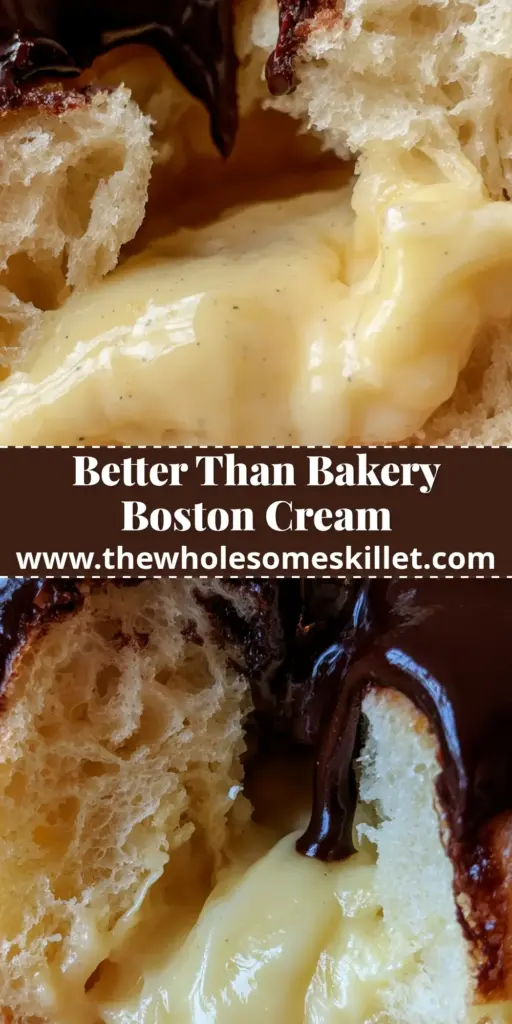
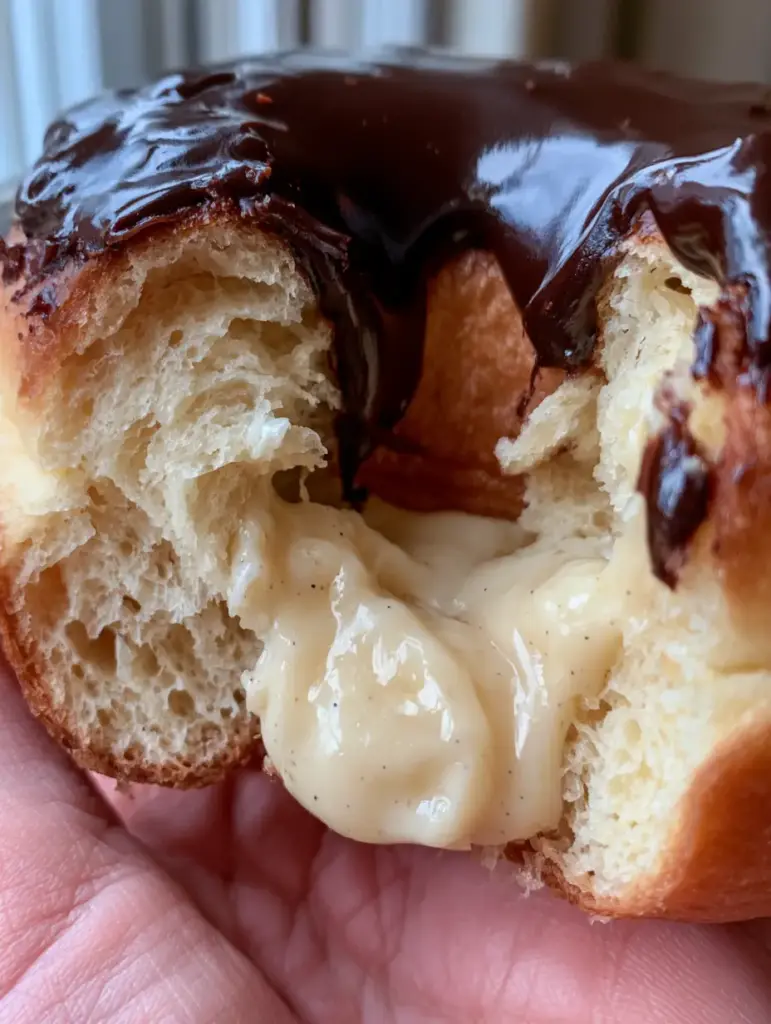
There is nothing quite like the first bite of authentic boston cream donuts, where the resistance of a golden-brown, airy yeast dough gives way to a decadent, oozing center of vanilla bean pastry cream. The visual contrast alone is enough to stop any dessert lover in their tracks: the deep, glossy dark chocolate ganache dripping down the sides of a perfectly proofed shell, revealing a crumb that is as light as a cloud.
Achieving this level of culinary excellence at home requires more than just a basic recipe; it demands an understanding of enriched dough science and the delicate art of tempering egg yolks. This guide provides a forensic deep-dive into creating the exact textures captured in professional bakery displays, ensuring your kitchen smells like a high-end patisserie by morning.

Why This Boston Cream Donut Recipe Stands Above the Rest
- Forensic Crumb Structure: We utilize a high-protein bread flour and a long fermentation process to ensure a soft, airy yeast dough that supports the weight of the filling without becoming dense.
- True Vanilla Bean Infusion: Unlike standard puddings, our custard is flecked with real vanilla bean specks, providing a complex aromatic profile and a thick, luxurious mouthfeel.
- High-Gloss Ganache: By balancing heavy cream with high-quality dark chocolate and a touch of glucose, we achieve a mirror-like finish that remains soft to the touch.
- Optimal Hydration: The dough is scientifically balanced to ensure it sears to a perfect golden-brown in the fryer while remaining moist inside.
The Essential Components for Silky Pastry Cream and Airy Dough
Every ingredient in these boston cream donuts serves a specific chemical purpose. To achieve the professional results seen in our visuals, do not skip these foundational elements.
Bread Flour (500g / 4 cups): The higher protein content is essential for developing the gluten network needed to trap gasses during proofing, resulting in a sturdy yet fluffy donut.
Whole Milk (240ml / 1 cup): Providing both hydration and fats, milk creates a tender crumb and helps the dough achieve that signature golden-brown color through the Maillard reaction.
Egg Yolks (4 large / 72g): In the dough, yolks add richness and emulsifiers; in the pastry cream, they provide the structural thickness and characteristic yellow hue.
Unsalted Butter (75g / 5 tbsp): Incorporated at room temperature, butter coats the gluten strands, ensuring the donut stays soft for hours after frying.
Vanilla Bean (1 whole pod): The specks are not just for show; they provide a depth of flavor that synthetic extracts cannot replicate, cutting through the richness of the heavy cream.
Heavy Cream (120ml / 0.5 cup): Used in both the custard and the ganache to provide the high-fat content necessary for a smooth, “oozing” texture.
Instant Yeast (7g / 2.25 tsp): The biological leavening agent that creates the airy pockets seen in a freshly bitten donut.
If you enjoy experimenting with enriched doughs and decadent fillings, you might also find our guide on Filipino Ensaymada or our creative Peach Cobbler Cheesecake Donuts helpful for mastering these techniques.
Professional Tools for Patisserie-Style Results
To recreate the macro-level detail of a professional donut, you need a few specialized tools. A heavy-bottomed Dutch oven is non-negotiable for maintaining a steady frying temperature of 350°F (175°C).
A digital kitchen scale is highly recommended for measuring ingredients in grams, as volume measurements can vary significantly. You will also need a fine-mesh sieve to ensure your vanilla bean custard is perfectly smooth and free of any cooked egg bits.
Finally, a piping bag fitted with a Bismarck tip (a long, thin nozzle) is essential for injecting the thick vanilla bean custard directly into the center of the fried dough without tearing the crumb.
Mastering the Enriched Yeast Dough
Step 1: The First Proof and Gluten Development
Begin by whisking together your warm milk (110°F / 43°C) and yeast. In the bowl of a stand mixer, combine the flour, sugar, and salt before adding the yeast mixture and egg yolks.
Knead on medium-low speed for about 8 minutes. You are looking for the “windowpane test” cue: a small piece of dough should stretch thin enough to see light through it without tearing.
Once developed, add the softened butter one tablespoon at a time. This delayed fat incorporation allows the gluten to form first, ensuring the boston cream donuts have maximum lift.
Step 2: Shaping and the Final Rise
After a bulk ferment of 90 minutes, or until doubled in size, turn the dough onto a lightly floured surface. Roll it to a thickness of 1/2 inch (1.25cm) and cut circles using a 3-inch (7.6cm) cutter.
Place the rounds on individual squares of parchment paper. This is a pro-tip that allows you to drop the donuts into the oil without touching them, preventing deflation and preserving the airy crumb structure.
Cover and let rise in a warm, draft-free spot for another 45-60 minutes. The donuts should look puffy and feel like marshmallows when lightly poked.
The Science of Thick Vanilla Bean Custard
While the dough rises, prepare the filling. Split the vanilla bean and scrape the seeds into a saucepan with milk and heavy cream. Bring to a gentle simmer to infuse the aromatics.
In a separate bowl, whisk the egg yolks with sugar and cornstarch until pale. Slowly temper the hot milk into the egg mixture to prevent curdling, then return everything to the heat.
Whisk constantly until the mixture thickens into a heavy, pudding-like consistency. Remove from heat and stir in cold butter for a glossy finish, then press plastic wrap directly onto the surface to prevent a skin from forming.
If you love the flavor of cooked creams, you should see how we apply similar techniques to our Creme Brulee Cheesecake Cupcakes.
Frying to a Perfect Golden-Brown
Heat your oil to exactly 350°F (175°C). Carefully lower 2-3 donuts into the oil at a time. Fry for approximately 2 minutes per side.
Watch for the sensory cue: the dough should puff up and develop a distinct “white line” around the center where it sits above the oil line. The exterior should be a deep, even golden-brown.
Drain the donuts on a wire rack over paper towels. It is crucial to let them cool completely before filling, otherwise, the heat will melt the pastry cream and ruin the “oozing” effect.
The Finishing Touch: Glossy Dark Chocolate Ganache
For the coating, heat heavy cream until just boiling and pour it over finely chopped dark chocolate. Let it sit for 2 minutes before whisking from the center outward.
The result should be a thick, dripping ganache. Dip the top half of each filled donut into the warm chocolate, allowing the excess to run down the sides in thick, glossy ribbons.
For an even richer flavor profile, some bakers like to add a teaspoon of Brown Butter Buttercream to their chocolate base, though the classic dark chocolate remains the standard for authentic boston cream donuts.
Expert Tips for Success
- Maintain Oil Temp: If the oil drops below 340°F (171°C), the donuts will absorb grease and become heavy. Use a thermometer constantly.
- Strain the Custard: Always pass your pastry cream through a sieve to ensure that “melt-in-your-mouth” texture shown in the macro photos.
- Don’t Overfill: Stop squeezing the piping bag as soon as you feel resistance or see a tiny bit of cream peek out of the entry hole.
- Proofing Environment: If your kitchen is cold, place the donuts in an oven (turned off) with a bowl of hot water on the bottom rack to create a proofing chamber.
How to Store and Enjoy Your Creations
boston cream donuts are best enjoyed within 4 hours of assembly for the ultimate texture. The contrast between the crisp fried shell and the cold cream is fleeting.
If you must store them, keep them in an airtight container in the refrigerator for up to 24 hours. Note that the ganache may lose its gloss and the dough will naturally firm up due to the starch retrogradation.
We do not recommend freezing fully assembled donuts, as the custard will separate upon thawing. However, you can freeze the fried (unfilled) shells for up to a month.
What to Serve with Custard-Filled Donuts
These donuts are rich and sweet, making them the perfect partner for a bitter espresso or a dark roast coffee. If you are hosting a brunch, they pair beautifully with a fresh Cheesecake Fruit Salad to cut through the decadence.
For a full dessert spread, consider adding lighter options like our Lemon Lava Cakes or a batch of Raspberry Jam Cookies to provide a variety of fruit-forward flavors.
Frequently Asked Questions
While you can bake enriched dough, it will result in a brioche roll texture rather than a classic fried donut. Frying is essential for the specific golden-brown crust and flavor profile of authentic Boston Cream Donuts.
Yes, you can substitute 1 tablespoon of vanilla bean paste or extract, but you will miss the visual ‘specks’ and the deep aromatic complexity that a fresh bean provides.
Adding a small amount of liquid glucose or light corn syrup to your ganache helps keep it flexible and glossy, preventing it from cracking when you bite into the donut.
The signature white line indicates a perfectly proofed, lightweight donut. If yours sank too deep, the dough was likely under-proofed or the oil temperature was too high, causing it to sear before it could expand.
Pastry cream usually fails to thicken because it wasn’t brought to a high enough temperature to activate the cornstarch, or it wasn’t cooked long enough after bubbling. Ensure it reaches a thick, pudding-like consistency on the stove before chilling.
The Ultimate Boston Cream Donut Recipe

Boston Cream Donuts: The Ultimate Guide to Bakery-Quality Custard-Filled Perfection
Ingredients
Equipment
Method
- Combine warm milk, yeast, and sugar. Mix with flour and yolks in a stand mixer. Knead for 8 minutes until gluten forms.
- Add butter one tablespoon at a time until fully absorbed. Proof for 90 minutes until doubled.
- Heat milk, cream, and vanilla bean. Temper into yolks, sugar, and cornstarch. Cook until thick.
- Stir in butter, strain through a sieve, and chill with plastic wrap on the surface.
- Fry 3-inch dough rounds in 350°F (175°C) oil for 2 minutes per side. Let cool completely.
- Pipe cold custard into the center. Dip the tops in warm chocolate ganache.
Notes
Ensure the custard is cold before piping to prevent melting.
Share Your Baking Journey
Mastering the boston cream donuts is a true badge of honor for any home cook. The combination of technical dough work and precise pastry cream construction yields a result that far exceeds anything bought at a drive-thru.
If you found this guide helpful, please leave a comment below and let us know how your donuts turned out! Don’t forget to follow us on Pinterest and pin the images below to save this recipe for your next weekend baking project.