There is something inherently magical about a dessert that transforms in the oven into a multi-textured masterpiece. The Brazilian coconut cake, often referred to as Bolo de Coco, is exactly that—a sensory journey that starts with a golden, buttery crust and ends in a dense, fudgy, custard-like center that melts on the tongue. If you have been searching for a cake that bridges the gap between a traditional sponge and a rich pudding, this is the ultimate discovery.
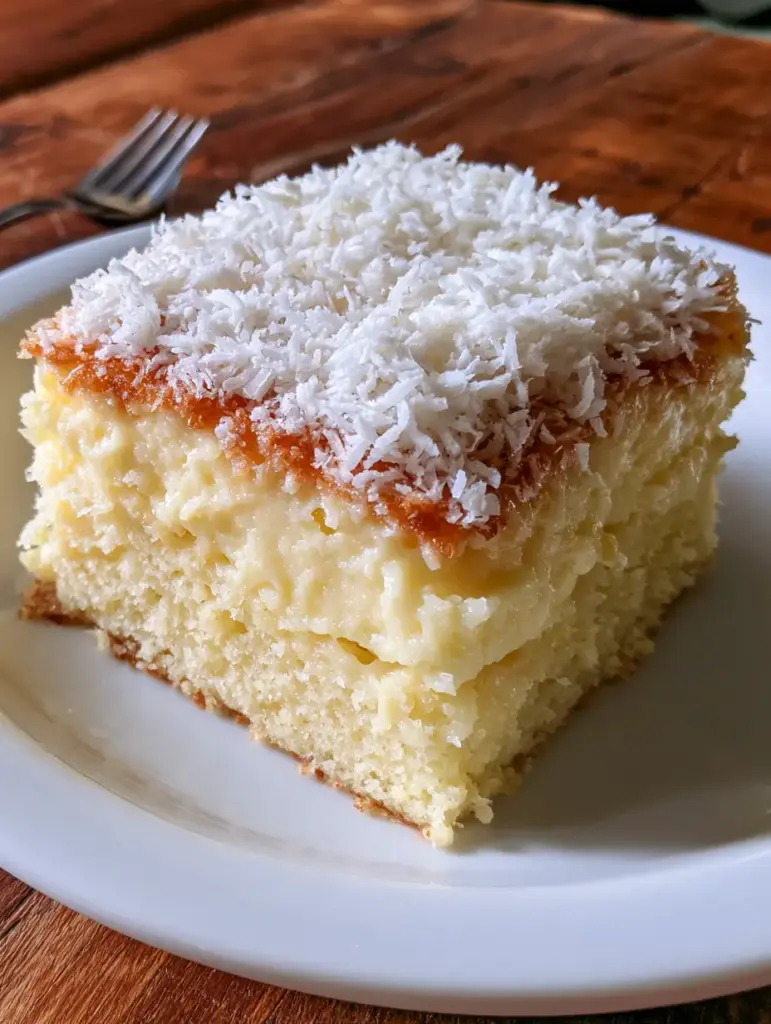
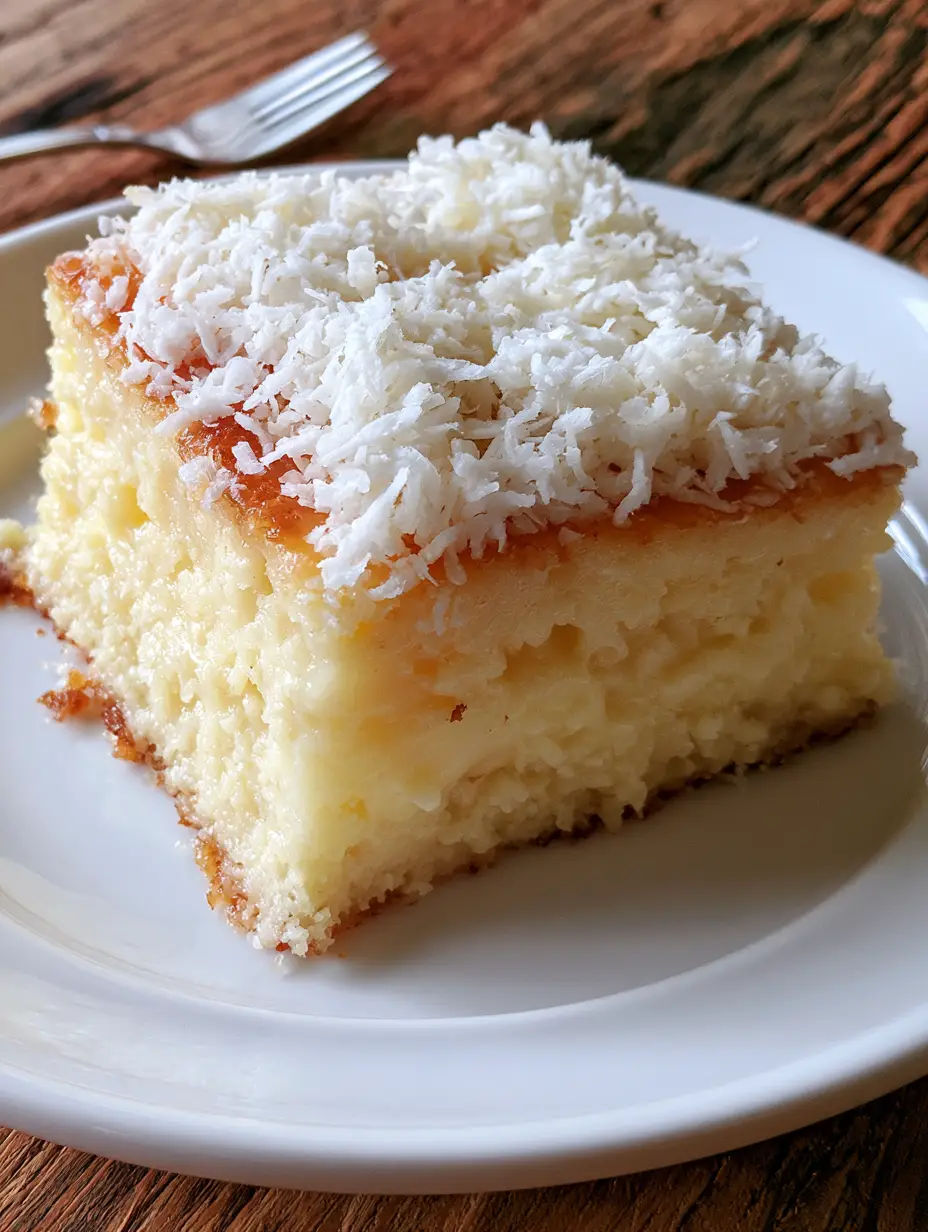
Imagine standing in a sun-drenched kitchen, the soft morning sunlight hitting a thick square slice of cake resting on a simple white plate. You see the gentle glow reflecting off fluffy white coconut flakes that crown a moist, pudding-like interior. This isn’t just a cake; it is a tropical escape captured in a single bite. The aroma of toasted coconut and sweetened condensed milk fills the air, promising a level of decadence that few other recipes can match.
What sets this Brazilian coconut cake apart is its unique structural duality. While the edges bake to a beautiful golden-brown, providing a slight resistance to the fork, the heart of the cake remains creamy and fudgy. This isn’t an airy chiffon; it is a substantial, indulgent treat designed for those who believe the best part of a dessert is its richness. Let’s dive into the culinary science and traditional techniques required to master this Brazilian staple.
Why This Is the Only Brazilian Coconut Cake Recipe You Need
- Unmatched Texture: We utilize a specific ratio of three types of milk to create a center that is scientifically closer to a custard than a crumb.
- Visual Brilliance: The recipe is engineered to produce those coveted golden-brown edges that provide a professional, bakery-style finish.
- Dual-Layer Magic: By balancing full-fat coconut milk with large eggs, the cake naturally settles into a dense, fudgy base with a lighter, coconut-topped surface.
- Morning-Light Ready: This cake is as beautiful as it is delicious, making it the perfect centerpiece for a brunch or a high-end dessert spread.
Essential Ingredients for a Fudgy Custard Texture
Creating a cake this dense and creamy requires high-quality fats and specific proteins. Every ingredient in this list serves a forensic purpose in achieving the visual and textural goals of the perfect Brazilian coconut cake.
Full-Fat Coconut Milk (13.5oz / 400ml): This is the soul of the cake. The high fat content ensures the “pudding-like” center remains moist and carries the tropical flavor throughout every crumb.
Sweetened Condensed Milk (14oz / 397g): More than just a sweetener, this provides the “fudgy” structural integrity. It caramelizes slightly during the bake, contributing to the golden edges.
Whole Milk (1 cup / 240ml): We use whole milk to thin the batter just enough to allow the flour to hydrate without becoming tough or overly bready.
All-Purpose Flour (2 cups / 250g): This provides the necessary framework. We use just enough to hold the custard together while maintaining that “creamy” interior described in the visual blueprint.
Unsalted Butter (1/2 cup / 113g, melted): Butter provides the “shortness” to the bite. It helps create the golden-brown crust and adds a richness that coconut oil simply cannot replicate.
Large Eggs (4 units): Eggs act as the emulsifier and the primary rising agent. In this recipe, they help the cake set into a custard rather than a liquid mess.
Granulated Sugar (1 cup / 200g): Beyond sweetness, sugar aids in the browning process (Maillard reaction) to ensure the exterior reaches that perfect golden hue.
Freshly Shredded Coconut Flakes (1.5 cups / 100g): These are divided between the batter and the topping. The flakes on top provide the “fluffy white” visual contrast seen in the morning sunlight photography.
Fine Sea Salt (1/2 tsp / 3g): An invisible but critical ingredient. Salt cuts through the heavy sweetness of the condensed milk and intensifies the natural coconut profile.
Baking Powder (1 tbsp / 12g): This provides a tiny bit of lift to ensure the cake isn’t a solid brick, but rather a “dense and fudgy” delight.
Professional Equipment for the Perfect Square Slice
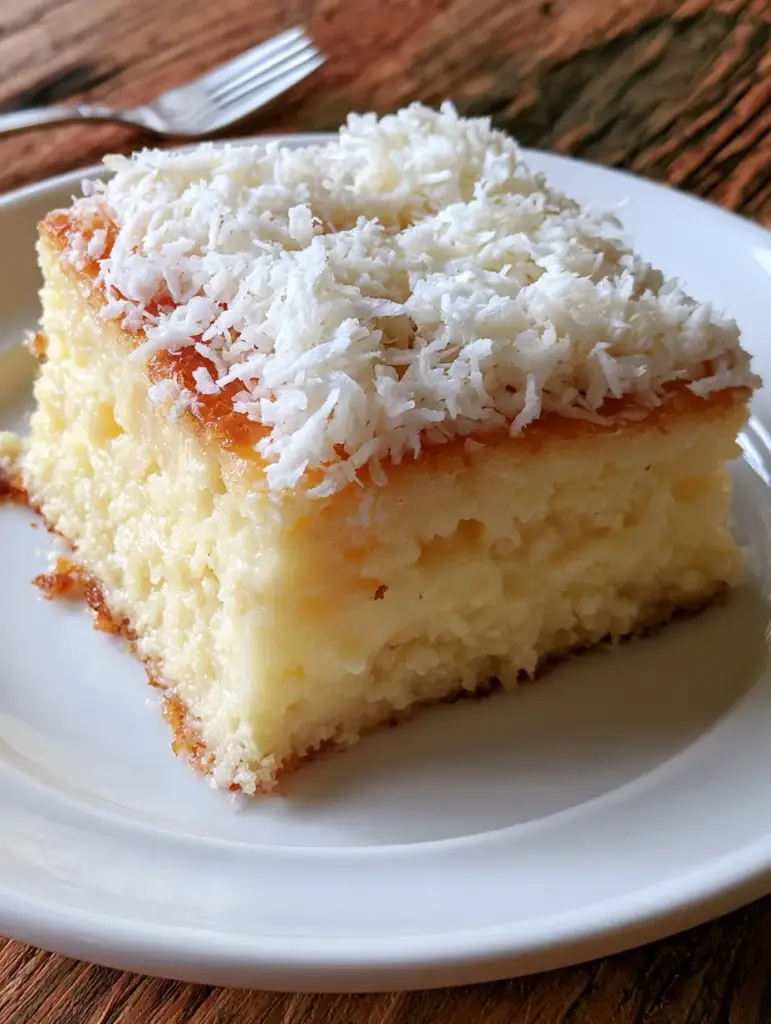
To achieve the “thick square slice” look from our visual guide, you need the right tools. A standard 9×9 inch (23x23cm) square baking pan with high sides is non-negotiable. This depth allows the custard center to develop without the cake drying out.
I also recommend using a heavy-duty whisk or a stand mixer to ensure the condensed milk is fully incorporated. For the visual finish, a microplane or a fine grater can be used if you are starting with fresh coconut, though high-quality bagged shredded coconut works beautifully for that “fluffy” topping.
Step-by-Step Instructions to Achieve a Creamy Center
1. Preparing the Tropical Base
Preheat your oven to 350°F (175°C). Grease your 9×9 inch pan generously with butter. In a large mixing bowl, whisk together the melted unsalted butter and granulated sugar until the mixture looks like wet sand. Add the eggs one at a time, beating vigorously after each addition. You are looking for the mixture to lighten in color—this ensures a smooth, non-grainy finish in the final bake.
2. The Triple-Milk Emulsion
Slowly pour in the sweetened condensed milk, full-fat coconut milk, and whole milk. This is the moment where the “creamy custard center” is born. Whisk until the liquids are perfectly homogenous. You’ll notice the batter is much thinner than a standard cake batter; do not be alarmed. This high liquid-to-dry ratio is exactly how we achieve the pudding-like texture.
3. Incorporating the Dry Framework
Sift the all-purpose flour, baking powder, and salt into the wet ingredients. Fold gently with a spatula. Over-mixing at this stage will develop gluten, which we want to avoid to keep the cake “fudgy” rather than “chewy.” Fold in half of the shredded coconut flakes. The flakes will suspend in the batter, providing texture in every bite.
4. The Golden-Brown Bake
Pour the batter into the prepared pan. Bake for 45-55 minutes. Watch for the visual cues: the edges should be a deep golden-brown and starting to pull away slightly from the sides of the pan. The center should still have a slight “jiggle” when shaken gently—this is the secret to the custard interior. If the top browns too quickly, tent it loosely with foil.
5. The Finishing Coconut Topping
Once the cake is removed from the oven, immediately sprinkle the remaining fluffy white shredded coconut flakes over the top. The residual heat will help them adhere. Allow the cake to cool completely in the pan. This is crucial; the custard center needs time to “set” as it cools, transforming from a liquid state to a dense, fudgy consistency.
Expert Tips for Success
- Room Temperature Ingredients: Ensure your eggs and milks are at room temperature. Cold liquids can cause the melted butter to seize, resulting in a speckled, uneven texture.
- The Jiggle Test: Treat this like a cheesecake. If the center is firm to the touch, you’ve overbaked it. It should move like firm gelatin when the pan is tapped.
- Quality of Coconut: If possible, use unsweetened shredded coconut for the topping to balance the sweetness of the condensed milk inside the cake.
- The Soak Method: For an even more “moist” result, some traditionalists poke holes in the cake while warm and pour an extra 1/4 cup of coconut milk over the top before adding the flakes.
Storage, Reheating, and Freezing Advice
Because of the high dairy and coconut milk content, this cake should be stored in the refrigerator. Cover it tightly with plastic wrap to prevent it from absorbing other fridge odors. It will stay fresh and fudgy for up to 5 days.
To reheat, place a square slice in the microwave for 15-20 seconds. This softens the butter and fats, returning the center to its creamy, pudding-like state. You can also freeze individual slices wrapped in parchment paper and foil for up to 3 months. Thaw in the refrigerator overnight before serving.
What to Pair With Brazilian Coconut Cake
This cake is incredibly rich, so it pairs best with items that offer a bit of acidity or a different textural contrast. A strong cup of black Brazilian coffee is the traditional accompaniment, as the bitterness cuts through the creamy sweetness.
If you are looking for more tropical inspiration, consider serving this alongside a Pineapple Coconut Fluff for a light, airy contrast. If you’re planning a full dessert bar, this cake stands out next to a Dark Chocolate Layer Cake or even a decadent Banana Pudding Cheesecake. For those who can’t get enough coconut, pairing it with a side of Coconut Rice Pudding creates a beautiful monochromatic dessert plate.
If you’re serving this as part of a brunch, start the meal with something savory like Garlic Parmesan Chicken and Potatoes to balance the palate before moving into the sweet, custard-filled finale.
Frequently Asked Questions
No, coconut flour is highly absorbent and will ruin the fudgy texture. This recipe requires all-purpose flour to create the necessary structural framework for the milk-heavy batter.
Yes, the condensed milk is vital for the dense and fudgy consistency. It provides a unique sugar-and-protein structure that regular sugar and milk cannot replicate.
Apply the coconut flakes immediately after the cake comes out of the oven. The slight moisture and heat will help them stick without wilting them or making them crunchy.
While it can be served at room temperature, it is traditionally served cold (Bolo Gelado) or slightly chilled to enhance the creamy, custard-like mouthfeel.
This cake is intended to have a ‘pudding-like’ center. However, if it is liquid rather than a set custard, it may be underbaked. Ensure the edges are golden-brown and the cake has cooled completely to set the fats.
The Ultimate Brazilian Coconut Cake Recipe Card
Brazilian Coconut Cake with a Rich Custard Center (Bolo de Coco)
Ingredients
Equipment
Method
- Whisk melted butter and sugar in a large bowl until lightened. Add eggs one at a time, whisking vigorously after each until the mixture is smooth.
- Slowly stir in the coconut milk, sweetened condensed milk, and whole milk until the batter is a consistent liquid.
- Sift in the flour, baking powder, and salt. Fold gently with a spatula until just combined. Stir in half of the coconut flakes.
- Pour into a greased 9x9 pan. Bake at 350°F (175°C) for 45-55 minutes until the edges are golden-brown and the center has a slight jiggle.
- Remove from oven and immediately top with remaining coconut flakes. Cool completely in the pan to allow the custard center to set fully.
Notes
Wait until the cake is completely cool before slicing to ensure the square shape holds.
Bring the Flavors of Brazil into Your Kitchen
The Brazilian coconut cake is more than just a recipe; it is a celebration of simple ingredients transformed by heat and time into something extraordinary. Whether you are enjoying a slice in the soft morning light or serving it as the grand finale to a dinner party, its dense, fudgy texture and creamy custard center are guaranteed to impress.
If you enjoyed this recipe, please leave a comment below and let me know how your custard center turned out! Don’t forget to sign up for our newsletter for more elite culinary blueprints. You can also save this recipe to your favorite boards by following us on Pinterest.