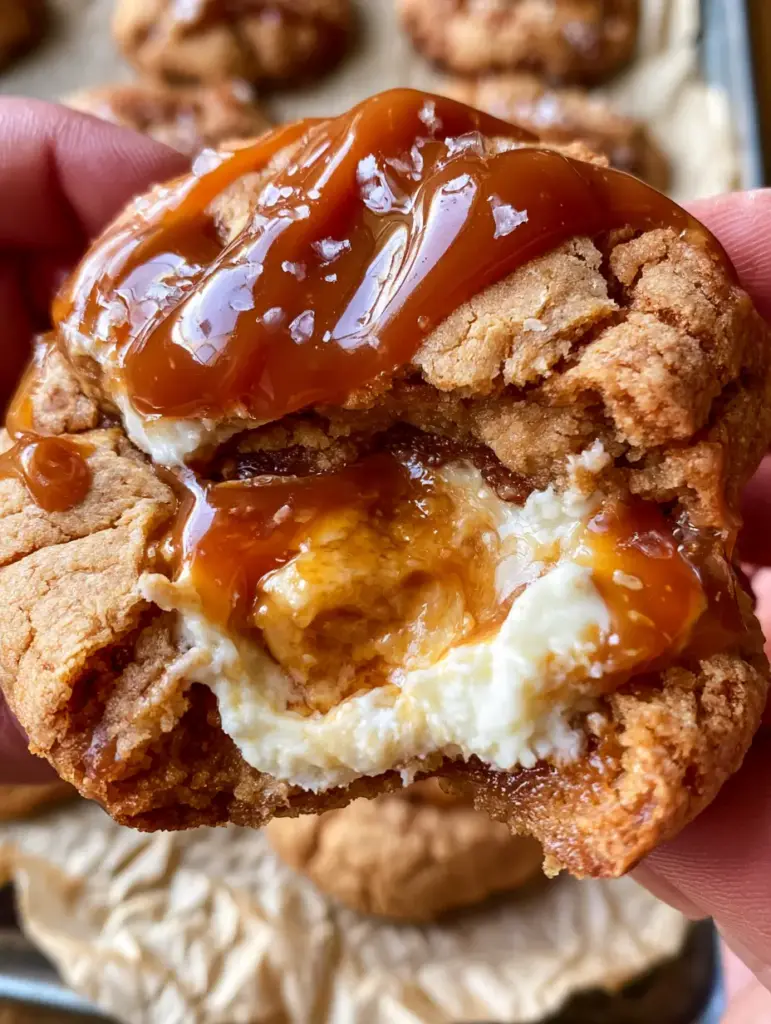
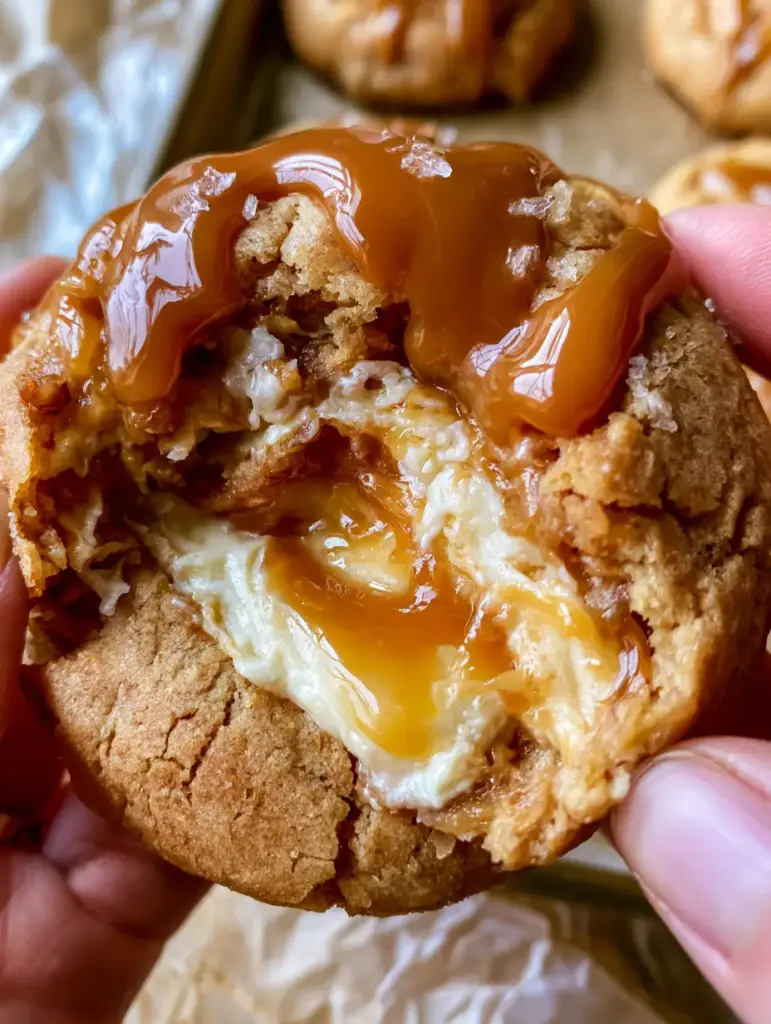
There is a specific, heart-stopping moment when you pull apart a warm, thick cookie and the world seems to go quiet. The caramel cheesecake cookies we are crafting today are designed for that exact sensory experience. Imagine a rustic, golden-brown exterior that shatters slightly under your thumb, revealing a velvety, snow-white cheesecake center that bleeds into a pool of molten, liquid gold caramel.
Every bite of these caramel cheesecake cookies is a masterclass in contrast. You get the crunch of the coarse sea salt flakes hitting your tongue, followed immediately by the deep, buttery notes of brown sugar dough and the tangy hit of premium cream cheese. We aren’t just baking cookies; we are engineering a multi-textural dessert that looks like it stepped right out of a high-end boutique bakery.
This recipe is inspired by the “stuffed” cookie movement, where the humble biscuit is transformed into a handheld dessert. By using natural window light to capture the glistening caramel drizzle and the fine grains of sea salt, these cookies become a visual masterpiece as much as a culinary one. Get your parchment paper ready—this is the only cookie recipe you will ever need for your next gathering.
Why These Caramel Cheesecake Cookies Outperform Every Other Recipe
- The Dual-Core Technology: Unlike basic cookies, these feature a distinct “inner heart” of creamy vanilla cheesecake and a secondary core of liquid salted caramel for maximum “gooey-ness.”
- Scientifically Soft Dough: We use a high ratio of brown sugar and a touch of cornstarch to ensure the cookie stays soft for days, mimicking that professional bakery texture.
- The Visual Crackle: Through specific temperature control, we achieve a rustic, golden-brown cracked texture on the exterior that provides a satisfying snap before the soft center.
- Gourmet Salt Balance: The addition of coarse sea salt flakes cuts through the richness of the white cheesecake filling, preventing the dessert from being cloying.
The Anatomy of an Elite Stuffed Cookie: Essential Ingredients
Unsalted Butter (1 cup / 225g): We use high-fat European-style butter, softened to exactly 65°F (18°C). This ensures the fat emulsifies perfectly with the sugars, creating a sturdy enough structure to hold the cheesecake filling without collapsing.
Dark Brown Sugar (1 ¼ cups / 250g): The high molasses content in dark brown sugar provides the deep, caramel-like flavor of the dough and contributes to the “soft-bake” texture we see in the visual prompt. It creates that beautiful golden-brown hue.
Granulated White Sugar (½ cup / 100g): While brown sugar adds moisture, white sugar is essential for those crisp, cracked edges. It helps the cookie spread just enough to reveal the filling when pulled apart.
Large Eggs (2 units): These provide the protein structure needed to encapsulate the heavy cheesecake center. Ensure they are at room temperature to prevent the butter from curdling during the creaming process.
Vanilla Bean Paste (1 tbsp / 15ml): We use paste instead of extract to get those beautiful black specks visible in the creamy vanilla cheesecake center. It adds a sophisticated, floral aroma that elevates the entire profile.
All-Purpose Flour (3 cups / 375g): This is our structural foundation. We measure by weight to ensure the cookies aren’t cakey or dry, maintaining the “handheld smartphone photo” aesthetic of a thick, substantial cookie.
Cornstarch (1 tsp / 3g): Our secret weapon for “velvety” dough. Cornstarch softens the proteins in the flour, resulting in a cookie that is tender and melt-in-your-mouth soft.
Full-Fat Cream Cheese (8 oz / 225g): Do not use low-fat or tub varieties. Block cream cheese is necessary for the stability of the “velvety white cheesecake filling,” ensuring it doesn’t bake away into the dough.
Liquid Salted Caramel Sauce (½ cup / 120ml): This provides the “melting golden caramel core.” We recommend a high-quality, thick sauce that remains viscous even after cooling.
Coarse Sea Salt Flakes (1 tsp / 5g): These are the “fine grains of sea salt” visible on the caramel drizzle. They provide a sharp textural contrast and enhance the sweetness of the caramel.
The Professional Baker’s Toolkit
To achieve the high-resolution texture of the soft dough and the liquid caramel seen in our visual guide, you will need a few specific tools. A large cookie scoop (3 tbsp capacity) is non-negotiable for creating uniform, thick cookies that can house the stuffing. You will also need heavy-duty parchment paper; this prevents the sugars in the caramel from sticking to the tray, ensuring a clean “pull-apart” shot.
A stand mixer with a paddle attachment is preferred for aerating the butter and sugar without overworking the flour. Finally, ensure you have a wire cooling rack. Cooling these caramel cheesecake cookies directly on the hot pan for too long will overcook the delicate cheesecake center, turning it grainy instead of velvety.
The Step-by-Step Architecture of the Perfect Cookie
Phase 1: Engineering the Cheesecake Core
In a medium bowl, beat the room temperature cream cheese, powdered sugar, and vanilla bean paste until completely smooth. You are looking for a glossy, thick consistency. Use a small teaspoon to drop 18 individual dollops onto a tray lined with parchment paper.
Here is the critical step: freeze these dollops for at least 30 minutes. If the cheesecake center isn’t frozen solid, it will merge with the cookie dough during baking, and you will lose that distinct white center visible in the “pulled apart” photo. While those freeze, you can begin the dough.
Phase 2: Crafting the Soft Brown Sugar Dough
Cream your softened butter and both sugars on medium-high speed for 3-4 minutes. You are looking for a visual change: the mixture should turn pale and fluffy. This aeration creates the “rustic, golden-brown cracked texture” later in the oven.
Add the eggs one at a time, followed by the vanilla. In a separate bowl, whisk together your flour, cornstarch, baking soda, and salt. Turn the mixer to low and slowly add the dry ingredients. Stop the moment no streaks of flour remain; overmixing will lead to a tough, bready cookie instead of a soft dough.
Phase 3: The Assembly and Stuffing Technique
Take a large ball of dough (about 2.5 tbsp) and flatten it into a disc in your palm. Place one frozen cheesecake dollop in the center. Carefully fold the edges of the dough over the cheesecake, sealing it completely so no white is showing. Roll it into a smooth ball.
Arrange the balls on your crumpled parchment paper, leaving at least 3 inches of space between them. These cookies are thick and will spread slightly. Chill the entire tray for another 15 minutes before baking to ensure the “warm, thick” profile is maintained.
Phase 4: The Bake and Sensory Cues
Bake at 350°F (175°C) for 11-13 minutes. You are looking for the “Visual & Sensory Cues”: the edges should be a deep golden-brown and the tops should have developed those characteristic cracks, but the center should still look slightly underbaked and “soft.”
As soon as they come out, use the back of a spoon to create a slight indentation in the center of each cookie. This “nest” will hold our liquid gold. Allow them to cool on the pan for 10 minutes to set their structure.
Phase 5: The Caramel Drizzle and Finishing Touches
Heat your salted caramel sauce until it is “thick and glossy.” Drizzle it artistically over the cookies, letting it pool in the center indentation and run down the sides. While the caramel is still wet, sprinkle the fine grains of sea salt over the top.
Expert Tips for Bakery-Quality Success
- The Temperature Rule: If your dough feels greasy or too soft, chill it. Cold dough equals less spread and a thicker, more “handheld” cookie experience.
- The “Soothe” Method: If your cookies come out of the oven looking a bit wonky in shape, immediately place a circular glass or cookie cutter over them and gently scoot them in a circular motion to “round” the edges while they are still soft.
- Avoid the Leak: Ensure your cheesecake balls are placed exactly in the center of the dough. If they are too close to the bottom, the cheesecake will burst through and stick to the parchment paper.
- Salt Selection: Use Maldon or Fleur de Sel for the topping. Table salt will be too salty, whereas flakes provide the “glistering” look from the Midjourney prompt.
Maximizing Your Cookie Experience: Storage and Reheating
Because these contain a real cream cheese center, they should be stored in an airtight container in the refrigerator for up to 5 days. However, to get that “melting golden caramel core,” you must reheat them. Microwave a single cookie for 10-15 seconds before serving.
For long-term storage, these cookies freeze beautifully. You can freeze the unbaked, stuffed dough balls for up to 3 months. When the craving hits, bake them directly from frozen, adding 2-3 minutes to the total baking time. This is perfect for fans of fruit-filled cookie varieties who love a prepared snack.
What to Serve With Caramel Cheesecake Cookies
These cookies are incredibly rich, so they pair best with beverages that offer a bit of acidity or bitterness. A dark roast coffee or a cold brew is the perfect companion. If you are looking to create a full dessert spread, consider pairing these with a lighter cheesecake-inspired fruit salad to balance the palate.
If you’re hosting a party, these look stunning next to other stuffed treats like strawberry cheesecake cookies or even fudgy brownie cheesecake bars. The contrast between the golden caramel and deep chocolate or bright berries makes for a world-class dessert table.
Frequently Asked Questions
You can substitute the all-purpose flour with a high-quality 1:1 gluten-free flour blend. Ensure it contains xanthan gum to maintain the structural integrity needed to hold the cheesecake stuffing.
Yes, but ensure it is a thick, high-quality salted caramel. If the sauce is too thin, it will absorb into the dough rather than creating that glistening, liquid gold core.
Yes, because of the real cream cheese center, these cookies should be stored in the fridge. Simply reheat them for 10 seconds in the microwave to bring back the gooey caramel texture before eating.
The cracks are achieved by the interaction between granulated sugar and a hot oven. Chilling the dough before baking also helps the exterior set quickly while the inside expands, creating those beautiful fissures.
This usually happens if the cheesecake dollops weren’t frozen solid before stuffing. Ensure they spend at least 30 minutes in the freezer so they maintain their ‘velvety white’ identity during the bake.
The Ultimate Caramel Cheesecake Cookies Recipe
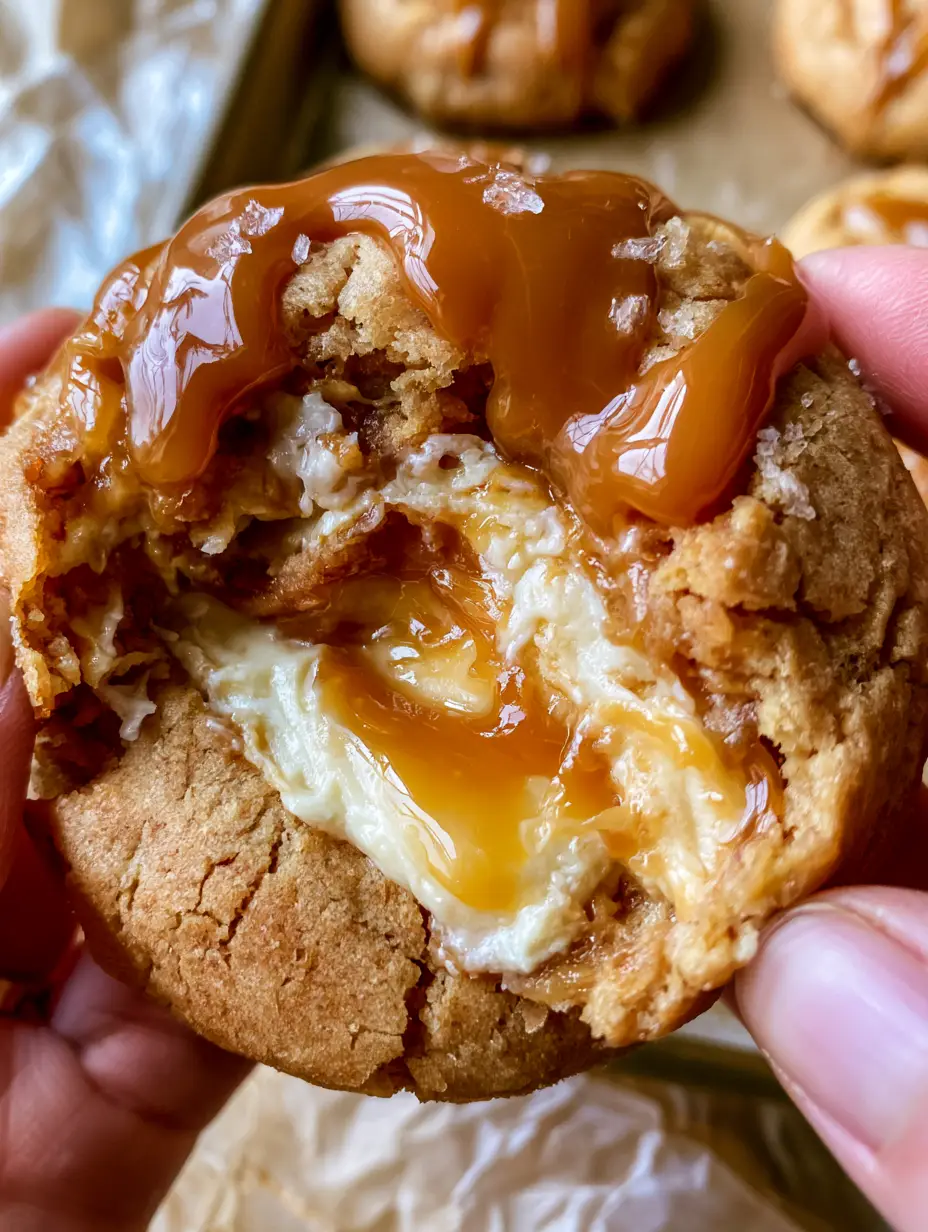
Caramel Cheesecake Cookies with Gooey Salted Caramel Core
Ingredients
Equipment
Method
- Beat cream cheese, powdered sugar, and vanilla until smooth.
- Drop 18 teaspoon-sized dollops onto parchment and freeze for 30 minutes until solid.
- Cream butter and sugars for 3-4 minutes until pale and fluffy.
- Mix in eggs and dry ingredients until just combined.
- Wrap 2.5 tbsp of dough around each frozen cheesecake dollop, sealing tightly.
- Bake at 350°F (175°C) for 11-13 minutes until edges are golden and tops are cracked.
- Drizzle with warm caramel sauce and sprinkle with sea salt flakes while warm.
Notes
Reheat for 10 seconds to restore the liquid caramel core texture.
Share the Love and Join Our Baking Community!
There is nothing quite like the satisfaction of mastering the caramel cheesecake cookies. We want to see your “cookie pull” shots! If you bake these, please tag us and share your results on Pinterest. Your feedback helps us refine our culinary science and brings more delicious recipes to home cooks around the world.
Don’t forget to sign up for our newsletter to get more “forensic” recipe breakdowns delivered straight to your inbox. Whether you’re a fan of seasonal pumpkin cheesecake or classic bakes, we have something for every enthusiastic home cook.