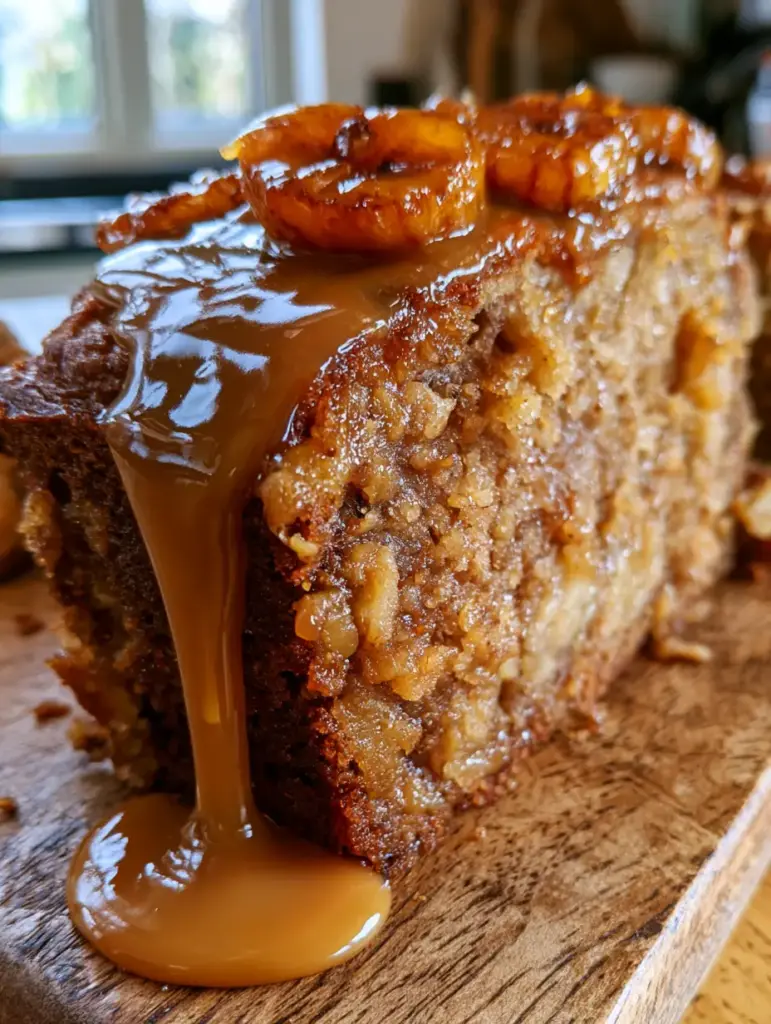
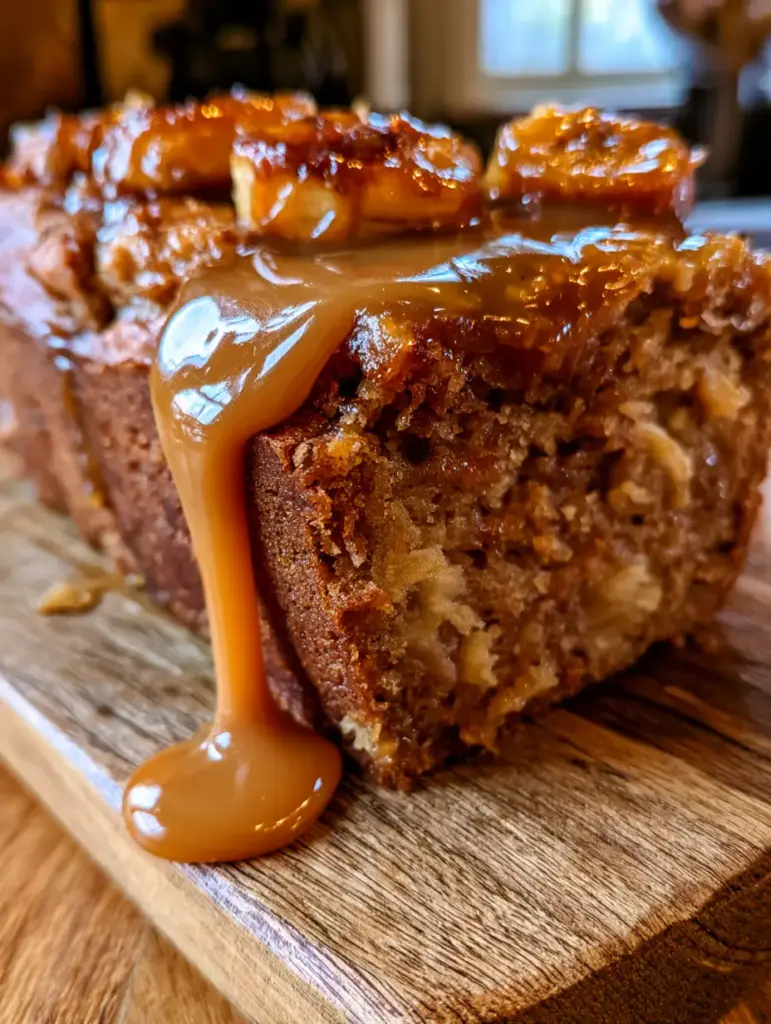
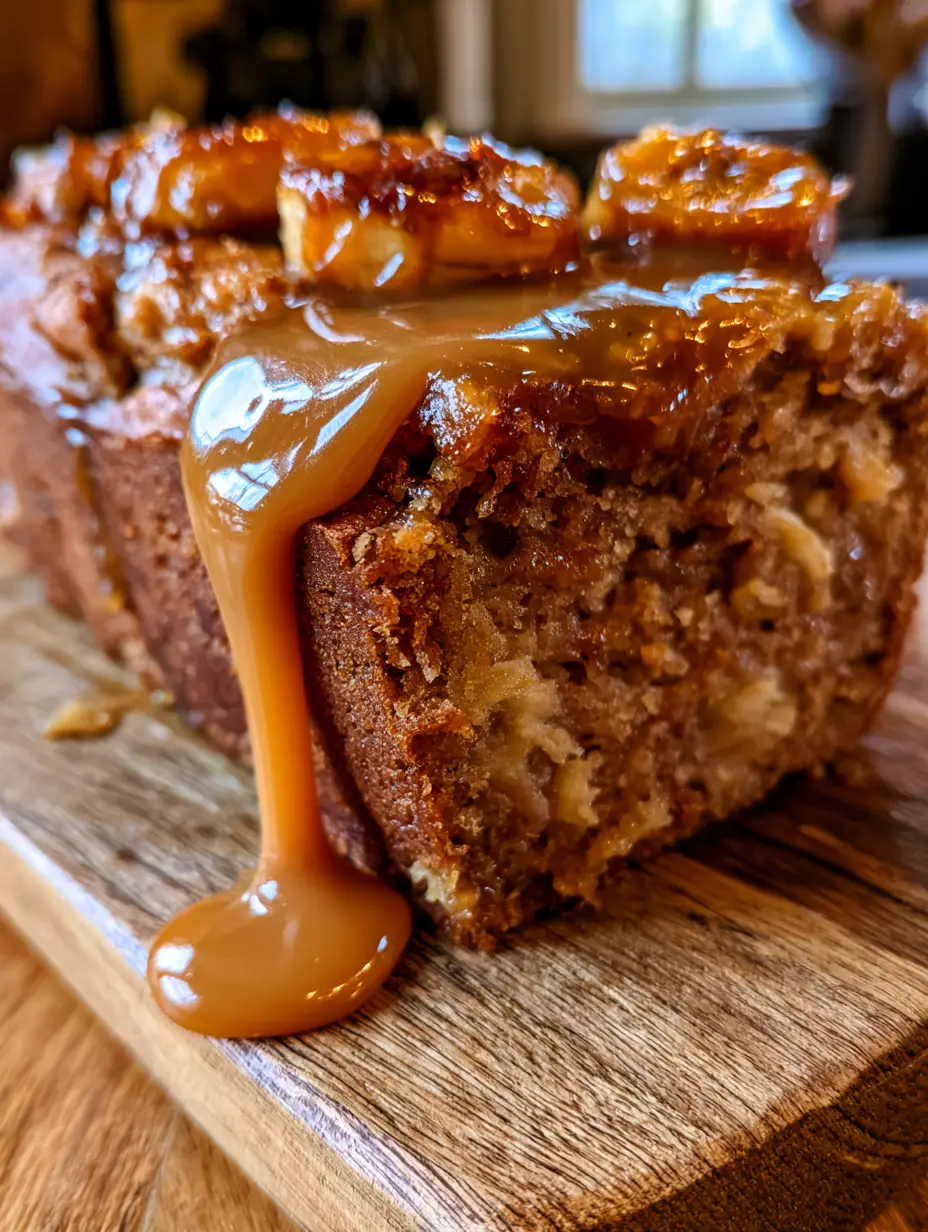
Imagine a thick, warm slice of the most indulgent banana bread you have ever tasted, dripping with a rich, amber-hued caramel. This dulce de leche bread is not just a snack; it is a sensory experience that bridges the gap between a rustic morning loaf and a decadent plated dessert.
The visual appeal is undeniable—a golden-brown crust yielding to an ultra-moist crumb, punctuated by visible chunks of sweet mashed banana. Every bite offers the perfect balance of deep caramel sweetness and the sharp crystalline crunch of sea salt flakes.
Whether you are serving this for a special brunch or as an evening treat, the way the thick dulce de leche glaze captured mid-drip clings to the sides of the bread makes it impossible to resist. This recipe is designed for those who appreciate the finer details of culinary texture and flavor harmony.
Why You Will Fall in Love with This Decadent Loaf
- Unmatched Moisture Content: The combination of overripe bananas and sour cream ensures a crumb that stays soft for days.
- Multidimensional Sweetness: We move beyond plain sugar by utilizing the deep, milky notes of dulce de leche and the burnt-sugar complexity of caramelized banana rounds.
- Professional Visual Appeal: With the glossy amber drip and golden banana crowns, this loaf looks like it came straight from a high-end artisanal bakery.
- Flavor Contrast: The addition of sea salt flakes cuts through the richness, highlighting the tropical notes of the fruit and the creaminess of the caramel.
The Secret Ingredients for the Fluffiest Dulce de Leche Bread
To achieve the specific visual and textural results seen in our professional kitchen, we must look beyond basic pantry staples. Every ingredient in this dulce de leche bread serves a specific scientific purpose in the baking process.
Overripe Bananas (3 large): You want bananas that are covered in black spots. The starch-to-sugar conversion at this stage provides the “ultra-moist crumb” and intense natural sweetness required for this loaf.
Dulce de Leche (1/2 cup (150g) for batter, 1/4 cup (75g) for glaze): This thick, milk-based caramel provides a unique viscosity and a flavor profile that standard caramel sauce simply cannot match. You can even use it as a base for other treats like biscoff mini cheesecakes.
All-Purpose Flour (2 cups (250g)): This provides the structural framework for the bread. We use a precise measurement to ensure the loaf isn’t heavy or dry, maintaining that “rich crumb” texture.
Unsalted Butter (1/2 cup (113g), melted): Melted butter contributes to the moist, dense texture while providing a fat source that carries the flavor of the banana throughout the palate.
Dark Brown Sugar (3/4 cup (150g)): The molasses content in dark brown sugar aids in the “golden-brown crust” development and adds a hint of chewiness to the exterior.
Full-Fat Sour Cream (1/4 cup (60g)): The acidity in sour cream tenderizes the gluten and adds a subtle tang that balances the sweetness of the glaze. It is a trick often used in carrot cake banana bread to keep the texture consistent.
Large Eggs (2): These act as the primary binder and provide the necessary lift. Ensure they are at room temperature to emulsify properly with the fats.
Baking Soda (1 tsp (5g)): This leavening agent reacts with the acidic sour cream to create tiny air pockets, ensuring the bread isn’t overly dense.
Caramelized Banana Topping: We use one firm banana sliced into rounds and sautéed in 1 tbsp (15g) of butter and 1 tbsp (12g) of sugar. This creates the “caramelized banana rounds” seen in the visual blueprint.
Sea Salt Flakes: A generous sprinkle of Maldon or similar flaky salt is essential to provide that visual sparkle and flavor pop described in the prompt.
Essential Tools for Artisanal Baking Results
To recreate the “rustic wooden cutting board” aesthetic and the perfect bake, you will need a few specific tools. Precision is key when working with high-sugar batters like this one.
A standard 9×5 inch (23x13cm) loaf pan is the ideal vessel for this bread. I recommend using a light-colored metal pan rather than glass to ensure the “golden-brown crust” develops evenly without burning the edges.
A heavy-bottomed skillet is required for the caramelized bananas. The even heat distribution allows the sugars to brown into a deep amber without scorching. If you enjoy this technique, you might also like making air fryer bananas for a quicker snack.
A wire whisk and a sturdy rubber spatula are your best friends here. You want to fold the ingredients together gently to avoid over-developing the gluten, which would ruin the moist crumb.
Step-by-Step Instructions to Mastering This Loaf
Preparing the High-Moisture Batter
Start by preheating your oven to 350°F (175°C). Grease your loaf pan thoroughly and line it with parchment paper, leaving an overhang on the sides for easy removal.
In a large mixing bowl, mash your bananas until they are mostly smooth but still have those “visible mashed banana chunks.” Whisk in the melted butter, dark brown sugar, eggs, and sour cream until the mixture is glossy and well-combined.
Gently fold in the dulce de leche. Do not over-mix; you want the caramel to be somewhat marbled through the batter to create pockets of intense flavor.
Mixing the Dry Components
In a separate bowl, sift together the flour, baking soda, and a pinch of fine salt. Slowly incorporate the dry ingredients into the wet banana mixture using a spatula.
Stop mixing the moment no more streaks of white flour are visible. This “low-agitation” method is the secret to the ultra-moist crumb mentioned in the Midjourney prompt.
Creating the Caramelized Banana Rounds
While the oven is finishing its preheat, melt a tablespoon of butter in your skillet over medium-high heat. Place the banana rounds in a single layer and sprinkle with sugar.
Sauté for 2-3 minutes per side until they develop a deep, sticky, caramelized coating. These will be placed on top of the batter before baking to create that “crowned” visual effect.
Baking and Achieving the Golden Crust
Pour the batter into the prepared pan and smooth the top. Arrange the caramelized banana rounds carefully across the surface. Bake for 55-65 minutes.
You are looking for a “golden-brown crust” that feels firm to a light touch. A toothpick inserted into the center should come out with just a few moist crumbs clinging to it.
The Final Dulce de Leche Drip
Allow the bread to cool in the pan for 10 minutes before transferring it to a wire rack. While the bread is still warm, heat your remaining dulce de leche in the microwave for 15 seconds until it reaches a pourable consistency.
Slowly pour the caramel over the center of the loaf, letting it create that iconic “amber dulce de leche mid-drip” down the sides. Finish with a shower of sea salt flakes.
Expert Tips for Success
- Temperature Control: Ensure your dulce de leche is slightly warm before drizzling. If it is too cold, it won’t “ooze” down the side; if it is too hot, it will soak into the bread rather than sitting on top.
- Banana Ripeness: If your bananas aren’t ripe enough, roast them in their skins at 300°F (150°C) for 15 minutes until black. This mimics the natural sugar development.
- Don’t Skip the Salt: The sea salt flakes are functional. They balance the high sugar content of the dulce de leche, making the bread taste sophisticated rather than cloying.
- Tent with Foil: If the crust is browning too quickly before the center is set, loosely tent the pan with aluminum foil for the last 15 minutes of baking.
How to Store and Reheat Your Dulce de Leche Bread
This bread stores beautifully thanks to its high moisture content. Keep it in an airtight container at room temperature for up to 3 days. The flavors actually deepen on the second day.
For longer storage, you can refrigerate the loaf for up to a week, though the cold may slightly firm up the caramel glaze. To freeze, wrap individual slices (without the glaze if possible) in plastic wrap and store in a freezer bag for 3 months.
To achieve that “warm banana bread” experience from the photo, reheat a slice in the microwave for 15-20 seconds. This will reactivate the dulce de leche and make it sticky and delicious once more.
What to Serve With This Decadent Loaf
This bread is a star on its own, but it pairs wonderfully with other dessert-inspired flavors. A cold glass of milk is the classic choice, but a cup of dark roast coffee provides a bitter contrast that is heavenly.
If you are hosting a brunch, serve this alongside classic banana bread for a comparison of textures. You could also offer a side of biscoff spread for even more caramel-like indulgence.
For a truly over-the-top dessert, serve a warm slice with a scoop of vanilla bean ice cream and a sprinkle of buttery crumble topping for added crunch.
Frequently Asked Questions
Yes, you can use full-fat Greek yogurt as a 1:1 substitute. It provides the same acidity and moisture necessary for the soft crumb.
Yes, high-quality store-bought dulce de leche works perfectly. Look for a ‘repostero’ or ‘baking’ grade if possible, as it is thicker and creates a better visual drip.
Heat the dulce de leche for just 10-15 seconds until it is slightly fluid but still viscous. Drizzle it over the bread while the loaf is still slightly warm to help it ‘ooze’ naturally.
Dulce de leche is made by slowly heating sweetened milk until it browns, resulting in a creamy, mellow, and thick consistency. Caramel is made by melting granulated sugar, giving it a sharper, more burnt-sugar flavor profile.
Gummy bread is usually the result of over-mixing the batter, which develops too much gluten, or using bananas that weren’t ripe enough. Ensure you fold the ingredients gently and use spotted, black bananas.
The Ultimate Dulce de Leche Bread Recipe
Dulce de Leche Bread with Caramelized Bananas and Sea Salt
Ingredients
Equipment
Method
- Whisk mashed bananas, melted butter, brown sugar, eggs, and sour cream. Fold in 1/2 cup dulce de leche.
- Sift flour and baking soda into the wet mixture. Fold gently until just combined, leaving visible banana chunks.
- Sauté banana rounds in butter and sugar over medium-high heat until golden-brown and sticky.
- Pour batter into loaf pan, top with caramelized rounds, and bake at 350°F (175°C) for 55-65 minutes.
- Warm remaining dulce de leche and drizzle over the warm bread, allowing it to drip down the sides. Sprinkle with sea salt.
Notes
Tent the loaf with foil if it browns too quickly.
Indulge in the Ultimate Comfort Food
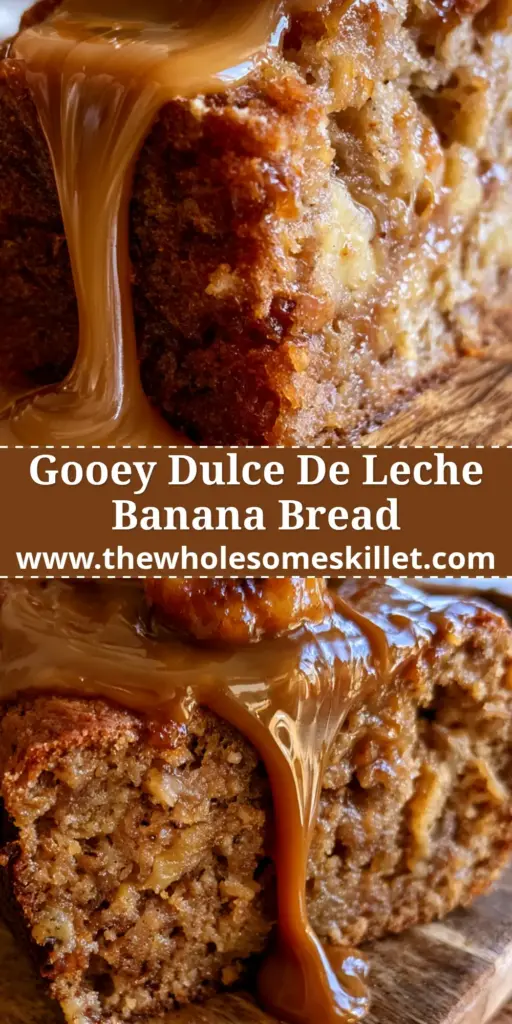
There is nothing quite like the aroma of fresh dulce de leche bread wafting through the kitchen. This recipe combines the rustic charm of a handheld snack with the luxury of a gourmet pastry.
We invite you to share your baking results with us! Tag us in your photos and show off that perfect caramel drip. For more recipe inspiration and visual guides, be sure to follow us on Pinterest.
Don’t forget to leave a comment below and let us know how your loaf turned out. Happy baking!