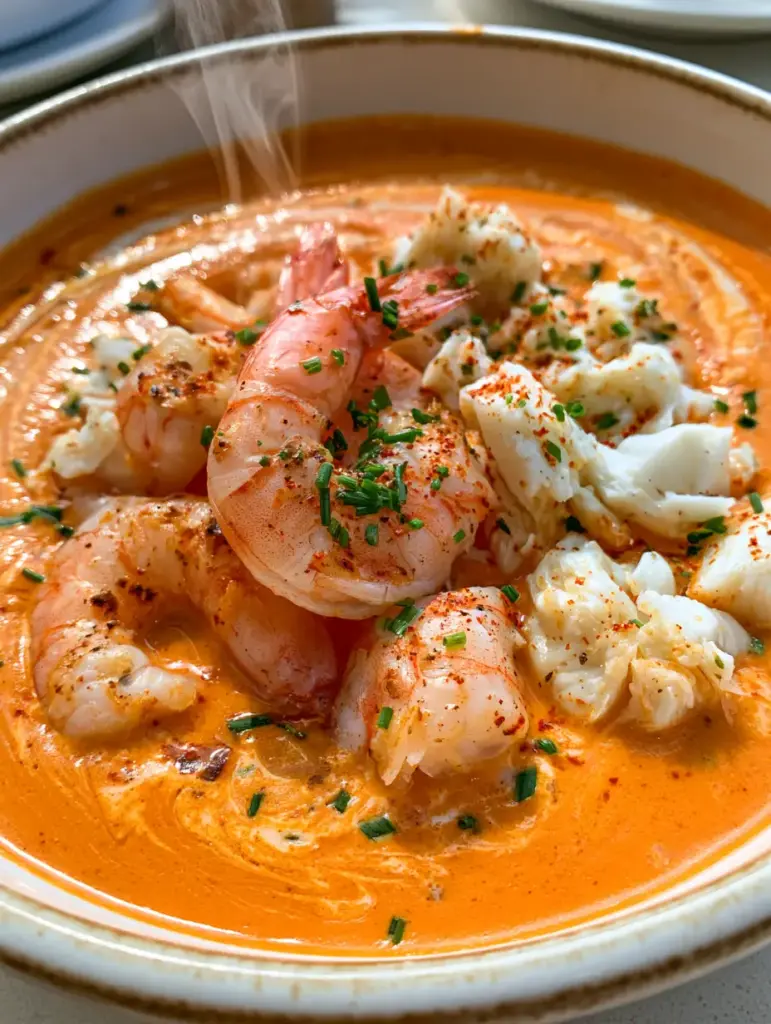
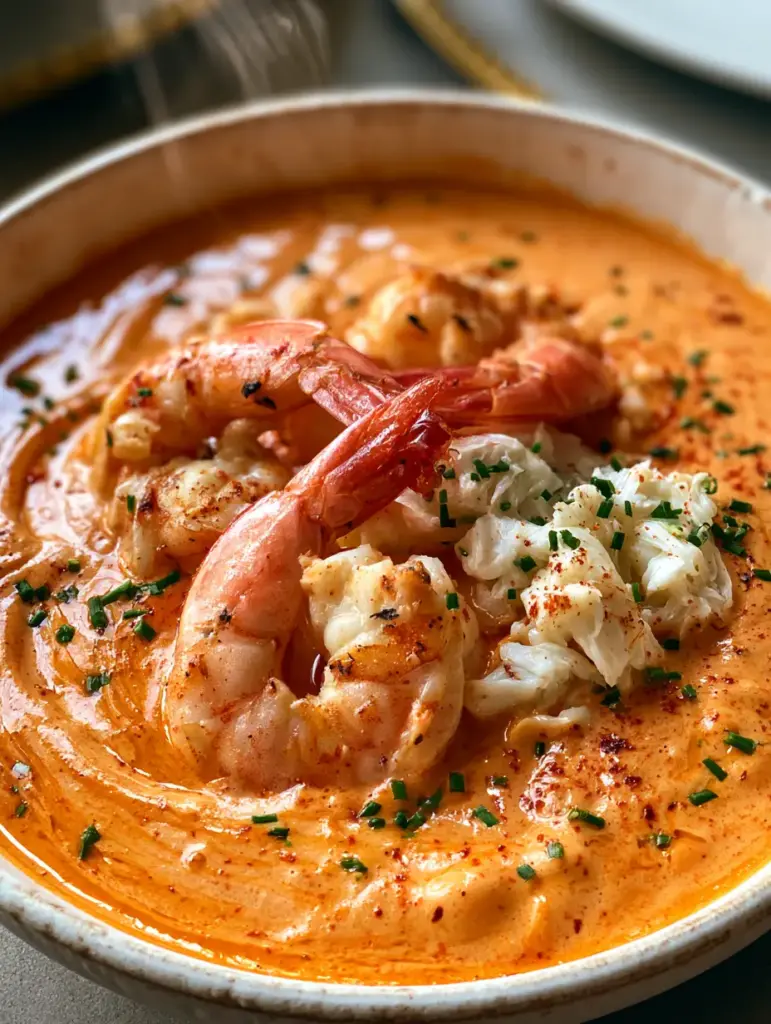
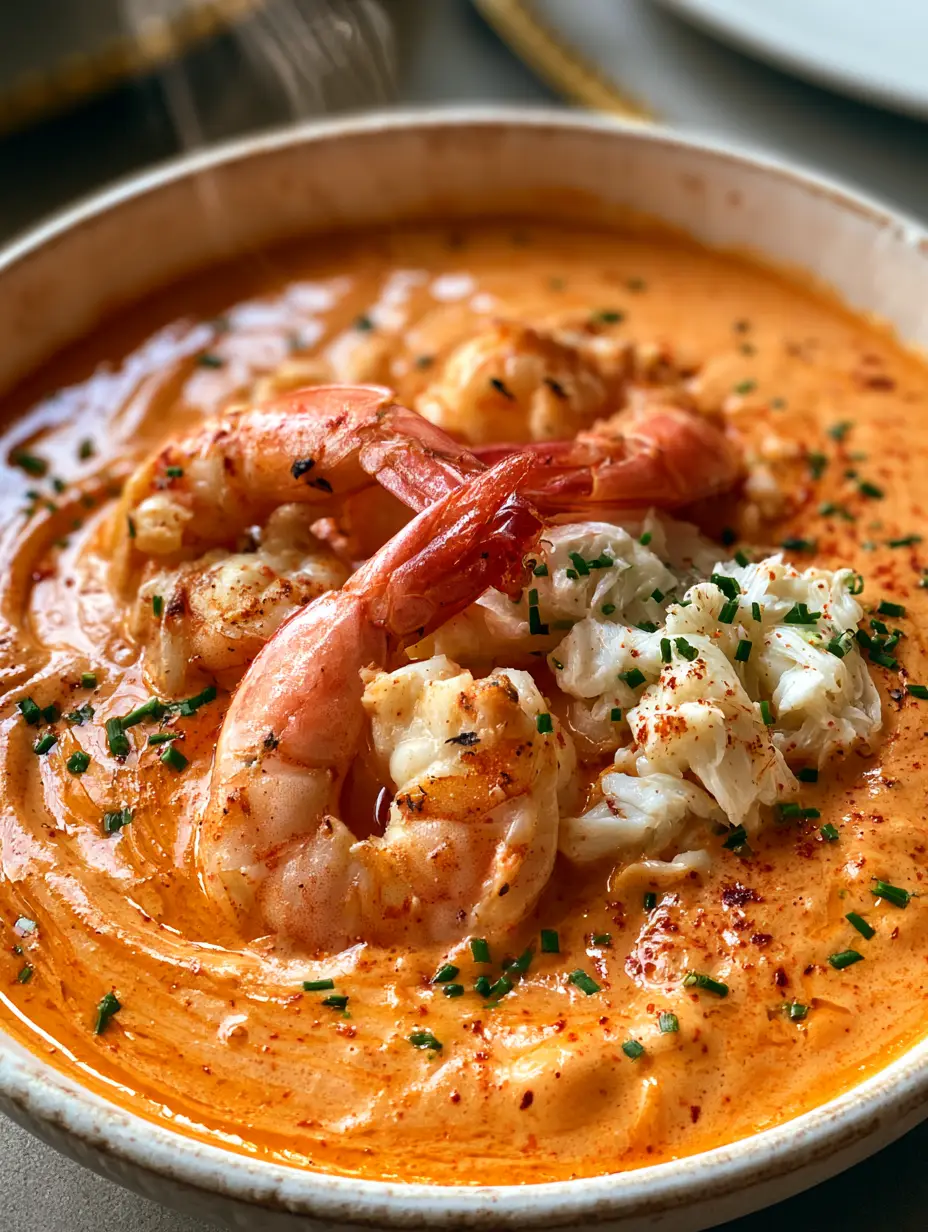
There is nothing quite as comforting or sophisticated as a steaming, vibrant orange-hued creamy seafood bisque served in a rustic white ceramic bowl. This crab shrimp bisque is the culmination of coastal tradition and modern culinary technique, designed to deliver a restaurant-quality experience right to your dining table. The first spoonful reveals a rich, velvety broth that glistens under the light, carrying the deep, sweet essence of the ocean with every sip.
Imagine large, perfectly cooked, plump pink shrimp with visible char marks nestled prominently on top, accompanied by generous, flaky chunks of bright white crab meat. The visual appeal is heightened by a delicate sprinkle of green chives and a dusting of cayenne pepper, providing both color and a gentle warmth. This recipe focuses on achieving that luxurious, swirling texture that defines a true French-style bisque while keeping the process accessible for the passionate home cook.
Whether you are hosting an elegant dinner party or looking for a cozy yet decadent meal, this dish hits every sensory note. From the enticing steam plume rising from the bowl to the complex layers of flavor built through a proper seafood stock, this crab shrimp bisque is guaranteed to become a household favorite. Let’s dive into the science and soul of this spectacular seafood creation.
Why You Will Fall in Love With This Luxurious Seafood Creation
- Unrivaled Texture: A meticulously blended base ensures a silky-smooth mouthfeel that rivals the best high-end steakhouses.
- Visual Sophistication: The contrast between the vibrant orange broth, the pink shrimp, and the snowy white crab meat makes for a stunning presentation.
- Layered Flavor Profile: By utilizing aromatics and a touch of cognac, we build a depth of flavor that commercial canned soups simply cannot replicate.
- Perfectly Cooked Proteins: We use a two-step cooking method to ensure the shrimp remain plump and the crab stays in large, succulent flakes.
The Essential Elements for a Rich Crab Shrimp Bisque
Creating a world-class crab shrimp bisque requires a balance of fresh seafood and foundational aromatics. Each ingredient plays a specific role in building the color, body, and aroma of the final dish.
Large Pink Shrimp: 1 lb (450g) of raw, peeled, and deveined shrimp. We look for large sizes (16/20 count) to provide that impressive visual weight on top of the bowl.
Lump Crab Meat: 8 oz (225g) of high-quality refrigerated lump crab. Flaky white crab meat provides the sweet, delicate contrast to the rich, savory broth.
Unsalted Butter: 4 tbsp (56g) used for sautéing the mirepoix. Butter adds a foundational richness and helps carry the fat-soluble flavors of the spices.
Aromatic Mirepoix: 1 cup (150g) finely diced onion, 1/2 cup (60g) celery, and 1/2 cup (60g) carrots. These vegetables provide the underlying sweetness and complexity that supports the seafood.
Tomato Paste: 2 tbsp (32g) of double-concentrated paste. This is crucial for achieving that vibrant orange hue and adding a subtle acidic backbone to the cream.
All-Purpose Flour: 3 tbsp (24g) to create a light roux. This serves as the structural invisible ingredient that ensures the bisque doesn’t separate.
Seafood Stock: 4 cups (960ml) of high-quality stock. This provides the liquid base; using a stock made from roasted shells will intensify the “ocean” flavor significantly.
Dry Sherry or Cognac: 1/4 cup (60ml) for deglazing. The alcohol burns off, leaving behind a sophisticated, nutty aroma that defines a classic bisque.
Heavy Cream: 1 cup (240ml) of full-fat cream. This creates the swirling, luxurious texture and transforms the deep red base into a vibrant orange masterpiece.
Spices & Herbs: 1/2 tsp (1g) cayenne pepper, 1 tsp (6g) kosher salt, and 1/2 tsp (1g) black pepper. The cayenne is essential for that signature sprinkle and gentle back-end heat.
Garnish: 2 tbsp (8g) fresh green chives, finely chopped. These provide a sharp, fresh bite and a pop of green against the orange broth.
Tools Required for Professional Culinary Results
To achieve the “meticulously detailed” look of this crab shrimp bisque, you will need a few specific kitchen tools. A heavy-bottomed Dutch oven or stockpot is essential for even heat distribution during the long simmer.
An immersion blender (or a high-powered stand blender) is non-negotiable for achieving the velvety texture described in our visual blueprint. You will also need a cast-iron skillet to achieve those specific char marks on the shrimp without overcooking the centers. Finally, a fine-mesh sieve is recommended if you want a truly restaurant-grade, ultra-smooth finish.
Step-by-Step Instructions to Mastering This Coastal Classic
1. Searing the Shrimp for Maximum Visual Impact
In a large cast-iron skillet, heat 1 tbsp (15ml) of olive oil over medium-high heat until it begins to shimmer. Pat the shrimp dry with paper towels—moisture is the enemy of a good sear.
Season the shrimp lightly with salt and a pinch of cayenne. Place them in the hot skillet, ensuring they do not touch. Sear for 2 minutes per side until they are pink and exhibit visible char marks. Remove them immediately and set aside; they will finish warming in the residual heat of the bisque later.
2. Building the Aromatic Foundation
In your main stockpot, melt the butter over medium heat. Add the onions, carrots, and celery, sautéing until the onions are translucent and the carrots have softened, about 8-10 minutes. The smell should be sweet and savory, never burnt.
Stir in the garlic and tomato paste. Cook for an additional 2 minutes, allowing the tomato paste to darken slightly—this “pinçage” technique is what creates the vibrant orange base later.
3. The Roux and Deglazing Process
Sprinkle the flour over the vegetables and stir constantly for 2 minutes. This cooks out the raw flour taste while creating a thickening agent for the broth. Slowing adding the flour ensures no lumps form in your crab shrimp bisque.
Pour in the sherry or cognac to deglaze the pan. Use a wooden spoon to scrape up all the browned bits (the fond) from the bottom of the pot. These bits contain concentrated flavor that is vital for the depth of the soup.
4. Simmering and Blending for Silky Texture
Slowly whisk in the seafood stock, ensuring the roux is fully incorporated. Add the bay leaf and a pinch of cayenne. Bring to a gentle boil, then reduce the heat and simmer for 20 minutes to allow the flavors to meld.
Remove the bay leaf. Use an immersion blender to process the soup until it is completely smooth. For an even more luxurious texture, pour the mixture through a fine-mesh strainer back into the pot, discarding any remaining solids.
5. The Final Enrichment and Garnish
Stir in the heavy cream and watch as the broth transforms into a vibrant, glistening orange. Gently fold in the flaky white crab meat, being careful not to break up the large chunks too much. Season with salt and pepper to taste.
Ladle the hot bisque into rustic white ceramic bowls. Top each bowl with three or four of the charred shrimp. Garnish with a generous sprinkle of chopped green chives and a delicate dusting of cayenne pepper for that perfect handheld photo look.
Expert Tips for a Flawless Bisque Every Time
- Don’t Boil the Cream: Once you add the heavy cream and crab, keep the heat on low. High heat can cause the cream to break or the delicate crab to become rubbery.
- Dry Your Seafood: Always pat the shrimp and crab dry. This ensures the shrimp sear rather than steam and keeps the crab from diluting the rich broth.
- Taste as You Go: Seafood stocks vary in saltiness. Always taste the base before adding additional salt to ensure the crab shrimp bisque is perfectly balanced.
- Quality of Crab: If possible, use “Colossal” or “Jumbo Lump” crab meat. The larger flakes provide a much better visual and textural contrast than “special” or “claw” meat.
Optimal Storage and Reheating Guidelines
This crab shrimp bisque is best enjoyed immediately while the shrimp are freshly charred and the broth is steaming. However, you can store leftovers in an airtight container in the refrigerator for up to 2 days.
When reheating, do so gently on the stovetop over low heat. Avoid the microwave, as it can cause the shrimp to become tough and the cream to separate. We do not recommend freezing this bisque, as the dairy and delicate seafood textures do not hold up well to the freezing and thawing process.
Perfect Pairings for a Seafood Feast
To turn this bisque into a full culinary experience, consider serving it alongside complementary dishes. A crusty sourdough baguette is perfect for soaking up every last drop of the vibrant orange broth.
For a multi-course seafood extravaganza, start with our ultimate restaurant-style crab cakes. If you are looking for a heavier main course to follow, the luscious garlic butter shrimp linguine or the decadent garlic shrimp pasta in cream sauce are excellent choices that echo the flavors of the bisque.
If you have extra crab meat, you might even try making crispy crab cream cheese egg rolls as a fun, crunchy appetizer. For those who prefer a balance of land and sea, a side of French onion chicken orzo provides a hearty contrast to the light, airy nature of the seafood.
Frequently Asked Questions Regarding Seafood Bisque
Yes, but ensure they are fully thawed and patted dry with paper towels. Excess moisture will prevent the shrimp from charring and can make the bisque watery.
The orange hue comes from sautéing tomato paste until it darkens (pinçage) and then whisking in heavy cream to lighten the deep red base.
Always add the heavy cream at the very end over low heat. Never let the bisque come to a rolling boil after the dairy has been incorporated.
While not strictly required, cognac or dry sherry provides a complex, nutty undertone that is characteristic of a professional-grade bisque.
A chowder is chunky and thick, often containing potatoes, while a bisque is traditionally smooth, velvety, and blended, often enriched with cream and cognac.
The Ultimate Crab Shrimp Bisque Recipe Card
Crab Shrimp Bisque: The Ultimate Guide to a Velvety Seafood Masterpiece
Ingredients
Equipment
Method
- Heat oil in a skillet. Sear shrimp for 2 minutes per side until charred and pink. Set aside.
- Melt butter in a pot. Sauté onions, carrots, and celery until soft. Add tomato paste and cook 2 minutes.
- Stir in flour and cook for 2 minutes. Deglaze with sherry, scraping the bottom of the pot.
- Whisk in stock. Simmer for 20 minutes. Blend until smooth using an immersion blender.
- Stir in heavy cream and crab meat. Warm through. Serve topped with charred shrimp, chives, and cayenne.
Notes
Ensure shrimp are completely dry before searing to get proper char marks.

A Final Word on This Culinary Masterpiece
This crab shrimp bisque is more than just a soup; it is a celebration of texture and coastal flavors. By following the visual cues of charred shrimp and vibrant orange broth, you have created a dish that is as beautiful as it is delicious. The combination of sweet crab and savory shrimp in a velvety base is a testament to the power of high-quality ingredients and patient cooking.
We invite you to share your results and tag us in your photos! If you enjoyed this recipe, please leave a comment below and follow us on Pinterest for more gourmet inspiration. Your feedback helps our community of home cooks grow and thrive.