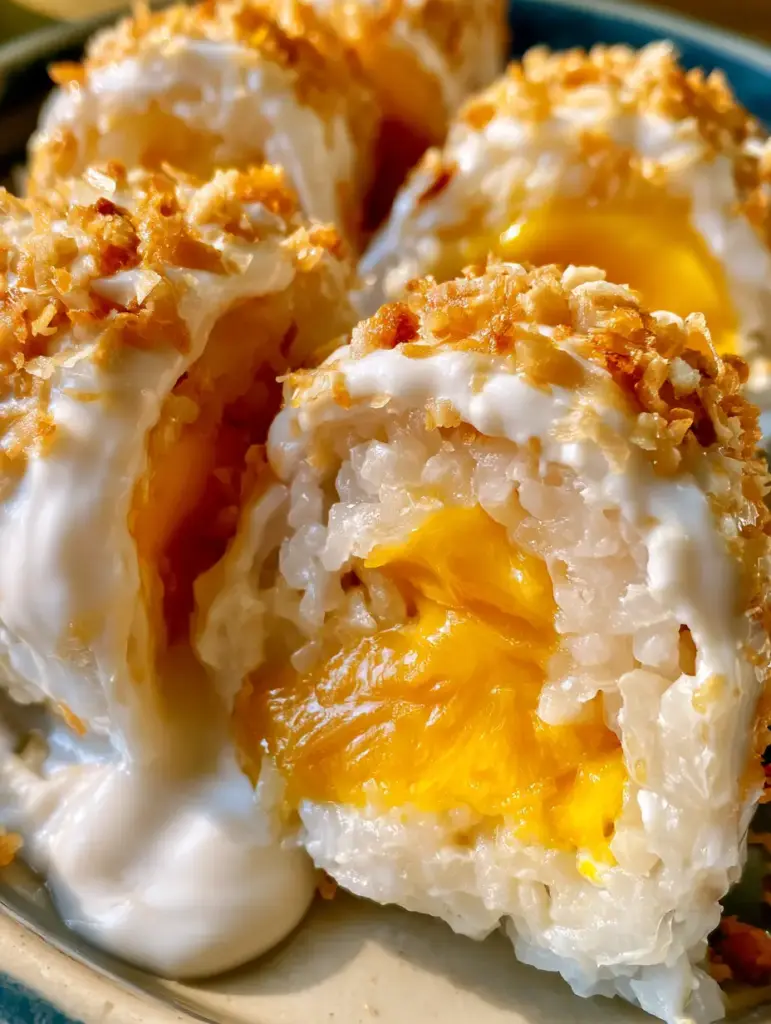
Experience the ultimate tropical indulgence with these mango sticky rice rolls. This recipe transforms the iconic Thai street food into a sophisticated, hand-held dessert that is as visually stunning as it is delicious. By wrapping vibrant, honey-sweet mango slices in translucent, sugar-infused glutinous rice, we create a cross-section of colors that rivals the most high-end pastry shops.
The magic of this dish lies in the contrast of textures. You have the chew of the sweet rice, the buttery softness of ripe mango, and the crunch of golden-toasted coconut flakes. Drizzled with a thick, velvety coconut cream that cascades down the sides, these mango sticky rice rolls are the perfect finale to any meal. Whether you are a fan of creamy coconut rice pudding or you simply love fresh fruit, this recipe is a masterclass in balance.
Why You Will Fall in Love with These Mango Sticky Rice Rolls
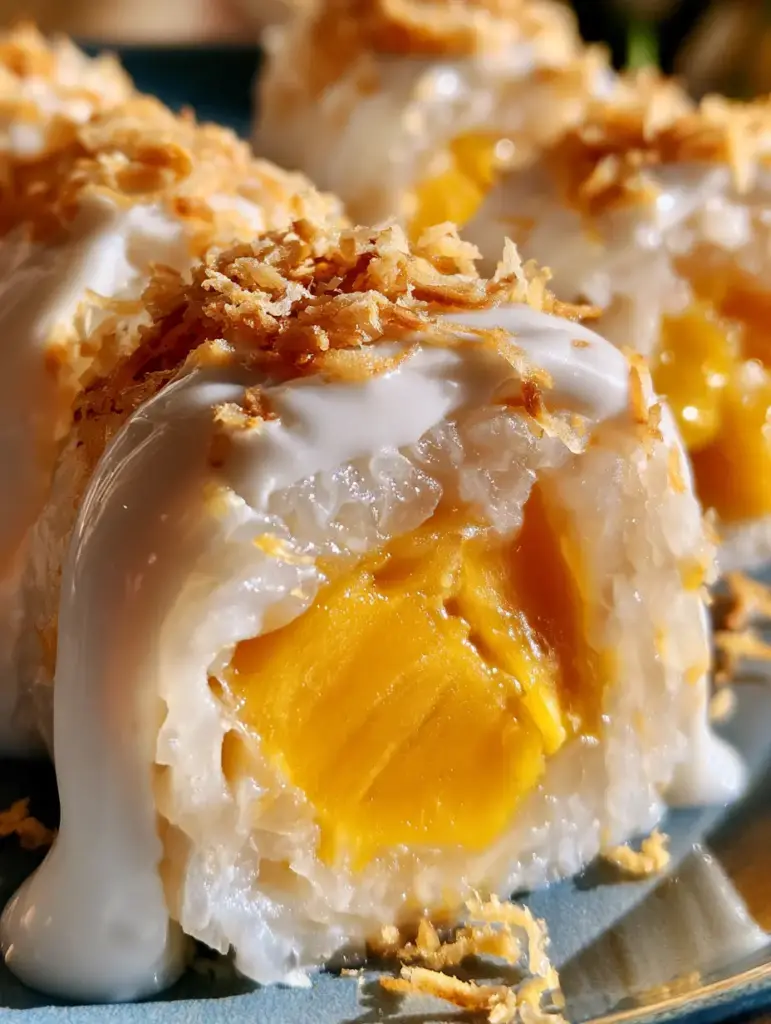
- The Visual Appeal: Under natural sunlight, the rice appears glistening and translucent, perfectly showcasing the vibrant orange-yellow mango center.
- Textural Harmony: Every bite delivers a mix of soft rice, juicy fruit, and a heavy layer of crunchy, golden-toasted coconut.
- Handheld Sophistication: While traditional sticky rice is served in a bowl, these rolls provide a “sushi-style” elegance that is perfect for entertaining.
- Decadent Finishes: The thick coconut cream glaze adds a rich, fatty mouthfeel that balances the natural acidity of the fresh fruit.
The Anatomy of Perfect Mango Sticky Rice Rolls
To achieve the professional results seen in our visual blueprint, we must focus on high-quality ingredients. Each component plays a specific role in the structural integrity and flavor profile of the mango sticky rice rolls.
Long-Grain Glutinous Rice (Thai Sweet Rice): 1.5 cups (300g). This is the “invisible” hero; unlike standard rice, glutinous rice contains high levels of amylopectin, which creates the necessary “sticky” texture for rolling. Do not substitute with Jasmine or Basmati, or your rolls will fall apart.
Full-Fat Coconut Milk: 1 can (400ml). We use the thinner part of the milk to season the rice while it’s hot, allowing the grains to absorb the liquid without becoming mushy. This creates the translucent look we are targeting.
Coconut Cream: 1/2 cup (120ml). This is the thick, fatty layer found at the top of the can. We reduce this further to create the “velvety white” pour that cascades over the finished rolls.
Ripe Ataulfo or Honey Mangoes: 2 large mangoes. These varieties are preferred for mango sticky rice rolls because they are non-fibrous and possess a deep orange-yellow hue that pops against the white rice.
Granulated Sugar: 1/2 cup (100g). Sugar doesn’t just sweeten; it acts as a humectant, keeping the rice soft even as it cools to room temperature.
Kosher Salt: 1/2 tsp (3g). A critical “culinary science” ingredient that enhances the coconut’s nuttiness and cuts through the intense sweetness of the mango.
Unsweetened Coconut Flakes: 1/4 cup (25g). These will be toasted until golden-brown to provide the “heavy layer of crunch” described in our visual prompt.
Essential Equipment for a Professional Finish
To recreate the macro-photography-worthy look, you will need a few specific tools. Achieving those clean cross-sections requires more than just a standard kitchen knife.
Bamboo Steamer Basket: Steaming glutinous rice is superior to boiling. It keeps the grains intact and translucent rather than turning them into a starchy paste.
Cheesecloth: Essential for lining the steamer to prevent the rice from falling through the slats and to ensure even steam distribution.
Bamboo Sushi Mat (Makisu): This is the secret to getting tight, uniform mango sticky rice rolls. Cover it with plastic wrap to prevent sticking.
Ultra-Sharp Chef’s Knife: To get that “ultra-detailed food photography” look, you need a clean cut. Wipe the blade with a damp cloth between every single slice.
Step-by-Step Instructions for the Perfect Roll
Preparing the Translucent Glutinous Rice
The foundation of great mango sticky rice rolls starts with a long soak. Rinse your 1.5 cups (300g) of glutinous rice under cold water until the water runs clear. This removes excess surface starch.
Soak the rice in filtered water for at least 4 hours, or ideally overnight. This ensures the heart of the grain is hydrated, allowing it to cook evenly without becoming blown out or mushy on the exterior.
Drain the rice and place it into a cheesecloth-lined bamboo steamer. Steam over boiling water for 20-25 minutes. You are looking for a visual cue: the grains should look translucent and feel tender but “bouncy” to the tooth.
Infusing the Coconut Base
While the rice is steaming, combine the coconut milk (not the cream!), sugar, and salt in a small saucepan. Heat over medium until the sugar is fully dissolved. Do not let it boil vigorously, as this can break the emulsion of the coconut milk.
Once the rice is done, immediately transfer it to a glass bowl and pour the warm coconut mixture over it. Stir gently with a wooden spoon. Cover and let it sit for 20 minutes. This is where the magic happens—the rice will “drink” the liquid, becoming plump and glistening.
Prepping the Mango and Toasted Flakes
Peel your mangoes and slice the flesh away from the pit. To get the perfect roll, cut the mango into long, uniform batons about 1/2 inch thick. If you enjoy fruity desserts, you might also like our refreshing cheesecake fruit salad.
For the toasted coconut, place the flakes in a dry skillet over medium-low heat. Stir constantly. The visual cue you are looking for is a “golden-toasted” hue and a fragrant, nutty aroma. This takes about 3-5 minutes. Remove from the pan immediately to stop the cooking.
The Art of the Roll
Place your plastic-wrapped sushi mat on a flat surface. Spread a thin, even layer of the coconut-infused rice over the bottom two-thirds of the mat. Wet your fingers frequently with water to prevent the rice from sticking to your skin.
Place 2-3 mango batons in the center of the rice. Using the mat, lift the edge closest to you and roll it over the mango, tucking it tightly. Continue rolling until a cylinder is formed. Press firmly to ensure the rice adheres to itself.
Let the rolls rest for 5 minutes before slicing. Use your sharp, damp knife to cut the rolls into 1-inch thick rounds, revealing the vibrant orange-yellow mango layers inside.
Creating the Velvety Coconut Pour
In a small pan, combine the thick coconut cream with a pinch of sugar and a tiny bit of cornstarch slurry (1 tsp cornstarch mixed with 1 tsp water). Heat until thickened.
The consistency should be “thick and velvety,” enough to coat the back of a spoon. When you pour it over the mango sticky rice rolls, it should cascade slowly, just like in the macro photo, creating a beautiful contrast against the translucent rice.
Expert Tips for Success
- Temperature Control: Always mix the coconut liquid with the rice while the rice is still piping hot. Cold rice will not absorb the flavors properly.
- Rice Selection: Ensure you are using “Long-Grain Glutinous Rice.” If the package says “Sushi Rice” or “Sweet Rice” but doesn’t mention glutinous, it may be the wrong variety.
- Slicing Technique: Use a “sawing” motion with a very sharp knife rather than pressing down, which can squash the delicate rice grains.
- Sunlight Photography: If you want to capture the “glistening rice” as seen in our prompt, plate your rolls near a window with natural, indirect sunlight.
Storage, Reheating & Freezing
Mango sticky rice rolls are best enjoyed the day they are made. Glutinous rice has a tendency to harden when refrigerated, losing its signature translucent glow and chewy texture.
If you must store them, keep them in an airtight container at room temperature for up to 6 hours. If refrigerated, the rice will turn opaque and firm. You can revive them slightly by steaming the rolls for 2-3 minutes, but the fresh mango may soften. This recipe does not freeze well, much like a fresh Filipino ensaymada which is best enjoyed at its peak freshness.
What to Serve With This
These rolls are a complete dessert on their own, but they pair beautifully with other tropical or creamy treats. If you are hosting a dessert bar, consider serving them alongside our tangy key lime bundt cake for a citrusy contrast.
For a more decadent spread, the velvety coconut cream also pairs surprisingly well with a slice of rich brownie cheesecake. The saltiness in the rice helps bridge the gap between tropical fruit and deep chocolate flavors.
Frequently Asked Questions
They are best served within 2-4 hours of assembly. If made too far in advance, the rice can become dry. If you must wait, wrap the rolls tightly in plastic wrap at room temperature.
No, you must use long-grain glutinous rice (Thai sweet rice). Regular rice does not have the necessary starch content to become ‘sticky’ enough to hold the roll’s shape.
The key is soaking the rice for at least 4 hours and steaming it rather than boiling it. Steaming preserves the grain’s structure, giving it that glistening, clear appearance.
Ataulfo (Honey) mangoes are best because they are sweet, creamy, and lack the fibrous strings found in other varieties, making them easy to slice into clean batons.
Glutinous rice naturally firms up as it cools. To keep it soft, ensure you’ve added enough sugar (which acts as a humectant) and keep the rolls at room temperature, not in the fridge.
The Ultimate Mango Sticky Rice Rolls Recipe
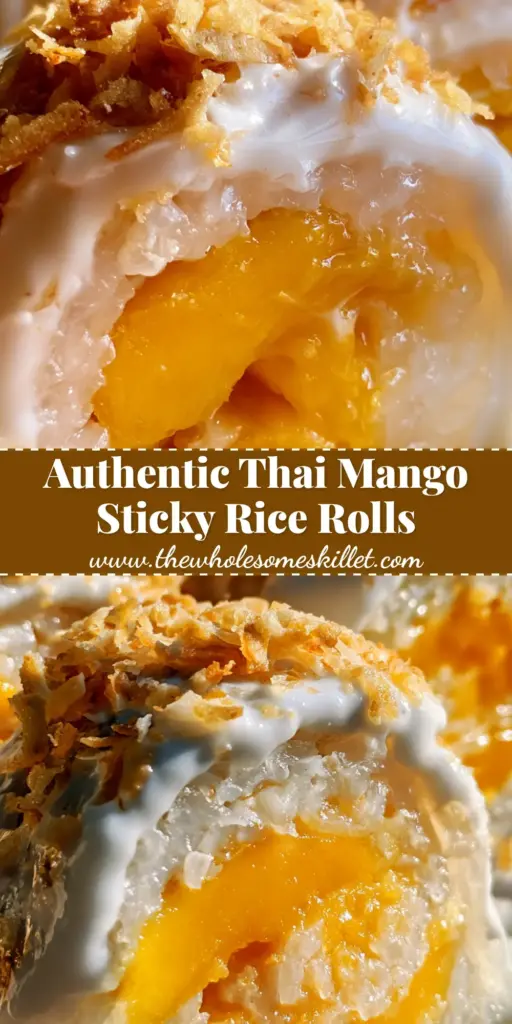
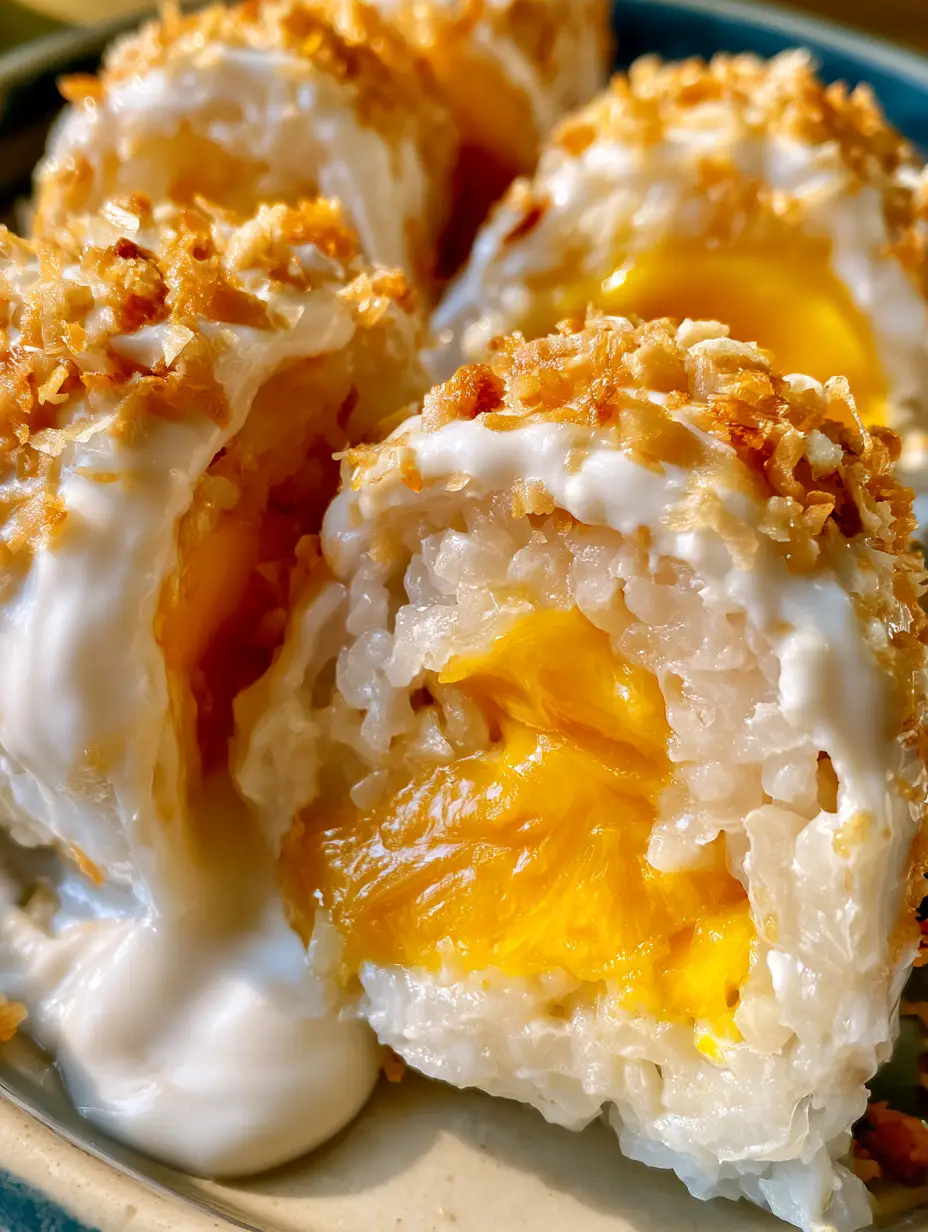
Mango Sticky Rice Rolls with Velvety Coconut Cream and Toasted Flakes
Ingredients
Equipment
Method
- Steam the soaked glutinous rice in a cheesecloth-lined steamer for 20-25 minutes until translucent and tender.
- Mix coconut milk, sugar, and salt in a pan over low heat until dissolved. Pour over hot steamed rice and let sit covered for 20 minutes.
- Slice mango into long, uniform batons. Toast coconut flakes in a dry skillet until golden-brown.
- Spread rice on a plastic-wrapped sushi mat. Place mango in the center and roll tightly into a cylinder.
- Slice into rounds with a wet knife. Drizzle with reduced coconut cream and a heavy layer of toasted flakes.
Notes
Always keep your hands and knife wet when working with glutinous rice to prevent sticking.
Closing & Call to Action
These mango sticky rice rolls are more than just a dessert; they are a sensory experience. From the first sight of the cascading coconut cream to the final crunch of the toasted flakes, they offer a perfect balance of Thai tradition and modern presentation. If you enjoyed this culinary journey, please leave a comment below and let us know how your rolls turned out!
Don’t forget to follow us on Pinterest for more visually stunning recipes and kitchen inspiration. Share your creations by tagging us—we love to see your glistening rice and juicy mango masterpieces!