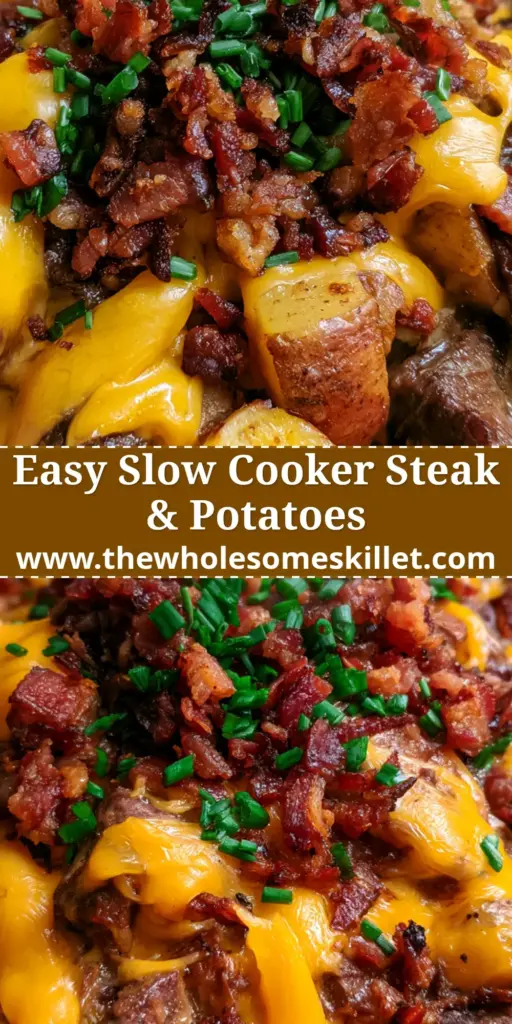
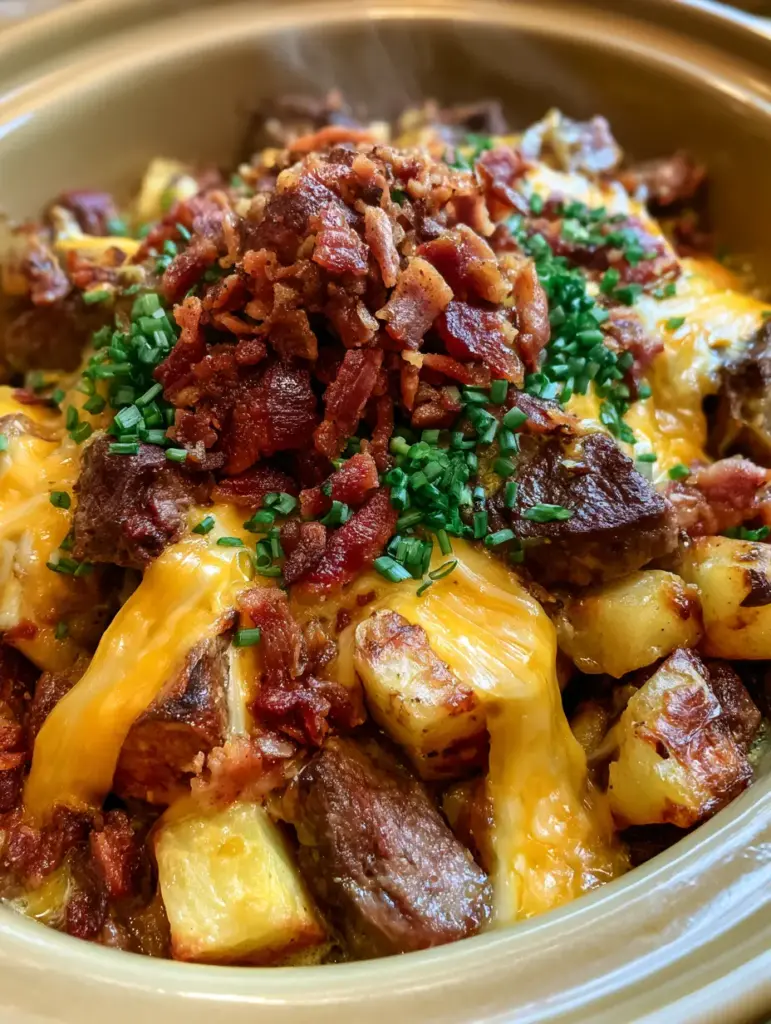
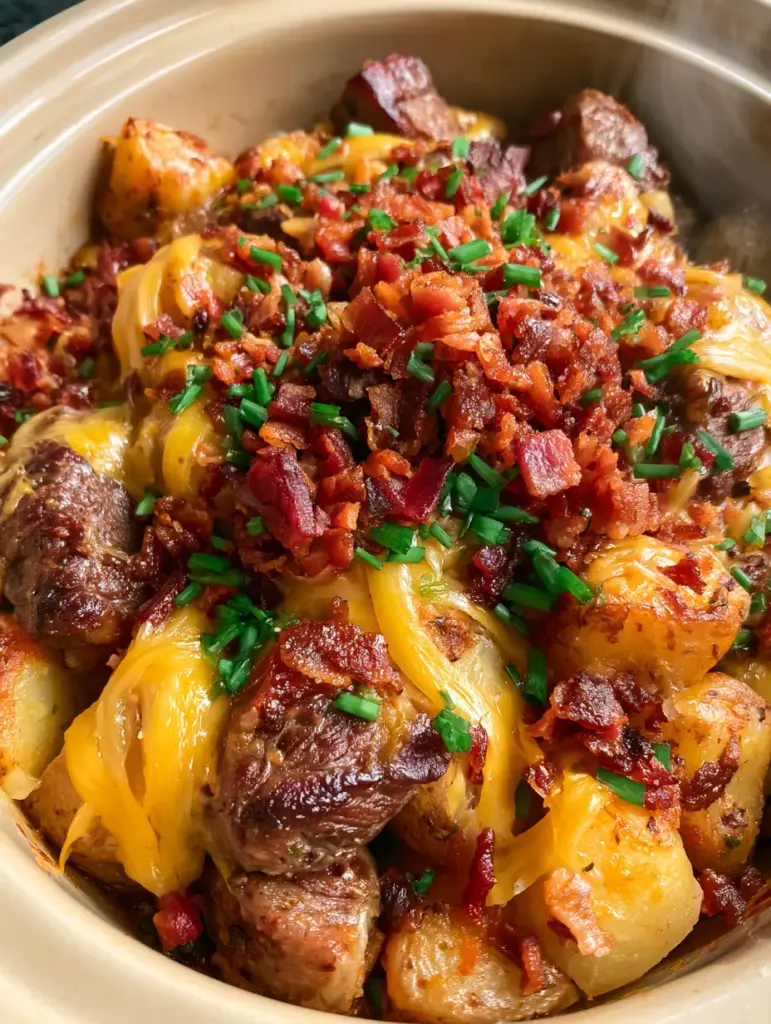
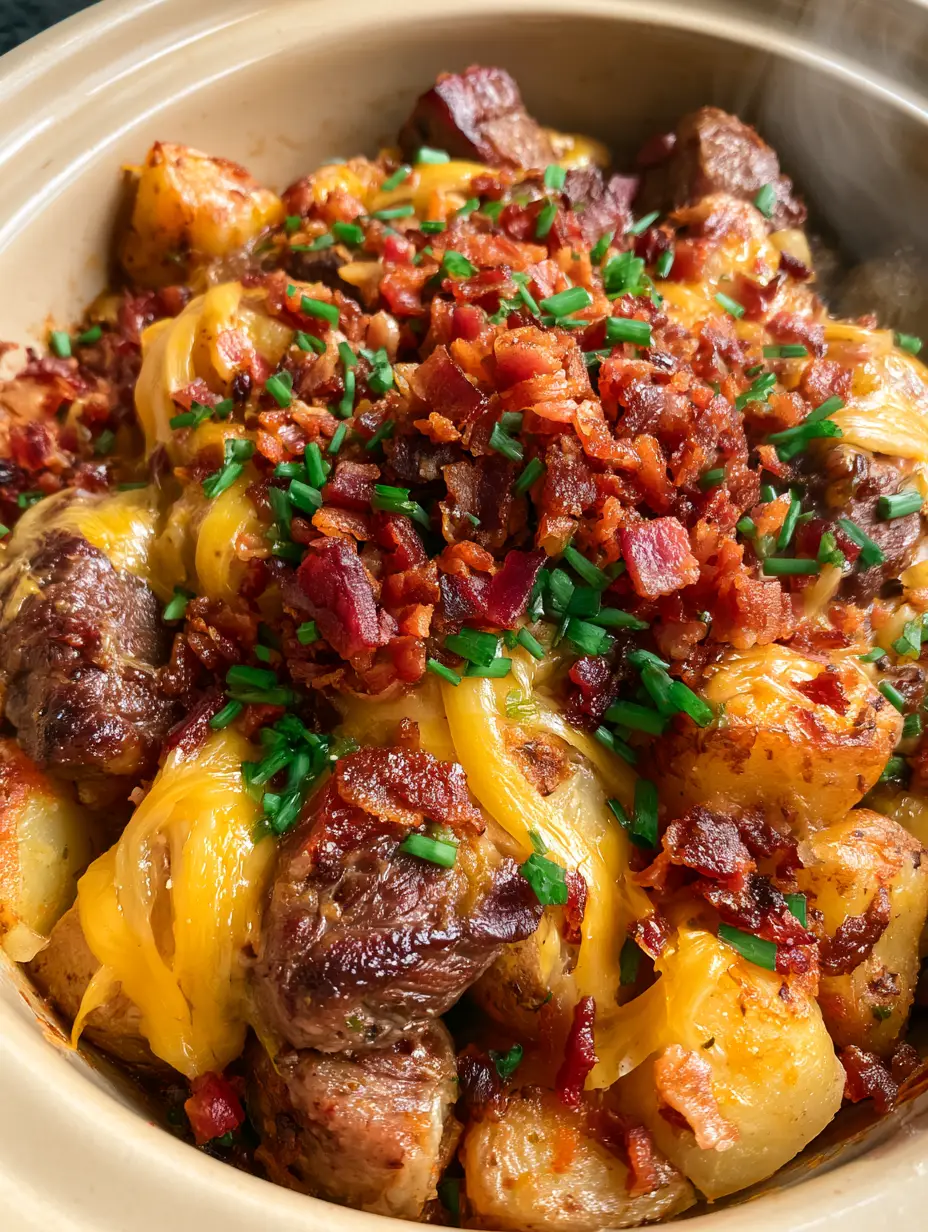
When the temperature drops and the craving for a hearty, stick-to-your-ribs meal hits, nothing satisfies quite like steak and cheese potatoes. This isn’t just a simple meat-and-potatoes dish; it is a meticulously layered masterpiece of textures and flavors. Imagine tender, seared beef medallions nestled against golden, roasted potato cubes, all smothered in a velvety garlic cream sauce and ribbons of melted sharp cheddar.
The beauty of this recipe lies in its visual and culinary complexity, captured perfectly in a rustic ceramic slow cooker. As the steam rises from the pot, you are greeted by the aromatic blend of sizzling applewood smoked bacon and fresh, vibrant chives. This dish is designed to be the centerpiece of your dinner table, offering a restaurant-quality experience with the ease of home-style cooking.
Whether you are feeding a hungry family or looking for the ultimate game-day feast, these steak and cheese potatoes deliver on every promise. The contrast between the crunchy bacon bits and the creamy sauce base creates a symphony of sensations in every bite. Let’s dive into how you can achieve this exact result in your own kitchen.
The Culinary Science Behind the Perfect Steak and Potato Bake
Achieving the perfect texture in a slow cooker requires more than just tossing ingredients into a pot. To ensure your steak and cheese potatoes don’t turn into a mushy mess, we utilize the Maillard reaction. By searing the steak bites and pre-roasting the potatoes, we lock in flavor and structural integrity.
- Maillard Excellence: Searing the beef medallions creates a complex, savory crust that stands up to the moist environment of the slow cooker.
- Structural Integrity: Roasting the potato cubes at a high temperature first ensures they remain “golden brown” and firm rather than dissolving into the sauce.
- Emulsified Creaminess: A dedicated garlic sauce base prevents the cheese from breaking into an oily residue, maintaining a “thick ribbon” consistency.
- Contrast of Freshness: The addition of fresh chives and cracked black pepper at the end provides a necessary bite to cut through the richness of the cheddar.
Essential Ingredients for Gourmet Steak and Cheese Potatoes
1.5 lbs (680g) Top Sirloin or Ribeye: This cut offers the perfect balance of tenderness and fat content. Cutting them into 1-inch medallions ensures they cook evenly while maintaining a juicy interior.
3 lbs (1.36kg) Yukon Gold Potatoes: Known for their naturally buttery flavor and waxy texture, these are the best choice for roasting and slow cooking. They hold their “golden chunk” shape far better than starchy Russets.
2 cups (225g) Sharp Cheddar Cheese: Always grate your own cheese from a block for the best melt. Pre-shredded varieties are coated in cellulose, which prevents those iconic “thick ribbons” from forming.
6 slices (170g) Applewood Smoked Bacon: The smokiness of the applewood complements the beef perfectly. Frying it until “crunchy” provides a necessary textural counterpoint to the soft potatoes.
1 cup (240ml) Heavy Cream: This forms the heart of our creamy garlic sauce base. It provides the luxurious mouthfeel that makes this dish feel truly indulgent.
4 cloves (20g) Fresh Garlic, Minced: Garlic is the aromatic backbone of the sauce. Sautéing it briefly before adding the cream releases the essential oils for a deeper flavor profile.
1/4 cup (10g) Fresh Chives, Chopped: These offer a mild onion flavor and a “vibrant green” pop of color. They are essential for that “authentic and unedited” look described in the visual prompt.
2 tbsp (30ml) Avocado or Vegetable Oil: A high-smoke point oil is required for searing the steak at high heat without burning. This is one of those “invisible” ingredients that ensures success.
1 tsp (5g) Cracked Black Pepper: Freshly cracked pepper provides a sharp, floral heat that pre-ground pepper simply cannot match. It’s the final seasoning touch that pulls everything together.
Must-Have Equipment for This Recipe
To recreate the “handheld smartphone photo” look, you’ll need a few specific tools. A 6-quart (5.7L) ceramic slow cooker is the primary vessel, providing even heat distribution. You will also need a heavy-bottomed cast iron skillet for the steak searing, as it retains heat better than stainless steel.
A large baking sheet is necessary for the initial roasting of the potato chunks. Finally, a sharp chef’s knife is non-negotiable for achieving those uniform potato cubes and finely chopped chives. If you enjoy making hearty meals like this, you might also want to try our garlic parmesan chicken and potatoes.
Developing Deep Flavor: The Searing Process
Step 1: Preparing the Beef Medallions
Pat the steak dry with paper towels to remove excess moisture. Season generously with salt and half of the cracked black pepper. In a hot skillet with 1 tbsp (15ml) of oil, sear the steak bites for 1-2 minutes per side until a deep brown crust forms. Do not overcook; the goal is color, not doneness.
Step 2: Roasting the Golden Potato Chunks
Toss the potato cubes with the remaining oil and a pinch of salt. Spread them on a baking sheet and roast at 400°F (200°C) for 20 minutes. Look for the visual cue of “golden brown” edges. This prevents them from becoming soggy once they hit the garlic sauce base in the slow cooker.
Step 3: Crafting the Creamy Garlic Sauce Base
In the same skillet used for the steak, sauté the minced garlic for 30 seconds. Pour in the heavy cream and whisk, scraping up the brown bits (frond) from the bottom of the pan. This is where the “hidden” flavor lives. Simmer for 3 minutes until slightly thickened.
Step 4: Layering in the Slow Cooker
Place the roasted potatoes in the bottom of the ceramic slow cooker. Pour the garlic sauce base over them, ensuring they are well-coated. Layer the seared steak medallions on top. This layering technique prevents the steak from becoming submerged and losing its crust.
Step 5: The Cheese and Toppings Finale
Cover and cook on LOW for 3-4 hours. In the last 15 minutes, sprinkle the sharp cheddar over the top. Once the cheese has melted into “thick ribbons,” top with the crunchy bacon bits, fresh chives, and the remaining cracked black pepper. Serve directly from the ceramic pot for that authentic, rustic look.
Expert Tips for the Best Steak and Cheese Potatoes
- Don’t Crowd the Pan: When searing the steak, work in batches. Overcrowding the pan lowers the temperature, causing the meat to steam rather than sear.
- Room Temperature Meat: Take your steak out of the fridge 20 minutes before cooking. This ensures the fibers don’t tighten up and become tough when they hit the heat.
- The Potato Size Matters: Cut your potatoes into uniform 1-inch (2.5cm) cubes. This ensures every piece reaches the “golden brown” stage at the same time.
- Fresh Herbs Only: Never use dried chives for this recipe. The “vibrant green” visual and the delicate flavor only come from fresh herbs.
Storage, Reheating, and Make-Ahead Advice
These steak and cheese potatoes are best enjoyed fresh, but leftovers stay delicious for up to 3 days in the refrigerator. Store them in an airtight container to prevent the potatoes from absorbing other fridge odors.
To reheat, avoid the microwave if possible, as it can make the steak rubbery. Instead, place the portion in an oven-safe dish, cover with foil, and warm at 325°F (160°C) for 15 minutes. This preserves the “melted cheddar” texture and the “creamy sauce base” without separating the fats.
What to Serve With Your Steak and Potato Bake
Because this dish is so rich and savory, it pairs beautifully with something light or sweet to balance the palate. A crisp green salad with a lemon vinaigrette is a classic choice. If you’re looking for a dessert to follow such a hearty meal, consider something like our strawberry banana pudding cake or perhaps some cinnamon sugar twists for a sweet crunch.
For those who love the combination of meat and creamy sauces, you might also find inspiration in our creamy garlic butter chicken pasta. The contrast of flavors makes for a complete and satisfying dining experience.
Frequently Asked Questions
Yes, but the potatoes may lose their golden roasted texture. Use the ‘Sauté’ function for the steak and then cook on High Pressure for 15 minutes.
It is not recommended. Frozen meat releases too much water, which will thin out the creamy garlic sauce and prevent a proper sear on the steak.
Shred your cheese from a block and ensure you use heavy cream as the base. The cream acts as an emulsifier to keep the cheese smooth.
Top sirloin or ribeye are ideal. They have enough marbling to stay tender during the slow cooking process without becoming overly fatty.
Mushy potatoes happen when they aren’t pre-roasted. Roasting them at 400°F creates a protective crust that holds up to the moisture in the slow cooker.
The Ultimate Slow Cooker Steak and Cheese Potatoes Recipe
Steak and Cheese Potatoes: The Ultimate Slow Cooker Comfort Food
Ingredients
Equipment
Method
- Heat 1 tbsp oil in a skillet. Pat steak dry, season with salt and pepper, and sear until a deep brown crust forms. Remove and set aside.
- Toss potato cubes with oil and salt. Roast at 400°F (200°C) for 20 minutes until golden brown and firm.
- In the same skillet, sauté minced garlic. Whisk in heavy cream and simmer until slightly thickened, scraping up the browned bits.
- Place roasted potatoes in the slow cooker. Pour garlic sauce over them. Top with seared steak medallions.
- Cover and cook on LOW for 3-4 hours until beef is tender.
- Sprinkle cheddar cheese on top and let melt for 15 minutes. Garnish with crunchy bacon, chives, and extra black pepper before serving.
Notes
Tip 2. Pre-roasting the potatoes is essential to prevent them from becoming mushy during the slow cooking process.
Share This Hearty Meal with Friends!
There is nothing quite as satisfying as a bowl of steak and cheese potatoes shared with loved ones. We hope this recipe becomes a staple in your home for chilly evenings and celebratory gatherings. The combination of seared beef and golden potatoes is a timeless classic for a reason!
If you enjoyed this recipe, please leave a comment below and let us know how yours turned out! Don’t forget to follow us on Pinterest and pin the image below to save this recipe for later. Happy cooking!