Bringing mathematics to life in the kitchen has never been more visually stunning or delicious. By utilizing math manipulatives in an edible format, we bridge the gap between abstract digital concepts and tactile, sensory-focused learning. This recipe is designed to mirror the sleek, modern aesthetic of virtual learning tools while providing the nutritional fuel necessary for deep concentration and discovery.
Inspired by the clean lines of digital tablets and the vibrant hues of interactive educational software, this discovery board transforms your kitchen counter into a laboratory of logic. Whether you are teaching fractions with citrus or geometry with toasted pita, every element serves a dual purpose of education and sustenance. We have meticulously crafted this layout to ensure that each component—from the “abacus” fruit skewers to the “ten frame” crackers—is both mathematically accurate and culinerily balanced.
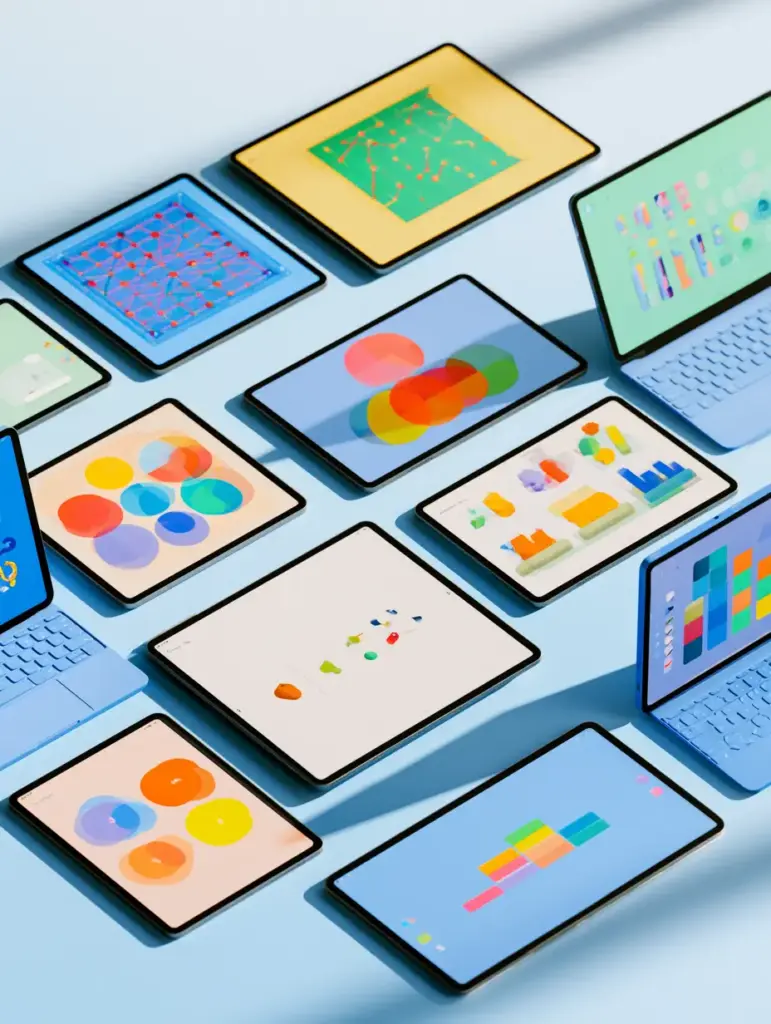
Why This Edible Math Manipulative Board Works
- Tactile Integration: Converts 2D digital concepts into 3D edible objects, enhancing spatial reasoning through touch and taste.
- Visual Precision: Mirrors the “flat lay” aesthetic of modern educational apps, making math feel contemporary and engaging for digital natives.
- Culinary Diversity: Features a wide array of textures, from crunchy “base ten” cucumbers to juicy “fraction circle” oranges.
- Educational Versatility: Covers over 15 distinct mathematical concepts, including subitizing, geometry, and basic arithmetic.
Essential Components for Your Math Discovery Board
Whole Grain Square Crackers (Geoboards): These serve as our structural base. You will need 4-6 large square crackers to act as the “pegs” for your edible designs.
Whipped Cream Cheese or Avocado Mash: This acts as the “screen” or adhesive. Use 1/2 cup (120g) to provide a smooth, matte surface on the crackers for building shapes.
Vibrant Citrus Slices (Fraction Circles): Use 1 large orange (200g) and 2 limes (100g). The natural segments of the fruit provide an immediate visual representation of parts of a whole.
English Cucumber Batons (Base Ten Blocks): You will need 1 large cucumber (300g). Slice them into long “tens” rods and small 1cm (0.4 inch) cubes for “units.”
Pretzel Rods and Snap Peas (Number Lines): 10-12 pretzels (60g) provide the linear structure, while small dots of hummus act as the coordinate points.
Gummy Bears or Berries (Counting Bears): 1 cup (150g) of assorted colorful berries or organic fruit snacks to represent individual units for counting and sorting.
Wooden Skewers and Grapes (Abacus): 5 skewers and 1 cup (160g) of red and green grapes. This provides a classic sliding mechanism for addition and subtraction.
Rectangular Mini-Sandwiches (Calculators): Use whole wheat bread and cheese slices to create “buttons.” The structural integrity of the bread is crucial for these “digital” icons.
Apple Slices (Clocks): 1 large Honeycrisp apple (200g), sliced into perfect rounds. The circular shape is ideal for teaching time intervals.
Assorted Cheese Slices (Geometric Shapes): 4 oz (115g) of cheddar or provolone, cut into triangles, hexagons, and squares to mimic pattern blocks.
Sliced Radishes or Pickles (Money Manipulatives): 1/2 cup (50g) of thin, circular slices to represent coins of varying “denominations.”
Cubed Feta Cheese (Dice): 1/2 cup (75g) of firm feta. Use a toothpick and balsamic glaze to add the “dots” or pips for probability exercises.
Toasted Pita Triangles (Tangrams): 2 large pitas (120g), toasted until crisp and cut into specific geometric configurations for puzzle-solving.
Rectangular Waffles (Ten Frames): 2 toasted waffles (70g). The natural grid of the waffle is the perfect built-in “ten frame” for subitizing.
Graham Cracker Sheets (Hundred Charts): 2 full sheets (30g). Use a food-safe marker or melted chocolate to create a 10×10 grid of dots.
Equipment Needed for Visual Accuracy
- Mandoline Slicer: Essential for achieving the uniform, thin slices required for “money” and “fraction” circles.
- Small Geometric Cookie Cutters: Used to ensure the “pattern blocks” and “tangrams” have the clean, sharp lines seen in digital math manipulatives.
- Offset Spatula: To create a perfectly smooth, “screen-like” surface of cream cheese or avocado on your geoboards.
- Kitchen Shears: For precision trimming of fruit leather “rubber bands” and pita tangrams.
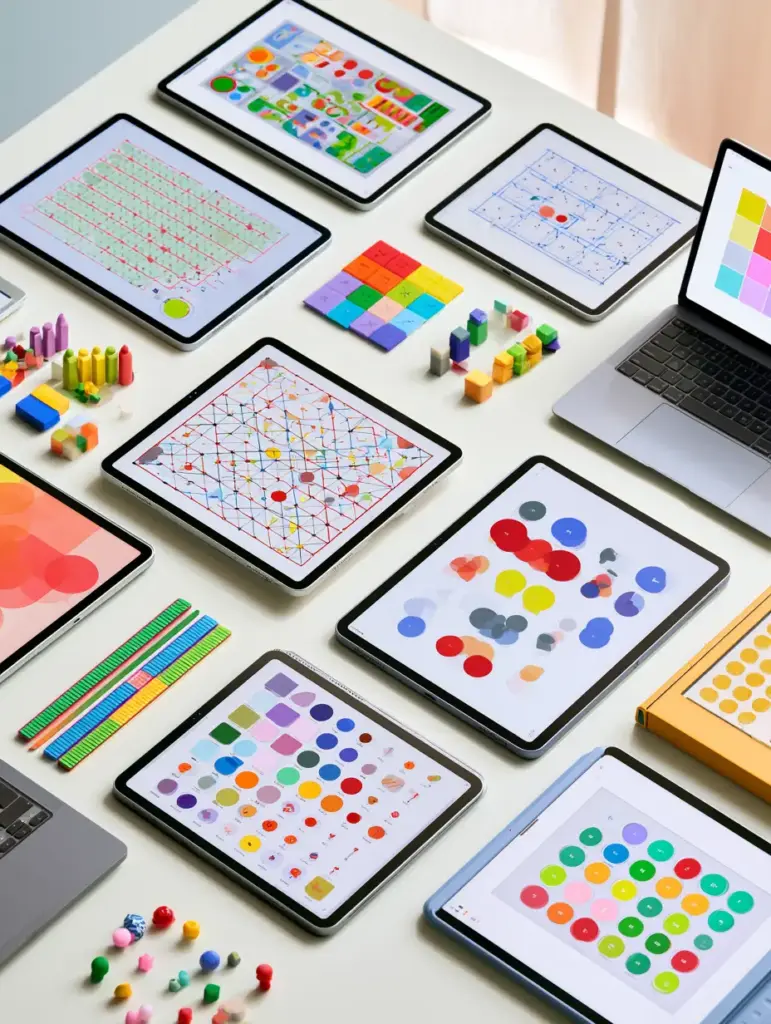
Step-by-Step Edible Math Assembly
Constructing the Digital Geoboards
Begin by spreading a thin, even layer of whipped cream cheese or avocado mash (approx. 1 tbsp or 15g) across the surface of your square crackers. Ensure the edges are clean to mimic a tablet screen. Use thin strips of fruit leather or chives to create “rubber band” shapes, stretching them from corner to corner to form triangles and squares.
Engineering the Base Ten Blocks and Number Lines
Peel your English cucumber and cut it into 10cm (4 inch) long batons to represent “tens.” Dice the remaining cucumber into 1cm (0.4 inch) cubes for “units.” For the number lines, lay pretzel rods end-to-end. Use a piping bag to place small dots of Greek yogurt or hummus at 2cm (0.8 inch) intervals, allowing the “learner” to count along the line.
Creating the Abacus and Fraction Circles
Thread five grapes onto each wooden skewer, alternating colors to signify groups of five. Arrange these horizontally on your board. For the fraction circles, slice your citrus thinly. Keep some slices whole (1/1), cut others in half (1/2), and others into quarters (1/4), arranging them in a cascading “vibrant flat lay” style that emphasizes the relationship between the pieces.
Precision Cutting for Tangrams and Pattern Blocks
Toast your pita bread until it is firm but not brittle. Using a template or keen eye, cut the pita into the seven classic tangram shapes: two large triangles, one medium triangle, two small triangles, one square, and one parallelogram. Similarly, slice your cheese into hexagons and trapezoids to mimic pattern blocks, ensuring all sides are straight and corners are sharp. This precision is vital for the math manipulatives to function as intended.
Expert Tips for Success
- Texture Contrast: Ensure your “tangram” pitas are toasted enough to hold their shape; if they are too soft, the geometric puzzles will collapse during “calculation.”
- Color Coding: Just like virtual math tools, use color to separate concepts. Use red grapes for “tens” and green for “fives” on your abacus.
- Visual Cues: When arranging the board, look for the “studio lighting” effect by placing the brightest items (citrus, peppers) in the center to draw the eye.
- Adhesion: If your “dice” (feta cubes) are sliding, use a tiny drop of honey or hummus on the bottom to “anchor” them to the board.
What to Serve With This Learning Board
To turn this discovery board into a full educational meal, pair it with a hearty dip or a protein-rich side. We recommend serving this alongside our Ultimate Cheesy Chicken Bacon Casserole for a warm contrast to the fresh produce. For a lighter lunch, these manipulatives pair beautifully with a cup of Hearty One-Pot Beef Macaroni Soup, which continues the “shape-based” food theme with its tubular pasta.
If you’re looking for a sweet treat to follow your math lesson, our Ultra Fudgy Brookie Cookies offer a great lesson in volume and mass. Alternatively, keep the fruit theme going with these Cinnamon Air Fryer Apple Fries.
Frequently Asked Questions
Yes, they are a fantastic way to engage students. Just ensure you are aware of any food allergies, particularly with dairy or gluten components.
You can prep the vegetable and cheese shapes up to 24 hours in advance, but assemble the crackers and toast the pita just before serving to maintain their crunch.
We use long cucumber batons to represent ‘tens’ and small cucumber cubes for ‘units.’ This helps students visualize place value while enjoying a healthy snack.
It is highly versatile! The counting bears and abacus are perfect for preschoolers, while the tangrams and fraction circles challenge elementary-aged students.
Edible fraction circles made from sliced citrus or mini pizzas are excellent because they provide a clear visual and tactile representation of parts of a whole.
Recipe for the Math Manipulatives Discovery Board
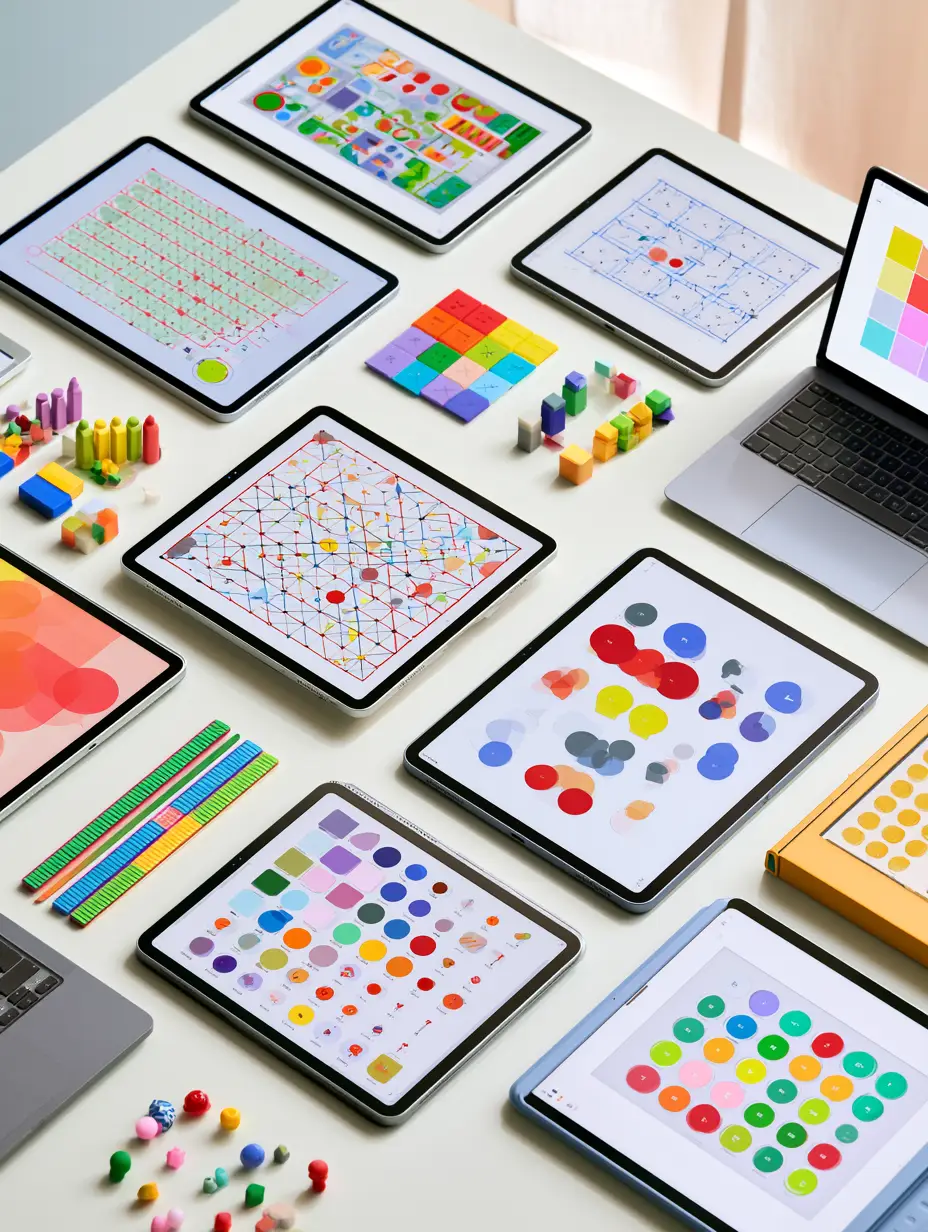
Math Manipulatives Discovery Board: A Vibrant Edible Learning Adventure
Ingredients
Equipment
Method
- Spread 1 tbsp (15g) of cream cheese onto each square cracker, smoothing with an offset spatula until it looks like a clean digital screen.
- Toast pita bread in a 350°F (175°C) oven for 5-7 minutes until crisp. Slice into tangram triangles and squares using kitchen shears.
- Slice cucumber into 4-inch (10cm) rods for tens and 1cm cubes for units; arrange in groups to show place value.
- Slice the orange and limes into thin rounds; leave one whole, cut one in half, and one in quarters to demonstrate fractions.
- Slide 5-10 grapes onto each skewer to create an edible abacus for counting practice.
Notes
Swap cucumbers for celery sticks if you prefer more crunch for your base ten blocks.
Closing & Call to Action
This math manipulatives discovery board is more than just a snack; it is a gateway to engagement and understanding. By bringing these digital concepts into the physical world through culinary art, you create a memorable learning experience that nourishes both the mind and the body. We would love to see your creations! Share your edible math boards with us on Pinterest and leave a comment below with which “manipulative” was your student’s favorite to eat!