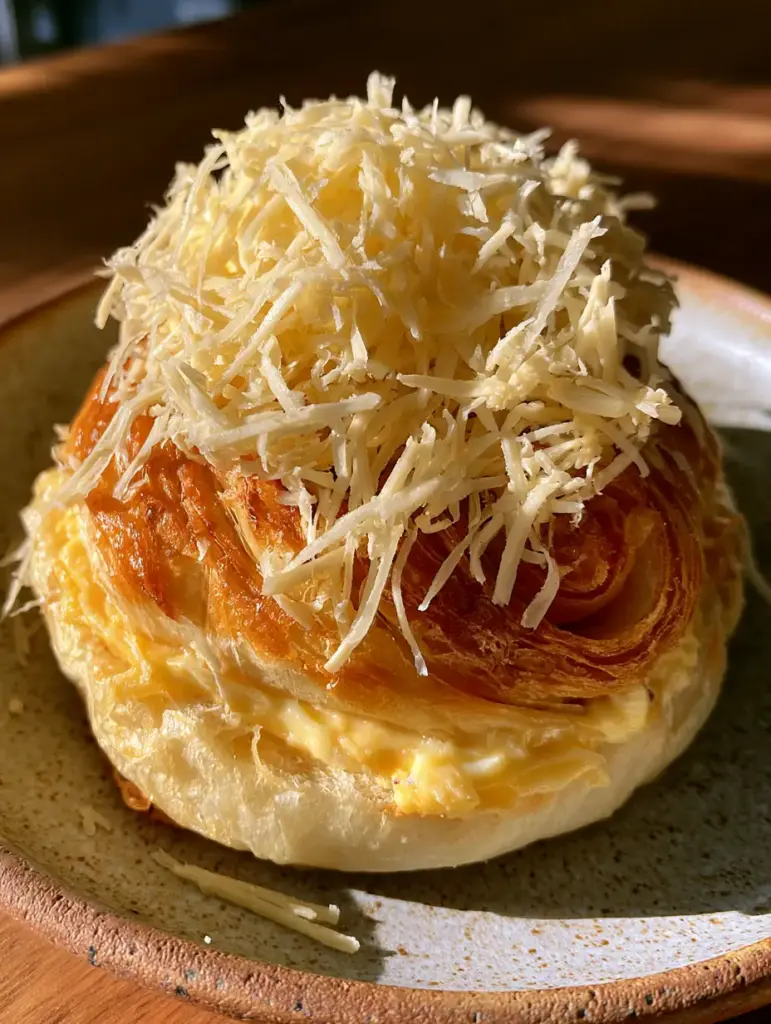
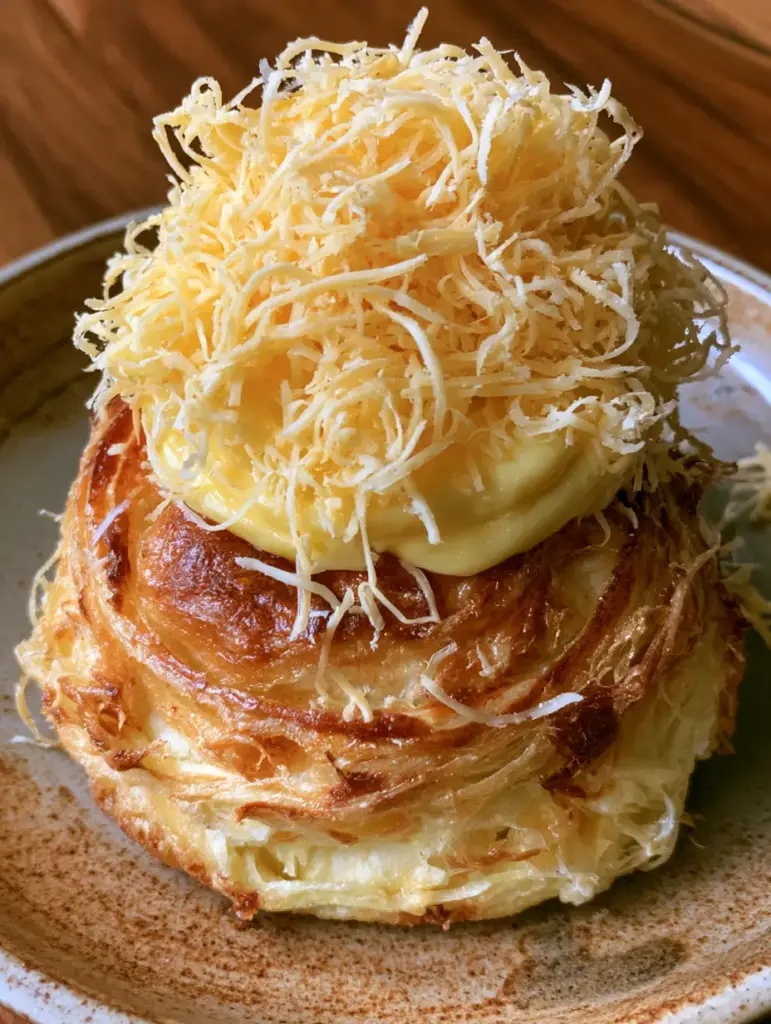
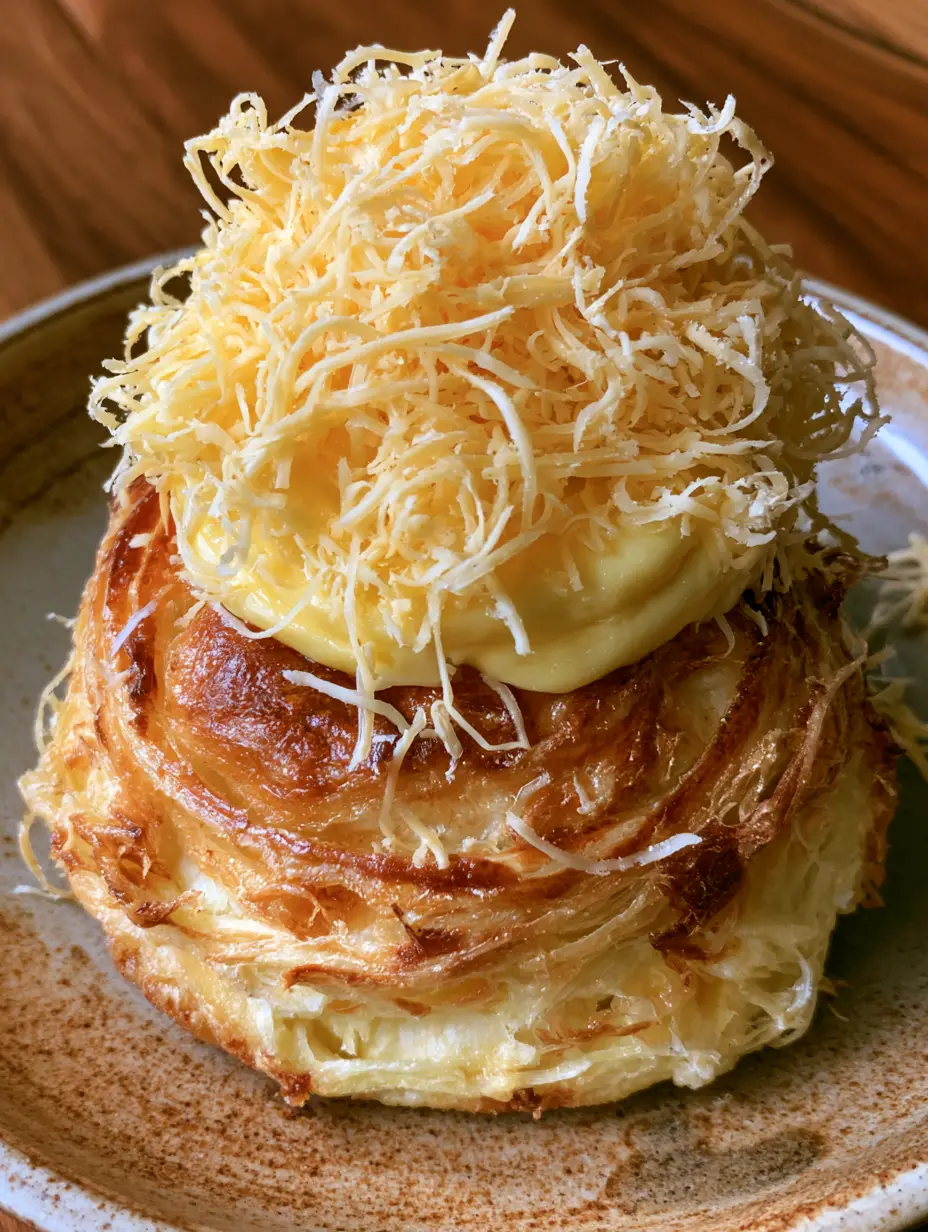
The filipino ensaymada is more than just a pastry; it is a cultural icon of the Philippines, a testament to the country’s rich history and its love for indulgent, sweet-and-savory contrasts. Imagine a bun so light it almost floats, its golden-brown surface hidden beneath a generous slather of silky buttercream and a towering mountain of finely grated cheese.
In this recipe, we are recreating the exact aesthetic of a high-end Filipino bakeshop. We are aiming for that perfect spiral, the ultra-fluffy crumb of an enriched brioche dough, and that signature “morning side lighting” glow that makes the cheese strands look like delicate threads of gold.
Whether you grew up eating these with a cup of hot tsokolate or you are discovering this brioche-style wonder for the first time, this guide will walk you through the science of enrichment and the art of the perfect spiral. Let’s dive into the world of the most decadent Filipino sweet roll ever created.
Why This Is the Best Filipino Ensaymada Recipe You’ll Ever Bake
- The “Cheese Mountain” Effect: We utilize a dual-cheese approach, combining mild cheddar for volume and Queso de Bola for that authentic, salty tang.
- Cloud-Like Brioche Texture: Using high-fat whole milk and extra egg yolks ensures a crumb that stays soft for days, never turning dry or crumbly.
- Pro-Level Visuals: The instructions focus on the authentic spiral shaping technique, ensuring your buns look exactly like the ones found in elite Manila pastry boutiques.
- Perfect Sweet-Savory Balance: The granulated sugar in the dough and the richness of the buttercream provide a canvas for the sharp, salty cheese topping.
The Anatomy of an Enriched Dough: Essential Ingredients
To achieve the results seen in our visual blueprint, every ingredient must serve a structural and flavor-focused purpose. We don’t just use flour and water; we use a precise ratio of fats and proteins to create that legendary “fluffy” result.
Bread Flour (4 cups / 500g): While all-purpose works, bread flour provides the gluten strength needed to support the heavy weight of the butter and egg yolks. This creates the “tall” spiral structure.
Whole Milk (1 cup / 240ml): Use full-fat milk warmed to exactly 110°F (43°C). The fats in the milk tenderize the crumb, while the liquid hydrates the flour’s proteins.
Active Dry Yeast (2 ¼ tsp / 7g): This is our leavening agent. It feeds on the sugar to produce carbon dioxide, which is what creates the “ultra-fluffy” pockets of air in the brioche.
Granulated Sugar (½ cup / 100g): This provides sweetness but also helps with the golden-brown browning of the crust through the Maillard reaction. It also feeds the yeast for a faster rise.
Egg Yolks (4 large): The secret to the rich yellow interior of the filipino ensaymada. Yolks provide lecithin, a natural emulsifier that keeps the dough incredibly soft and moist.
Salted Butter (½ cup / 113g, softened): We use salted butter specifically to enhance the savory notes of the cheese. It must be room temperature so it can be incorporated into the dough without clumping.
Queso de Bola (Edam Cheese): This is the “soul” of the recipe. Its sharp, nutty profile provides the forensic visual accuracy of a traditional high-end ensaymada.
Mild Cheddar Cheese: This adds height and volume to the “mountain” of cheese on top, melting slightly into the buttercream for a cohesive texture.
Must-Have Equipment for Perfect Pastry Spirals
Achieving the perfect filipino ensaymada requires a few specific tools to ensure consistency. A stand mixer is highly recommended, as the dough is quite sticky and requires long kneading times to develop gluten.
You will also need a kitchen scale for precise metric measurements, a rolling pin for flattening the dough into thin rectangles, and a pastry brush for that final butter wash. If you want individual buns, specialized ensaymada molds or a standard muffin tin will help maintain the spiral shape during the second rise.
Mastering the Dough: Step-by-Step Instructions
Step 1: Activating the Yeast and “Blooming”
In the bowl of your stand mixer, combine the warm whole milk (1 cup / 240ml) and a tablespoon of the sugar. Sprinkle the active dry yeast (2 ¼ tsp / 7g) over the surface and let it sit for 5-10 minutes. You are looking for a thick, foamy head to form; this is the sensory cue that your yeast is alive and ready to lift your dough.
Step 2: Mixing the Rich Brioche Base
Add the remaining sugar, egg yolks, and half of the bread flour. Using the dough hook attachment, mix on low speed until a thick paste forms. Gradually add the remaining flour and the softened salted butter (½ cup / 113g) one tablespoon at a time. The dough should look shaggy and slightly greasy at this stage.
Step 3: The Gluten Development Phase
Increase the speed to medium. Knead the dough for 8-10 minutes. You’ll know it’s ready when the dough clears the sides of the bowl and passes the “windowpane test”—you should be able to stretch a small piece of dough thin enough to see light through it without it tearing. If it tears, keep kneading.
Step 4: The First Rise (Bulk Fermentation)
Place the dough in a lightly oiled bowl and cover it with a damp cloth. Let it rise in a warm, draft-free spot for 1 to 1.5 hours. Look for the dough to double in size and feel “jiggly” to the touch. This slow fermentation is where the deep, yeasty flavor of the filipino ensaymada develops.
Step 5: Shaping the Iconic Spirals
Punch the dough down to release excess gas. Divide the dough into 12 equal portions (approx 80g each). Roll each portion into a thin rectangle (about 8 inches long). Brush the surface with melted butter, then roll it up tightly like a cigar. Take that “cigar” and coil it around itself into a spiral shape, tucking the end underneath.
Step 6: The Second Rise and Golden Bake
Place the shaped buns into greased molds or onto a baking sheet. Let them rise again for 45-60 minutes until they look “puffy” and delicate. Bake in a preheated oven at 350°F (175°C) for 15-18 minutes. The sensory cue here is a “perfectly golden-brown” crust that feels soft but springy when touched.
Crafting the Whipped Buttercream and Cheese Mountain
While the buns cool, prepare the topping. Cream together ½ cup (113g) of softened salted butter and ¾ cup (90g) of powdered sugar until light and fluffy. If you want a deeper flavor, you could even use a brown butter buttercream for a toasted, nutty note.
Once the ensaymada are completely cool, spread a thick layer of this buttercream over the top. This is the “glue” for our cheese. Now, take your finely grated cheddar and Queso de Bola and pile it high. Do not press it down; let it sit loosely to create that “towering, airy mountain” look described in our visual prompt.
Expert Tips for Bakery-Quality Results
- Temperature Control: Ensure your eggs and butter are truly at room temperature. Cold ingredients will shock the yeast and slow down the rise, leading to dense buns.
- Don’t Skimp on the Butter: The richness of the filipino ensaymada comes from the high fat content. Use the best quality European-style butter you can find for the buttercream topping.
- The Grate Factor: Use the finest side of your box grater for the cheese. The finer the grate, the more volume you get, creating that “airy” visual texture.
- Steam in the Oven: Place a small pan of hot water on the bottom rack of the oven while baking. This creates a moist environment that allows the dough to expand fully before the crust sets.
The Best Way to Store and Reheat Your Pastries
Fresh filipino ensaymada are best eaten within 24 hours. However, if you have leftovers, store them in an airtight container at room temperature for up to 2 days. For longer storage, you can refrigerate them for up to a week.
To recreate that “fresh from the oven” experience, microwave a single bun for 10-15 seconds. This will slightly melt the buttercream and soften the brioche without losing the structure of the cheese mountain. You can also freeze the un-frosted buns for up to 3 months; just thaw and add the buttercream and cheese before serving.
What to Serve With Filipino Ensaymada
These buns are incredibly rich, so they pair perfectly with contrasting textures and flavors. For a traditional merienda (afternoon snack), serve them with a hot chocolate or a strong coffee.
If you are hosting a brunch, these sweet rolls pair beautifully with a fresh cheesecake fruit salad. The acidity of the fruit cuts through the richness of the buttercream. For a more diverse spread of Filipino treats, consider serving them alongside mango sticky rice rolls or even a savory dulce de leche bread for those who love caramel flavors.
Frequently Asked Questions
Yes, you can use mild or sharp cheddar. However, Queso de Bola (Edam) provides a unique salty, nutty flavor that is characteristic of traditional Filipino holiday ensaymada.
While molds help maintain a tall, uniform spiral, you can bake them on a flat baking sheet. Just ensure the end of the spiral is tucked firmly underneath to prevent it from unfurling during the rise.
Ensure your buttercream is whipped to a light, ‘fluffy’ consistency. Use a fine grater for the cheese so the strands are lightweight, allowing them to pile high without collapsing the buttercream.
The secret lies in high hydration and enrichment. Using extra egg yolks and full-fat milk, combined with a long kneading process to develop strong gluten, ensures the dough can hold its shape while remaining airy.
Enriched doughs are naturally sticky due to the sugar and fat. Avoid adding too much extra flour; instead, use a stand mixer and rely on gluten development to make the dough manageable.
The Ultimate Filipino Ensaymada Recipe
Filipino Ensaymada: The Ultimate Guide to Ultra-Fluffy Brioche with Queso de Bola
Ingredients
Equipment
Method
- Mix warm milk, 1 tbsp sugar, and yeast. Let stand until foamy (about 10 mins).
- Add yolks, remaining sugar, and flour. Mix with dough hook, adding softened butter gradually. Knead 8-10 mins until it passes the windowpane test.
- Cover and let rise in a warm spot for 1-1.5 hours until doubled and jiggly.
- Divide dough into 12 pieces. Roll each into a rectangle, brush with butter, roll into a log, then coil into a spiral.
- Place in molds. Let rise 45-60 mins until puffy.
- Bake at 350°F (175°C) for 15-18 mins until the crust is a perfect golden brown.
- Whip butter and powdered sugar until white and fluffy.
- Spread buttercream on cooled buns. Pile a towering mountain of finely grated cheddar and Queso de Bola on top.
Notes
Ensure the cheese is grated very fine to achieve the signature airy mountain look.
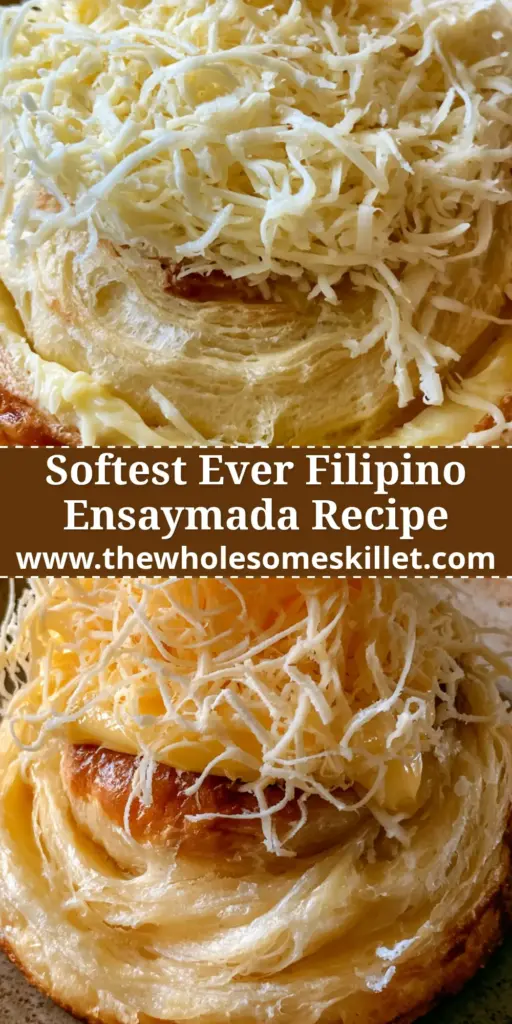
This recipe brings the authentic taste of the Philippines into your home kitchen. With its spiraled layers, rich buttercream, and salty cheese, it’s a masterclass in pastry balance. If you enjoyed making this, don’t forget to explore our other enriched bread recipes like the boston cream donuts or our festive cinnamon swirl bundt cake.
We’d love to see your “Cheese Mountains!” Share your photos and tag us, or pin this recipe to your favorite dessert board on Pinterest. Happy baking!