The lemon custard cake is a culinary miracle that defies logic in the most delicious way possible. With just one simple batter, this dessert transforms in the oven into two distinct, mouthwatering layers: a light, golden airy sponge on top and a silky, melt-in-your-mouth lemon custard on the bottom.
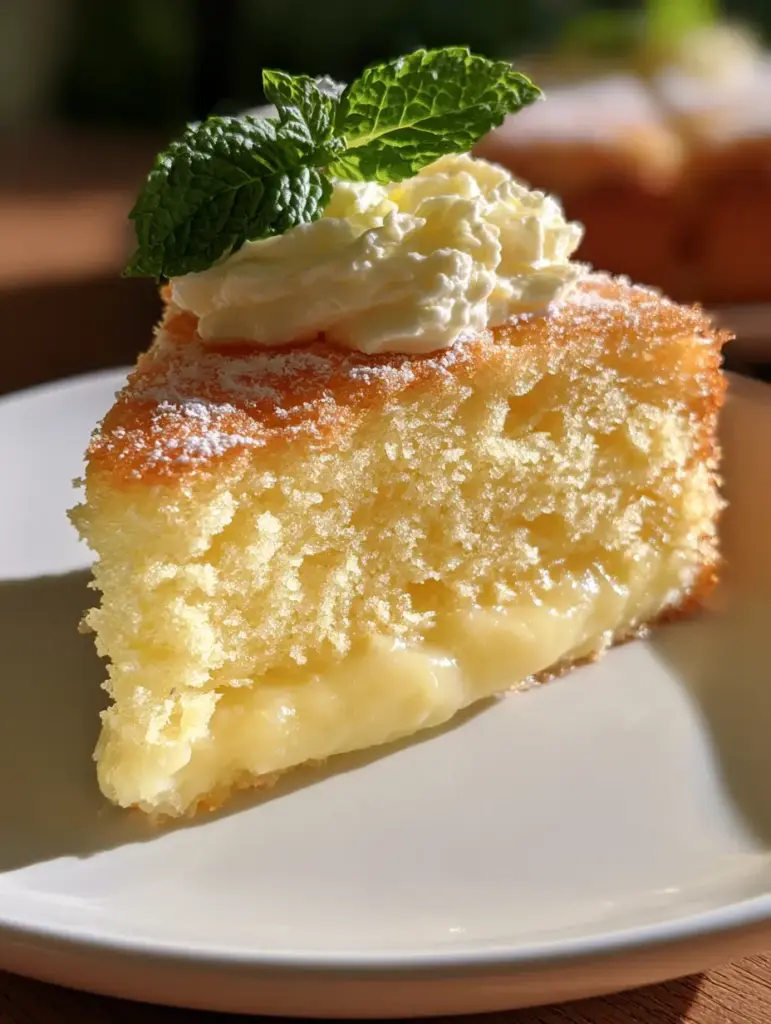
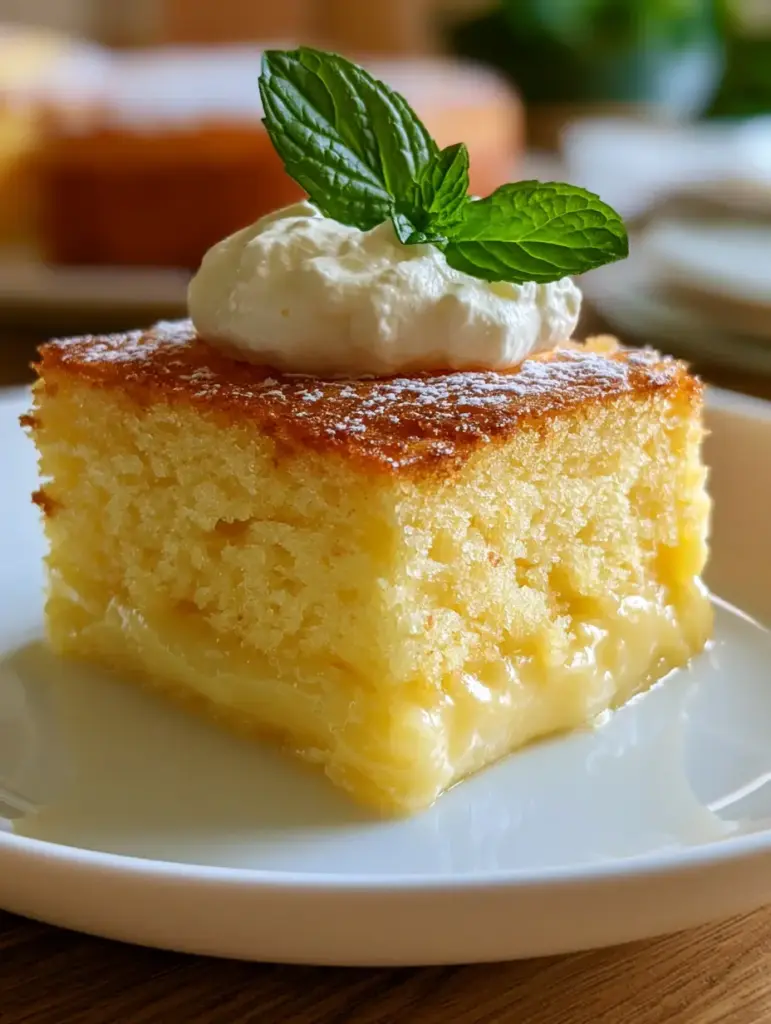
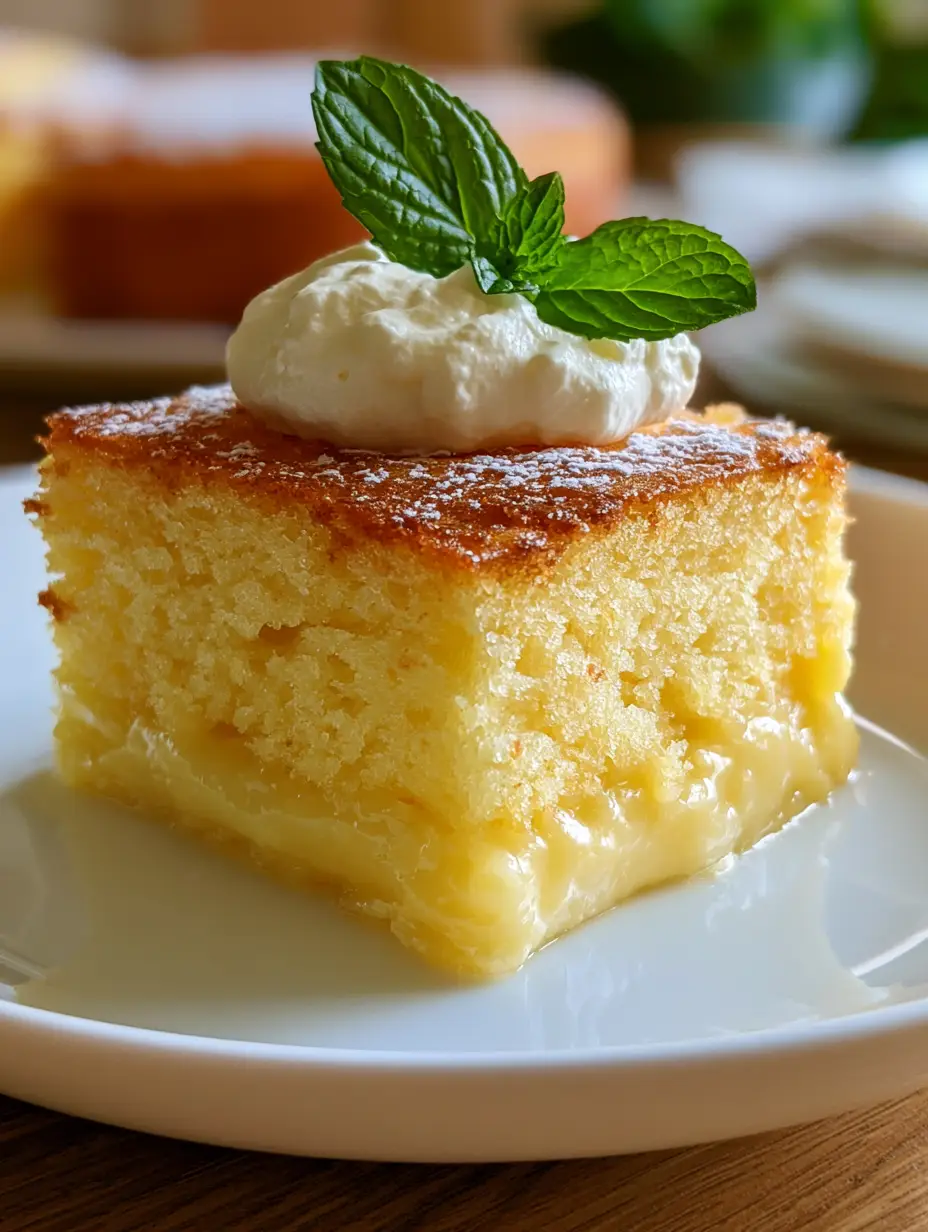
Imagine slicing into a thick piece of cake served on a simple white ceramic plate, resting against a rustic wood background. The top is dusted with a snowy layer of powdered sugar, crowned with a generous dollop of whipped cream and a vibrant sprig of fresh mint. This isn’t just a recipe; it’s a sensory experience captured in a handheld smartphone photo that looks as good as it tastes.
Whether you are hosting a spring brunch or simply craving a zesty treat, this magic cake delivers high-impact flavor with minimal effort. Let’s dive into the science of how this single-batter wonder creates the perfect citrus harmony.
Why This Magic Lemon Dessert Is a Showstopper
- Dual-Texture Magic: You get the structural satisfaction of a sponge cake and the creamy decadence of a custard in every single bite.
- Intense Citrus Profile: We use both fresh lemon zest and juice to ensure the brightness cuts through the richness of the eggs and butter.
- Visually Stunning: The contrast between the golden-brown top and the pale, silky bottom layer makes for professional-quality food photography.
- Simple Ingredients: Despite its complex appearance, it uses pantry staples you likely already have in your kitchen.
Essential Components for the Perfect Lemon Custard Cake
Large Eggs (separated): 4 large eggs (approx. 200g) are the backbone of this recipe. The yolks provide the rich base for the custard, while the whipped whites create the airy sponge top.
Granulated Sugar: 3/4 cup (150g) of sugar sweetens the batter and helps stabilize the egg whites during the whipping process.
Unsalted Butter: 1/2 cup (115g) of butter, melted and slightly cooled, adds fat for a tender crumb and a luxurious mouthfeel in the custard layer.
All-Purpose Flour: 3/4 cup (95g) of flour provides just enough structure to keep the sponge afloat without making the custard too dense.
Whole Milk: 2 cups (480ml) of lukewarm milk are critical. The milk must be warm to the touch (about 105°F/40°C) to ensure the ingredients emulsify correctly and separate into layers.
Fresh Lemon Zest and Juice: 1 tbsp (6g) of zest and 2 tbsp (30ml) of juice provide the essential acidic lift. If you love this flavor profile, you might also enjoy these lemon sugar cookies.
Cream of Tartar: 1/4 tsp (1g) helps stabilize the meringue, ensuring your sponge layer doesn’t collapse during the folding process.
Foundational Seasoning: A pinch of fine sea salt enhances the lemon notes and balances the sweetness of the powdered sugar topping.
Must-Have Tools for Success
To achieve the “magic” separation, you will need a few specific tools. A high-quality stand mixer or electric hand mixer is essential for achieving stiff peaks with the egg whites. A 8×8 inch (20x20cm) square baking pan is the ideal size for a thick, handheld slice.
You will also need a silicone spatula for the delicate folding process. If you enjoy the technical side of custard-based bakes, you should try making an eggnog custard tart during the holiday season. A fine-mesh sieve is also required for that final, picture-perfect dusting of powdered sugar.
Mastering the Magic: Step-by-Step Instructions
Step 1: Preparing the Zesty Foundation
Preheat your oven to 325°F (160°C). Grease an 8-inch square baking dish and line it with parchment paper, leaving an overhang on two sides for easy removal. In a large bowl, beat the 4 egg yolks and 3/4 cup (150g) sugar until the mixture is pale yellow and doubled in volume.
Slowly whisk in the 1/2 cup (115g) of melted butter, lemon zest, and lemon juice. Continue mixing for 2 minutes until the fats are fully incorporated into the yolk base. This creates the richness required for the bottom custard layer.
Step 2: Incorporating the Dry and Liquid Elements
Gently whisk in the 3/4 cup (95g) of flour and the pinch of salt until just combined. The batter will be quite thick at this stage. Gradually pour in the 2 cups (480ml) of lukewarm milk, whisking constantly.
Don’t be alarmed—the batter will become very thin and watery. This high liquid content is exactly what allows the flour to settle and create the custard base while the air stays trapped in the egg whites for the top.
Step 3: Whipping the Meringue to Stiff Peaks
In a separate, clean glass or metal bowl, beat the 4 egg whites with 1/4 tsp (1g) cream of tartar. Start on low speed until foamy, then increase to high. Beat until stiff peaks form—when you lift the beaters, the points should stand straight up without drooping.
This “meringue” is what provides the lift for the golden airy sponge. If you like airy bakes, our Brazilian coconut custard cake follows a similar scientific principle of texture separation.
Step 4: The Delicate Folding Process
Using a spatula, gently fold the egg whites into the thin batter. Do not use a whisk! You want to leave small “clouds” of egg white floating on the surface. These clouds will rise to the top in the heat of the oven to form the cake layer.
Pour the mixture into your prepared pan. The visual cue here is a watery liquid with white foam floating on top. Smooth the surface slightly with the back of a spoon if needed, but do not over-mix.
Step 5: Baking for the Perfect “Jiggle”
Bake for 45–50 minutes. You are looking for a specific sensory cue: the top should be a deep golden brown and feel springy, but the cake should still have a slight “jiggle” when the pan is gently shaken. This ensures the custard remains silky rather than rubbery.
Allow the cake to cool completely in the pan for at least 2 hours. For the best results, refrigerate for another hour to let the custard set fully before slicing. This is similar to the patience required for a strawberry custard cake.
Expert Tips for Visual and Texture Perfection
- Room Temperature Ingredients: Ensure your eggs are at room temperature so the whites whip to their maximum volume.
- The Milk Temperature: If the milk is too cold, the butter will clump. If it’s too hot, it will cook the eggs prematurely. Aim for “baby bath” warm.
- Avoid Over-Folding: If you fold until the batter is completely smooth, you will lose the distinct sponge layer on top.
- The Clean Cut: Use a sharp knife dipped in hot water and wiped dry between each cut to get those perfectly defined layers shown in the photo.
Storage, Reheating, and Make-Ahead Advice
This lemon custard cake is best served chilled or at room temperature. Because of the high egg and dairy content, it must be stored in the refrigerator. Wrap the pan tightly with plastic wrap or transfer slices to an airtight container.
The cake will stay fresh for up to 4 days in the fridge. We do not recommend freezing this cake, as the delicate custard layer can become grainy and lose its silky texture upon thawing. If you need a freezer-friendly citrus treat, consider our lemon rice krispie treats instead.
Perfect Pairings for a Bright Dessert
While the blueprint calls for a fresh dollop of whipped cream and mint, you can elevate this dish further. A side of macerated berries or a drizzle of raspberry coulis provides a beautiful color contrast against the white plate.
If you are serving this as part of a larger dessert spread, it pairs beautifully with other textured bakes like a caramel pound cake or even a rich flourless chocolate cake for those who want a variety of options.
Frequently Asked Questions
While you can, fresh lemon juice and zest provide a much brighter, superior flavor that balances the richness of the custard better than bottled versions.
Yes, because the bottom layer is a true egg-based custard, it must be stored in the refrigerator to stay fresh and maintain its structure.
The top should be golden and feel set like a sponge cake, but the entire pan should still have a slight jiggle in the center when moved. It will fully set as it cools.
This usually happens if the egg whites were over-mixed into the batter. You must gently fold them so that small ‘clouds’ of egg white remain floating on the surface to form the sponge layer.
The Ultimate Lemon Custard Cake Recipe
Lemon Custard Cake: The Ultimate Magic Layer Dessert Recipe
Ingredients
Equipment
Method
- Preheat oven to 325°F (160°C). Grease and line an 8-inch square pan with parchment paper.
- Whisk egg yolks and sugar until pale and doubled in volume. Mix in melted butter, lemon zest, and juice.
- Whisk in flour and salt. Gradually pour in lukewarm milk, whisking until a thin batter forms.
- In a clean bowl, beat egg whites with cream of tartar until stiff peaks form.
- Gently fold the egg whites into the batter using a spatula. Leave small clumps of egg white floating; do not over-mix.
- Pour into pan and bake for 45-50 minutes until the top is golden-brown but the center still jiggles slightly.
- Cool completely, then refrigerate for 1 hour. Dust with powdered sugar, top with whipped cream, a lemon slice, and a mint sprig before serving.
Notes
Do not over-fold the egg whites, as they are necessary for the top sponge layer to form properly.

Bring the Magic to Your Kitchen
There is something truly rewarding about pulling a lemon custard cake out of the oven and seeing that perfect golden crust. It is a dessert that proves you don’t need a professional bakery to create something sophisticated and visually stunning. The combination of zesty lemon, airy sponge, and creamy custard is a timeless trio that never fails to impress.
We would love to see your results! If you make this recipe, please leave a comment below and let us know how your layers turned out. Don’t forget to snap a photo and share it with us by tagging thewholesomeskillet on social media, and be sure to pin this recipe to your favorite dessert board on Pinterest.