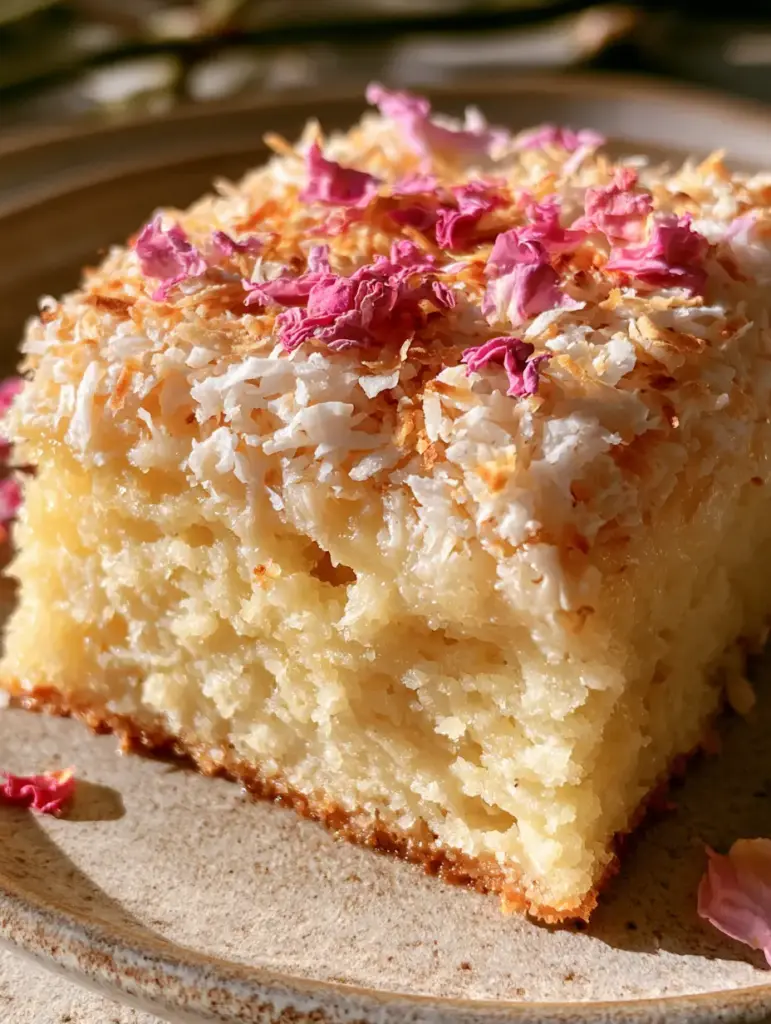
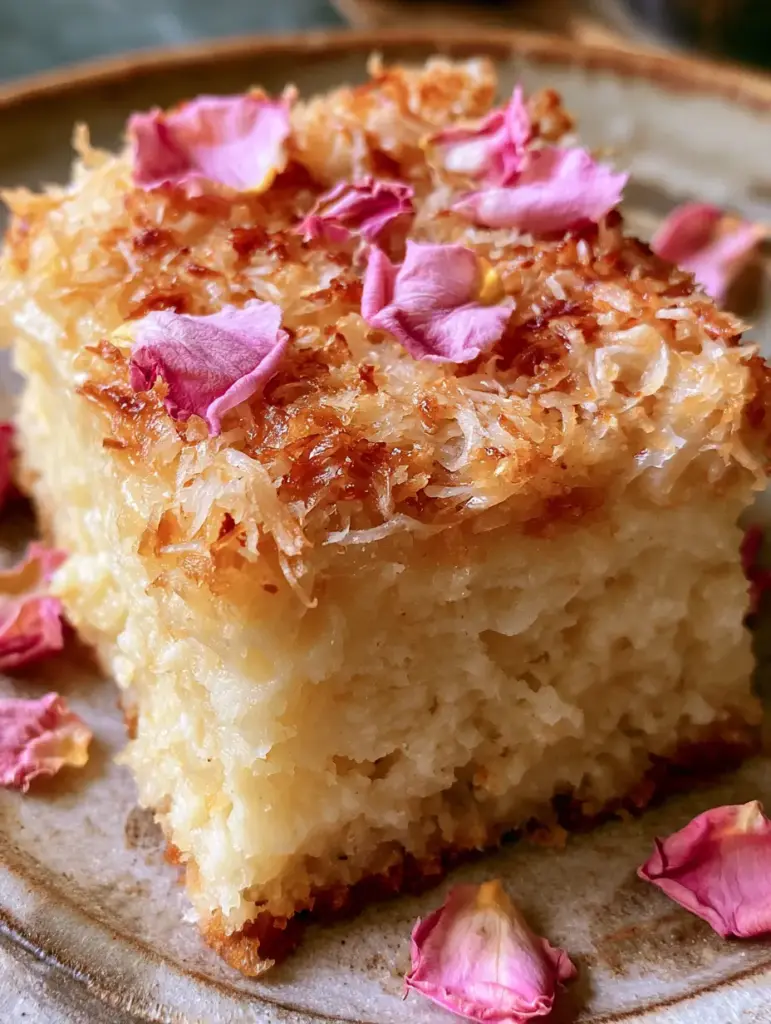
Imagine a dessert that captures the essence of a sun-drenched Italian afternoon, blending the creamy richness of traditional dairy with the tropical allure of toasted coconut. This coconut ricotta cake is not just a treat; it is a sensory experience designed for those who appreciate the finer nuances of pastry texture and floral aesthetics. From the first glance at its golden, coconut-encrusted surface to the final bite of its moist, airy crumb, this cake delivers a sophisticated profile that is both rustic and refined.
The beauty of this recipe lies in the “forensic” details—the way the dried rose petals provide a delicate pop of color against the crunch of the coconut, and how the ricotta creates a marble-like texture within the sponge. Unlike dense pound cakes, this version focuses on a fluffy, airy sponge that remains incredibly damp thanks to the high moisture content of the cheese. It is the perfect centerpiece for a spring brunch or an elegant evening gathering.
Capturing the perfect shot of this cake, as seen in our handheld smartphone photography, requires no filters—only soft natural daylight to highlight the intricate layers of flavor. Whether you are a seasoned baker or a curious novice, this guide will walk you through the culinary science of achieving that signature “melt-in-your-mouth” ricotta crumb every single time.
Why You Will Fall in Love with This Italian-Inspired Masterpiece
- The Perfect Crumb: The combination of whipped eggs and whole-milk ricotta results in an airy, slightly damp crumb that defies the heaviness of traditional cakes.
- Crunchy-Soft Contrast: Every slice features a dense layer of crunchy toasted coconut flakes that offsets the soft natural light-reflecting sponge.
- Sophisticated Aromatics: The inclusion of dried edible rose petals adds a subtle floral high note that elevates the coconut from simple to sublime.
- Visual Elegance: With its marble texture and vibrant pink accents, this cake is naturally photogenic and requires minimal effort to look professional.
Essential Elements for the Ultimate Coconut Ricotta Cake
To achieve the specific visual recipe blueprint we have laid out, every ingredient serves a dual purpose: structural integrity and aesthetic appeal. We do not just want flavor; we want that specific “airy sponge” texture described in our forensic analysis.
Whole Milk Ricotta Cheese: 1.5 cups (375g). This is the soul of the cake, providing the “damp” texture and the subtle marble pockets in the crumb. Always use full-fat for the best mouthfeel.
Unsweetened Shredded Coconut: 1 cup (90g). We fold this into the batter to ensure the coconut flavor is structural, not just a topping. It helps absorb excess moisture while providing a soft chew.
Large Eggs: 3 units. Room temperature eggs are vital for the “fluffy cake texture.” They provide the lift and aeration necessary to keep the ricotta from becoming too dense.
All-Purpose Flour: 1.5 cups (190g). The scaffold of our cake. We use a precise amount to ensure the cake holds its shape without becoming bready.
Granulated Sugar: 1 cup (200g). Sugar does more than sweeten; it tenderizes the crumb by slowing down gluten development, ensuring that “airy” quality.
Baking Powder: 2 tsp (10g). Our primary leavening agent. It reacts with the moisture in the ricotta to create the tiny air pockets seen in the macro shot.
Unsalted Butter: 0.5 cups (115g), melted and cooled. Butter provides the fat needed for a tender crumb and helps the coconut flakes on top reach that “golden toasted” state.
Coconut Milk: 0.25 cups (60ml). This reinforces the primary keyword flavor and adds a silky richness to the marble texture batter.
Dried Edible Rose Petals: 2 tbsp (5g). These are the crowning jewel. They must be food-grade and added at the very end to maintain their delicate pink hue.
Large Flake Toasted Coconut: 0.5 cups (45g). These are for the topping. The “dense layer” mentioned in the blueprint comes from generously applying these before and after the final bake.
Vanilla and Almond Extracts: 1 tsp (5ml) each. The almond extract acts as a flavor bridge, making the coconut taste deeper and more complex.
Fine Sea Salt: 0.5 tsp (3g). A foundational invisible ingredient that balances the sweetness and makes the floral notes of the rose petals pop.
Professional Tools for a Flawless Bake
To replicate the “thick slice” look from our smartphone photo, you need a high-sided 8-inch (20cm) springform pan. This allows the cake to rise vertically without spreading, maintaining that signature airy height. A fine-mesh sieve is also essential for aerating the flour, which is a non-negotiable step for an “airy sponge.” Finally, ensure you have a wire cooling rack; cooling the cake in the pan for too long will trap steam and ruin the “damp but fluffy” balance we are aiming for.
The Step-by-Step Path to Coconut Ricotta Perfection
Preparation and Aeration
Begin by preheating your oven to 350°F (175°C). Grease your springform pan with butter and line the bottom with parchment paper. Sift your flour, baking powder, and salt together twice. This may seem redundant, but it is the secret to the “airy sponge” described in our visual blueprint.
Creaming the Ricotta Base
In a large bowl, whisk the ricotta, sugar, and melted butter until the mixture is smooth and pale. Add the eggs one at a time, beating vigorously after each addition. You are looking for a sensory cue here: the batter should look slightly aerated and have tiny bubbles on the surface, indicating you’ve incorporated enough air for a “fluffy cake texture.”
Integrating the Coconut Flourish
Gently fold in the shredded coconut, vanilla, and almond extracts. Slowly pour in the coconut milk while stirring. At this point, the batter should have a “marble texture”—not perfectly homogenous, but showing beautiful ribbons of creamy ricotta and coconut.
Folding and Finishing
Using a rubber spatula, fold the dry ingredients into the wet mixture. Stop the moment no streaks of flour remain. Over-mixing at this stage will destroy the air bubbles and result in a flat cake rather than the “moist ricotta crumb” we desire. Pour the batter into the prepared pan and smooth the top with an offset spatula.
The Toasted Topping Technique
Sprinkle half of your coconut flakes over the raw batter. As the cake bakes, these will sink slightly and become “golden toasted,” creating that dense, crunchy layer mentioned in the Midjourney prompt. Save the dried rose petals for after the bake to preserve their delicate structure.
Baking and Sensory Cues
Bake for 45-50 minutes. Look for the “golden-brown” edges and a center that slightly jiggles but feels firm to a light touch. A toothpick inserted into the center should come out with a few damp crumbs attached—this is the visual confirmation of a “moist Italian coconut ricotta cake.”
Expert Tips for Success
- Drain Your Ricotta: If your ricotta seems particularly watery, let it sit in a fine-mesh strainer for 15 minutes. Excess water can turn a “moist crumb” into a “soggy crumb.”
- Toast the Topping Separately: For the most vibrant “golden toasted coconut flakes,” you can toast the flakes in a dry skillet for 2 minutes before adding them to the cake.
- Rose Petal Timing: Only add the dried edible rose petals once the cake has cooled slightly. If the cake is too hot, the petals will wilt and lose their vibrant pink color.
- Room Temperature Ingredients: Ensure your eggs and coconut milk are not cold. Cold ingredients will cause the melted butter to seize, ruining the marble texture.
Storing, Reheating, and Freezing Your Cake
Because this coconut ricotta cake is naturally damp, it stores beautifully. Keep it in an airtight container at room temperature for up to two days. For longer storage, refrigerate for up to five days; however, note that the coconut flakes may lose some of their “crunchy” texture in the fridge.
To freeze, wrap individual thick slices in plastic wrap and then foil. They will stay fresh for up to three months. To reheat, simply let the slice come to room temperature, or give it a quick 10-second burst in the microwave to restore the “soft natural light” warmth of a fresh bake.
What to Serve with This Coconut Delight
This cake is a standalone star, but it pairs beautifully with other textures and flavors. For a truly tropical spread, consider serving it alongside a slice of creamy Brazilian coconut cake or some crunchy toasted coconut bars.
If you prefer a contrast in flavors, the floral notes of the rose petals pair exceptionally well with citrus. A side of lemon custard cake or a few chewy almond ricotta cookies can turn a simple dessert into a full Italian-inspired dessert board. For those who love a visual swirl, serving this with a fruity strawberry swirl cake creates a stunning palette on the plate.
Frequently Asked Questions
Yes, but you must ensure they are labeled as ‘food-grade’ or ‘edible.’ Culinary rose petals are processed differently than those found in floral shops to be safe for consumption.
We recommend whole-milk ricotta for the best results. Low-fat ricotta has higher water content and less fat, which can result in a rubbery texture rather than the desired moist ricotta crumb.
Apply half the flakes before baking so they toast into the batter, and add the remaining pre-toasted flakes after the cake has cooled. This creates a multi-textured, crunchy dense layer.
The marble texture is achieved by the pockets of ricotta cheese that don’t fully homogenize with the flour, creating a beautiful variegated crumb that is both damp and fluffy.
Density usually comes from over-mixing the batter or using cold ingredients. To ensure an airy sponge, sift your flour twice and make sure your eggs are room temperature before whisking.
The Ultimate Coconut Ricotta Cake Recipe
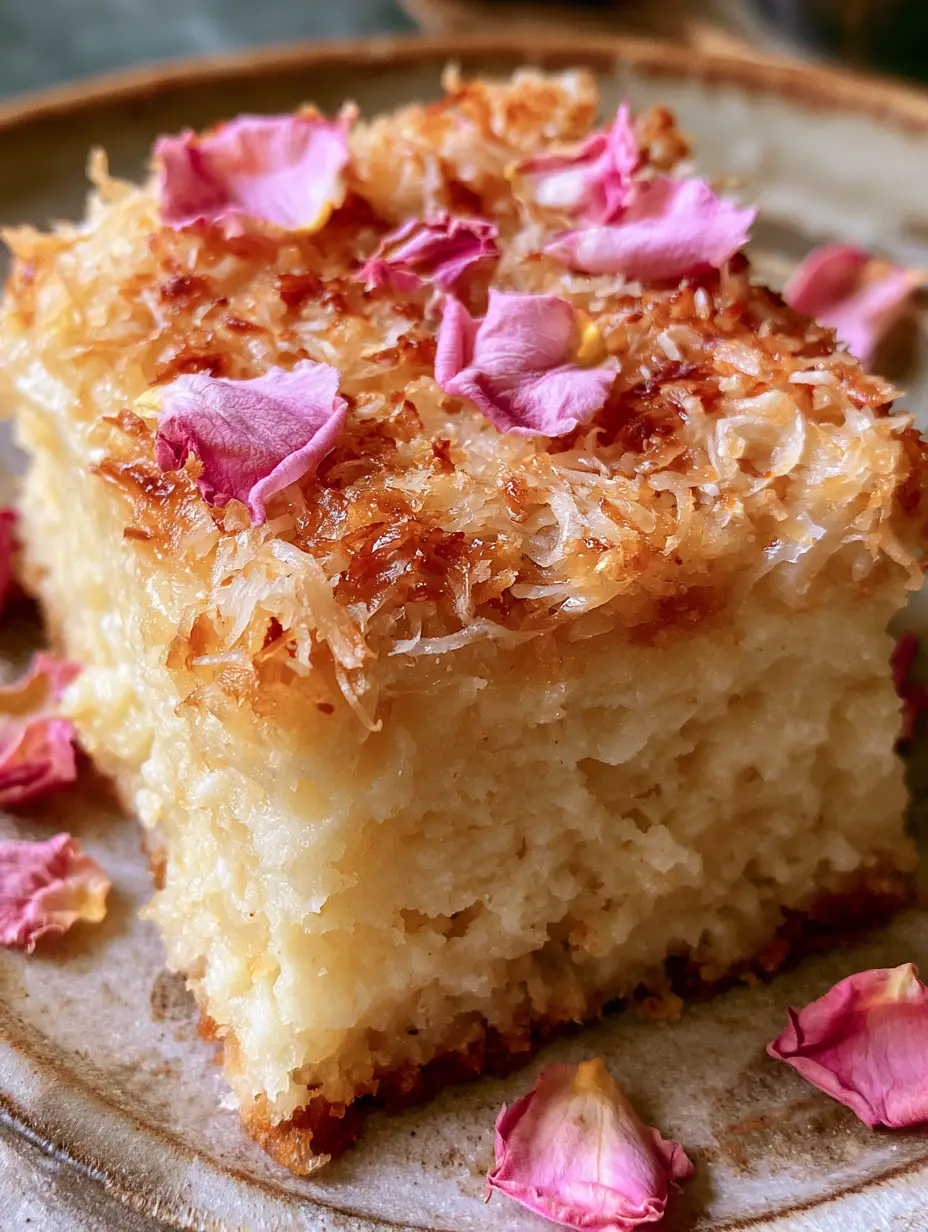
Coconut Ricotta Cake with Toasted Coconut and Dried Rose Petals
Ingredients
Equipment
Method
- Preheat oven to 350°F (175°C). Grease an 8-inch springform pan and line with parchment paper. Sift flour, baking powder, and salt together twice for maximum aeration.
- In a large bowl, whisk ricotta, sugar, and melted butter until smooth. Add eggs one at a time, beating until tiny air bubbles appear on the surface.
- Fold in shredded coconut, vanilla, almond extract, and coconut milk until a marble texture forms.
- Gently fold in the sifted flour mixture using a spatula. Stop as soon as no flour streaks are visible to maintain the fluffy cake texture.
- Pour into pan, top with half the coconut flakes. Bake for 45-50 minutes until golden brown and a toothpick comes out with damp crumbs.
- Cool on a wire rack. Once slightly cooled, top with remaining toasted coconut and dried rose petals for the final visual result.
Notes
Tip 2. Sift the flour twice to ensure an airy, light sponge texture.
Closing & Call to Action
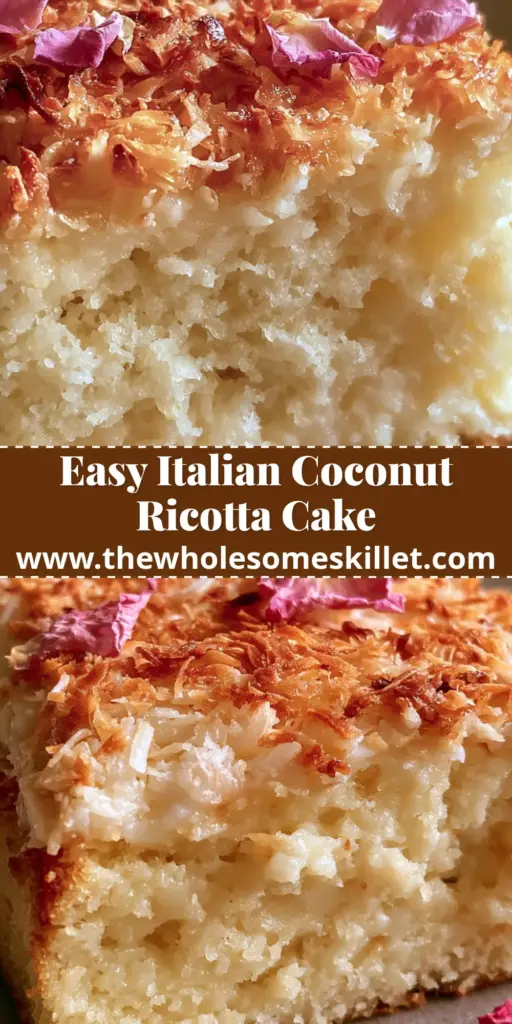
Mastering the coconut ricotta cake is a journey into the heart of Italian texture and tropical flavor. With its moist ricotta crumb and the elegant crunch of toasted coconut, it is a recipe that promises to impress both visually and gastronomically. We hope this guide helps you achieve the perfect “airy sponge” and “golden toasted” finish seen in our photos.
If you enjoyed this recipe, please leave a comment below and let us know how your marble texture turned out! Don’t forget to follow us and share your creations on Pinterest. Your support helps us continue to develop these forensic-level culinary guides!