There is something undeniably nostalgic about the scent of glazed praline pecans wafting through a home. This specific recipe captures the essence of a Southern candy shop, delivering a thick, glossy, bubbling brown sugar and butter glaze that clings to every crevice of the toasted nut. Unlike thin, sandy coatings, this method ensures a professional, glass-like finish that catches the light beautifully.
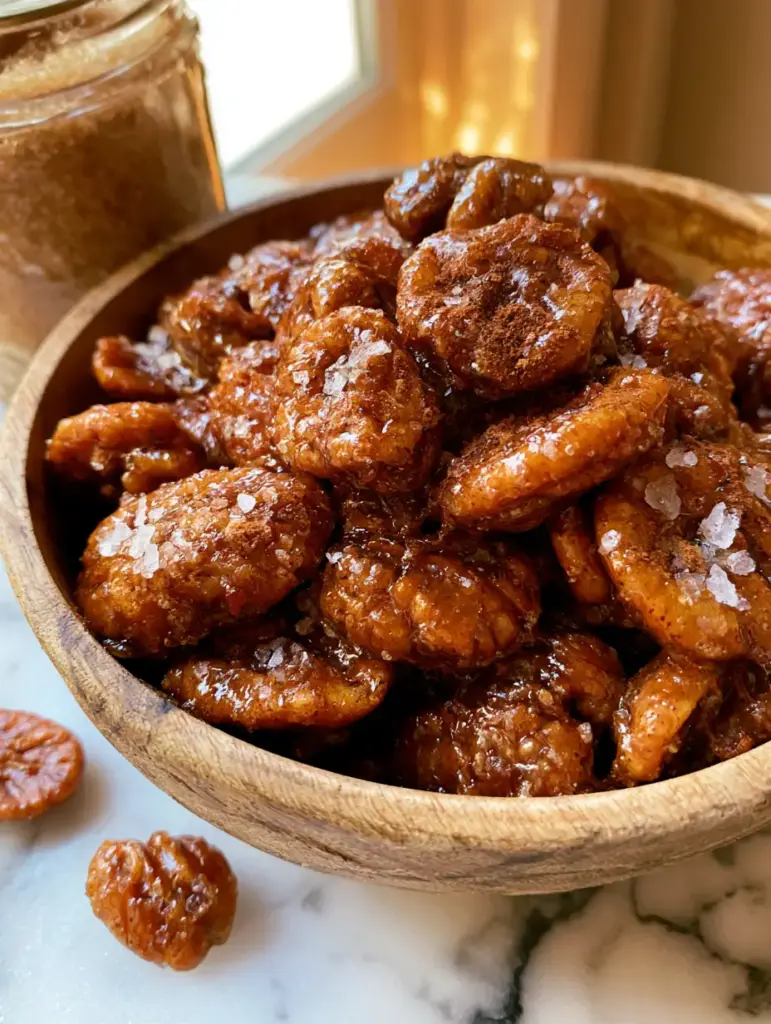
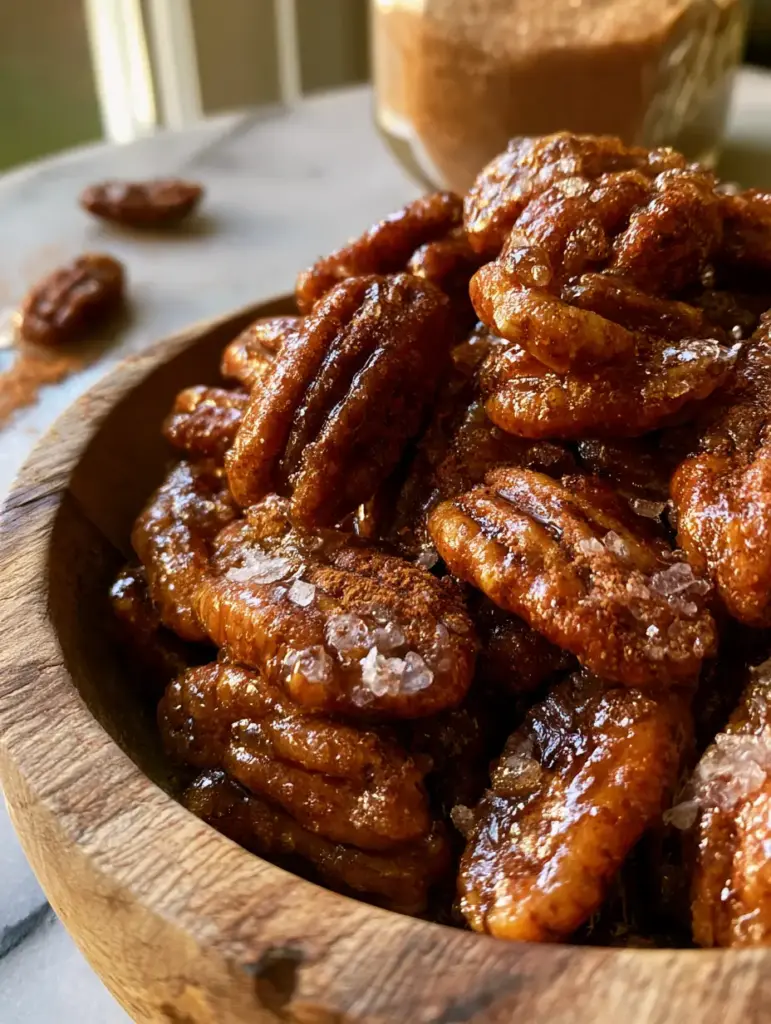
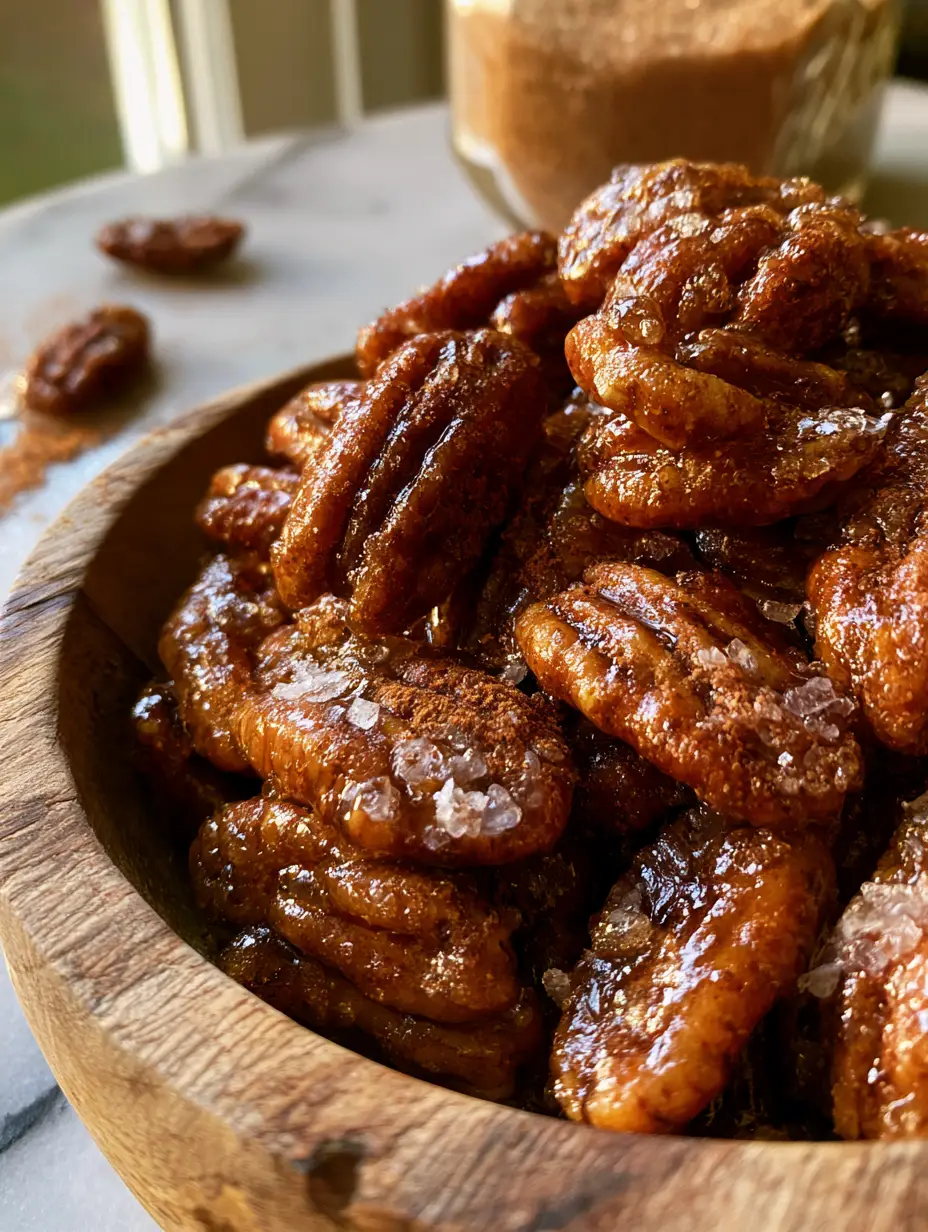
In this guide, we are recreating the exact visual masterpiece described in our culinary blueprint: a heap of warm, amber-hued nuts piled into a rustic wooden bowl, glistening under natural light. Whether you are preparing these for a holiday gift or a decadent snack, the contrast between the sharp crunch of the pecan and the melting sweetness of the glaze is incomparable.
We will achieve that signature “bubbling” texture by mastering the temperature of the sugar syrup, ensuring it reaches the perfect stage of caramelization. With a final dusting of ground cinnamon and a generous scatter of coarse flaky sea salt, these pecans offer a sophisticated flavor profile that balances deep molasses notes with a sharp, savory finish.
Why You Will Fall in Love With These Candied Gems
- The Perfect Gloss: The combination of melted butter and brown sugar creates a thick, reflective coating that remains shiny even after cooling.
- Textural Harmony: You get a satisfying, sharp crunch from the toasted whole pecan halves paired with a slightly chewy, buttery glaze.
- Visual Appeal: The visible layers of coarse sea salt crystals and cinnamon dusting make these look like they came from a high-end artisanal boutique.
- Fast & Reliable: Using the stovetop method allows for total control over the glaze consistency, preventing the nuts from burning in a hidden corner of the oven.
The Essential Components for Praline Perfection
Creating world-class glazed praline pecans requires high-quality fats and sugars. The chemistry of the glaze depends on the ratio of moisture to sucrose, which is why we use specific measurements for the butter and water.
Whole Pecan Halves: Use 3 cups (375g) of raw, unsalted mammoth pecan halves. Freshness is key here; older nuts can have a bitter, rancid oil taste that ruins the sweet glaze.
Light Brown Sugar: 1 cup (200g) of packed brown sugar provides the molasses foundation. The moisture in brown sugar helps create that “bubbling” effect during the cooking process.
Unsalted Butter: 4 tbsp (56g) of high-quality butter is the secret to the glossy finish. As the butter melts and emulsifies with the sugar, it creates a rich, velvety mouthfeel.
Ground Cinnamon: 1 tsp (2.6g) of high-grade cinnamon is divided—half goes into the glaze, and half is dusted over the finished nuts for visual contrast.
Coarse Flaky Sea Salt: 1/2 tsp (3g) of Maldon or similar salt. This isn’t just for flavor; the large crystals catch the light on the marble surface and provide a necessary saline pop.
Pure Vanilla Extract: 1 tsp (5ml) added at the very end. This “invisible” ingredient rounds out the toasted notes of the pecans and the deep caramel of the sugar.
Water: 2 tbsp (30ml) to help dissolve the sugar crystals evenly, preventing a grainy texture in your final glazed praline pecans.
Tools Required for an Artisanal Finish
To achieve the professional look of a handheld smartphone photo at a rustic bakery, you need the right heat distribution. A heavy-bottomed stainless steel or cast-iron skillet is non-negotiable for even caramelization.
You will also need a silicone spatula or a wooden spoon to keep the nuts moving, preventing the sugar from scorching. For cooling, a sheet of parchment paper or a smooth marble surface is ideal to prevent the hot glaze from sticking to the counter.
Step-by-Step: Mastering the Bubbling Glaze
Pre-Toasting the Pecans for Maximum Flavor
Start by placing your 3 cups (375g) of pecan halves in a dry skillet over medium heat. Toast them for 3-5 minutes, shaking the pan frequently, until you smell a rich, nutty aroma and the surface looks slightly oily.
Toasting the nuts beforehand ensures they stay crunchy inside the glaze. If you skip this, the moisture from the syrup can make the pecans turn soft or “bready” over time.
Building the Caramel Base
Push the toasted pecans to the outer edges of the skillet. In the center, add 1 cup (200g) brown sugar, 4 tbsp (56g) butter, and 2 tbsp (30ml) water.
Allow the butter to melt and the sugar to dissolve completely. Once combined, start whisking the center mixture until it begins to form large, viscous bubbles. This is the stage where the glazed praline pecans develop their signature thick coating.
The Glazing Transformation
Fold the pecans back into the bubbling mixture. Stir constantly for 2-3 minutes. Watch for the sensory cue: the liquid will transform from a thin syrup into a thick, tacky glaze that clings to the nuts in a heavy layer.
If you are looking for more dessert inspiration, these pecans make an incredible topping for butter pecan pound cake or even crushed over air fryer bananas.
The Finishing Touches
Remove the pan from the heat immediately once the glaze is thick and glossy but still bubbling. Stir in the vanilla extract and half of the cinnamon.
Immediately pour the heap of pecans onto a parchment-lined tray or a marble surface. Use two forks to quickly separate them before the sugar sets into a solid mass. While still tacky, sprinkle the remaining cinnamon and the coarse flaky sea salt over the top.
Expert Tips for Success
- Avoid the Grain: Do not stir the sugar and water too vigorously before the butter is melted. This can cause the sugar to recrystallize, leading to a sandy rather than glossy finish.
- The Marble Trick: If you have a marble countertop, use it! The cold stone helps the glazed praline pecans set instantly, locking in that “bubbling” visual texture.
- Don’t Walk Away: Sugar transforms from caramel to burnt in less than 10 seconds. Keep your eyes on the pan and your nose alert for any hint of acrid smoke.
- Humidity Matters: Making candy on a very rainy day can be tricky, as the sugar pulls moisture from the air. If it’s humid, cook the glaze for an extra 60 seconds to ensure a hard set.
Serving and Pairing Ideas
These glazed praline pecans are incredibly versatile. They are the perfect textural contrast when served alongside a creamy earl grey panna cotta or as a crunch factor for cranberry mousse parfaits.
For a full Southern dessert spread, consider pairing these with a slice of german chocolate poke-cake or using them as a garnish for apple custard puff pastries. Their salty-sweet profile also cuts through the richness of a biscoff spread beautifully.
Storage and Shelf Life
To maintain that “freshly made” crunch, store the cooled pecans in an airtight glass jar—like the vintage jar mentioned in our visual prompt. At room temperature, they will remain crisp for up to 2 weeks.
For longer storage, you can freeze these pecans in a vacuum-sealed bag for up to 3 months. To serve, let them come to room temperature while still in the bag to prevent condensation from softening the glaze.
Frequently Asked Questions
While you can, brown sugar contains molasses which provides the signature Southern praline flavor and a deeper amber color. White sugar will result in a lighter, more brittle candy coating.
While not strictly necessary for this stovetop method, a thermometer can help. Aim for approximately 235°F-240°F (113°C-115°C) for the glaze to ensure it sets properly with a slight chew.
The key is timing. Sprinkle the coarse flaky sea salt immediately after pouring the pecans out of the pan. The glaze needs to be tacky enough to hold the crystals but not so hot that the moisture in the syrup dissolves them.
Sticky pecans usually happen if the glaze didn’t cook long enough to reach the ‘hard ball’ stage or if the humidity is very high. Try cooking the syrup for an additional 1-2 minutes until the bubbles become thick and slow.
The Ultimate Glazed Praline Pecans Recipe
Glazed Praline Pecans: The Ultimate Southern-Style Candied Nut Recipe
Ingredients
Equipment
Method
- Place pecan halves in a dry skillet over medium heat. Toast for 3-5 minutes, shaking frequently, until fragrant and slightly deepened in color.
- Push pecans to the side and add brown sugar, butter, and water to the center. Stir until the butter is melted and large, viscous bubbles begin to form.
- Fold pecans into the bubbling mixture. Stir constantly for 2-3 minutes until the glaze is thick, glossy, and clings to every nut.
- Remove from heat. Stir in vanilla and half the cinnamon. Pour onto a marble surface or parchment paper.
- Immediately separate the pecans with forks. Sprinkle with the remaining cinnamon and coarse flaky sea salt while still tacky.
Notes
Separate the pecans immediately after pouring to prevent them from cooling in a large clump.
Closing & Call to Action
Making your own glazed praline pecans is a rewarding culinary project that brings a touch of Southern hospitality to your kitchen. The combination of the thick, glossy glaze and the sharp snap of the sea salt makes these absolutely addictive. If you enjoyed this recipe, please leave a comment below and share your results! Don’t forget to follow us on Pinterest for more visually stunning recipe inspiration.