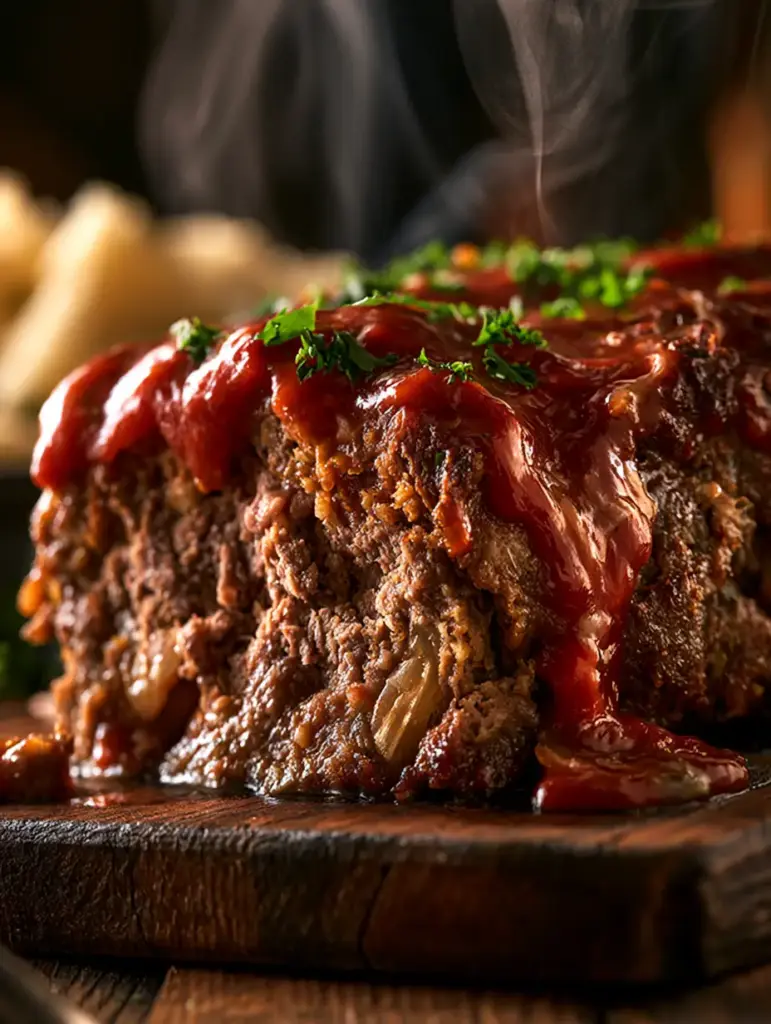
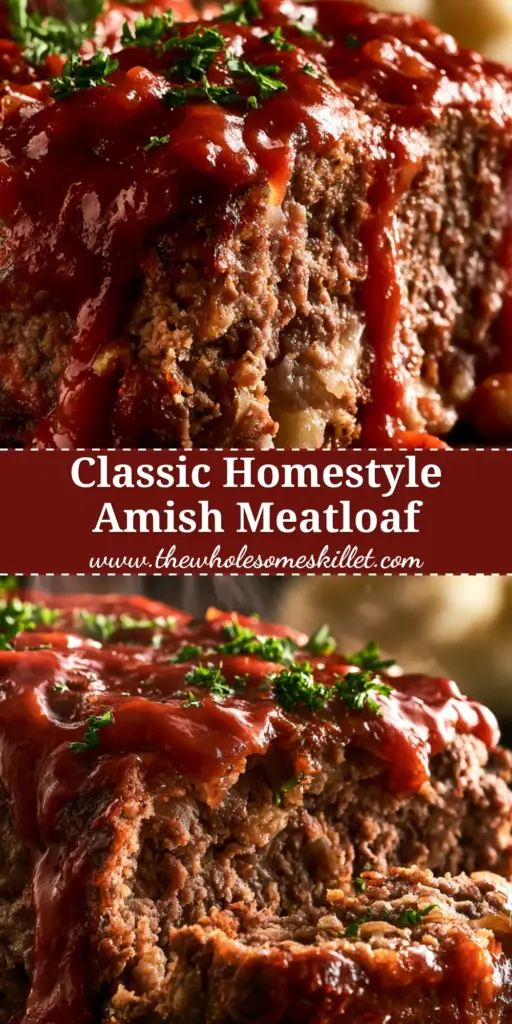
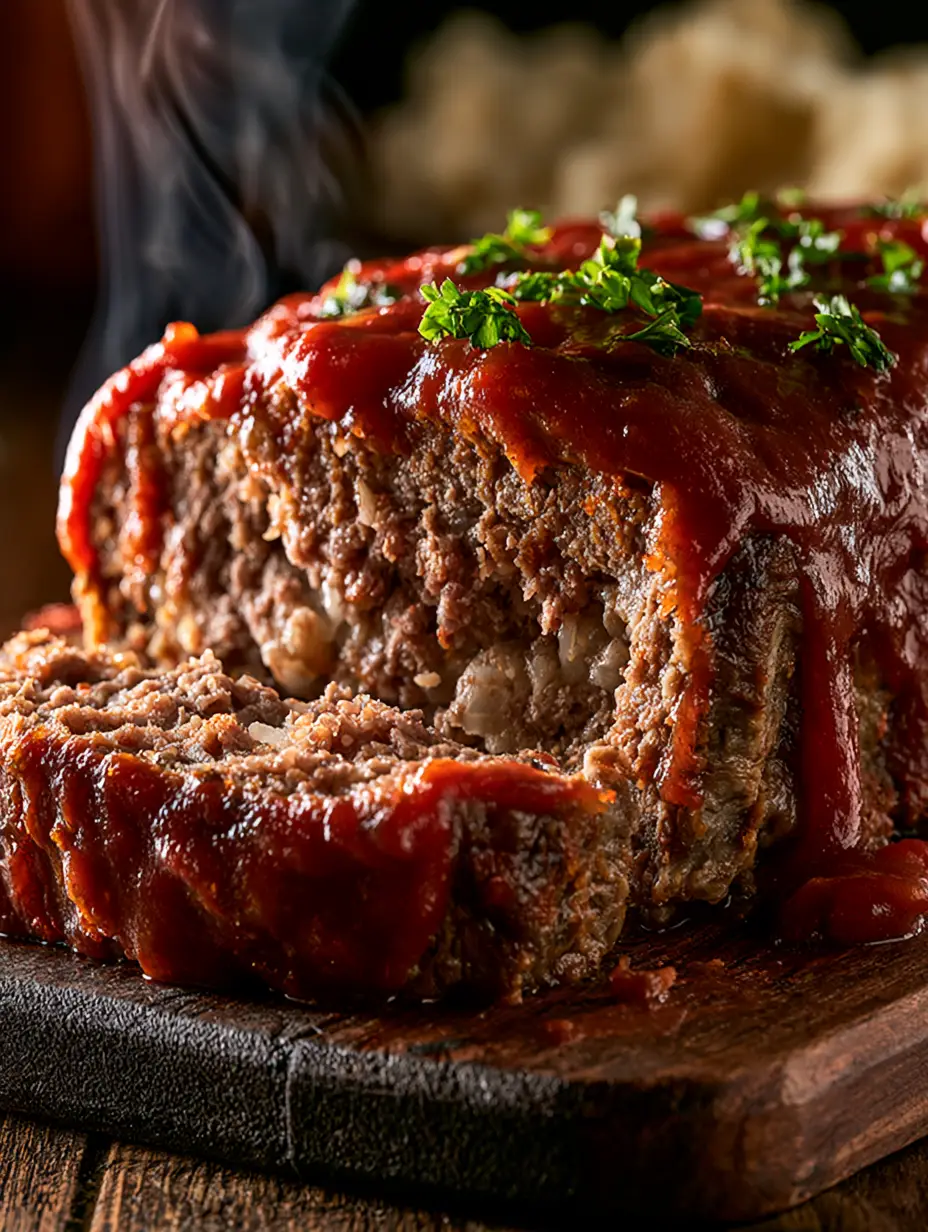
There is nothing quite like the sight of a thick, fresh slice of traditional amish meatloaf resting on a rustic wooden board. This isn’t just a meal; it is a centerpiece of heritage cooking that brings a sense of warmth to any dinner table. Imagine the steam gently rising from a succulent, moist slice, revealing layers of finely ground beef and tender onions.
What sets this amish meatloaf apart is the dramatic, ruby-red sweet and tangy glaze that glistens under the light. Every bite offers a perfect balance of savory meat and a bright, acidic finish. Served alongside creamy, buttery mashed potatoes, this dish is the definition of a high-end comfort experience designed for maximum appetite appeal.
In this guide, we will walk through the professional culinary techniques required to achieve that iconic browned surface and succulent internal texture. Whether you are a seasoned home cook or a beginner, these forensic culinary details will ensure your meatloaf looks exactly like a gourmet smartphone photo every time.
The Signature Appeal of Traditional Amish Meatloaf
- Succulent Texture: A precise ratio of ground beef and moisture-absorbing breadcrumbs ensures a moist, never-dry interior.
- Ruby-Red Glaze: A thick, glistening tomato-based coating that cascades down the sides for a professional finish.
- Aromatic Foundation: Finely chopped, sautéed onions provide a subtle sweetness and structural integrity to every slice.
- Visual Contrast: Delicate, bright green fresh parsley sprinkled over the glaze adds a pop of color and freshness.
Essential Ingredients for a Moist and Flavorful Loaf
Ground Beef (80/20 Blend): Use 1.5 lbs (680g) of ground beef. The 20% fat content is foundational for ensuring the meatloaf remains juicy during the long roasting process.
Plain Breadcrumbs: You will need 1 cup (60g) of fine breadcrumbs. These act as the structural “glue,” trapping the juices within the meat matrix to prevent crumbling.
Yellow Onions: 1 cup (150g) of finely diced onions. Sautéing these before mixing is the secret to achieving that “tender sauteed onion” visual described in our blueprint.
Whole Milk: 1/2 cup (120ml) of milk. This hydrates the breadcrumbs, creating a panade that keeps the protein fibers from tightening and becoming tough.
Large Eggs: 2 large eggs. These provide the necessary protein binding to ensure you can cut a thick, clean slice without the loaf falling apart.
Fresh Parsley: 1/4 cup (15g) of finely chopped parsley. Half goes into the mix for flavor, and the other half is for the artistic garnish.
The Glaze Trio: A combination of 1/2 cup (120ml) ketchup, 1/4 cup (50g) brown sugar, and 1 tbsp (15ml) apple cider vinegar creates that signature sweet and tangy finish.
Foundational Seasonings: 1 tsp (6g) fine sea salt, 1/2 tsp (3g) black pepper, and 1/2 tsp (3g) garlic powder to enhance the natural beef flavors.
Kitchen Tools for Rustic Presentation
To achieve the visual perfection of a professional food photo, you will need a 9×5 inch (23x13cm) loaf pan for shaping. However, for the best browning, we recommend baking the loaf on a rimmed baking sheet lined with parchment paper.
A rustic, dark wooden cutting board is essential for serving. The contrast between the dark wood and the glistening ruby-red glaze creates a dynamic, inviting composition that highlights the depth of the meatloaf’s layers.
How to Make Amish Meatloaf Step-by-Step
Sautéing the Aromatics
Heat 1 tbsp (15g) of butter in a small skillet over medium heat. Add your finely diced onions and sauté for 5-7 minutes until they are translucent and tender. This step is critical; raw onions will stay crunchy and ruin the succulent internal texture of the amish meatloaf.
Constructing the Meat Matrix
In a large mixing bowl, whisk the eggs, milk, salt, pepper, and garlic powder together. Stir in the hydrated breadcrumbs and sautéed onions. Add the ground beef and half of the chopped parsley.
Gently mix using your hands until just combined. Overworking the meat at this stage will lead to a dense, rubbery loaf rather than the moist, tender texture we are aiming for. Look for the meat to still have visible layers of ingredients.
Shaping and First Bake
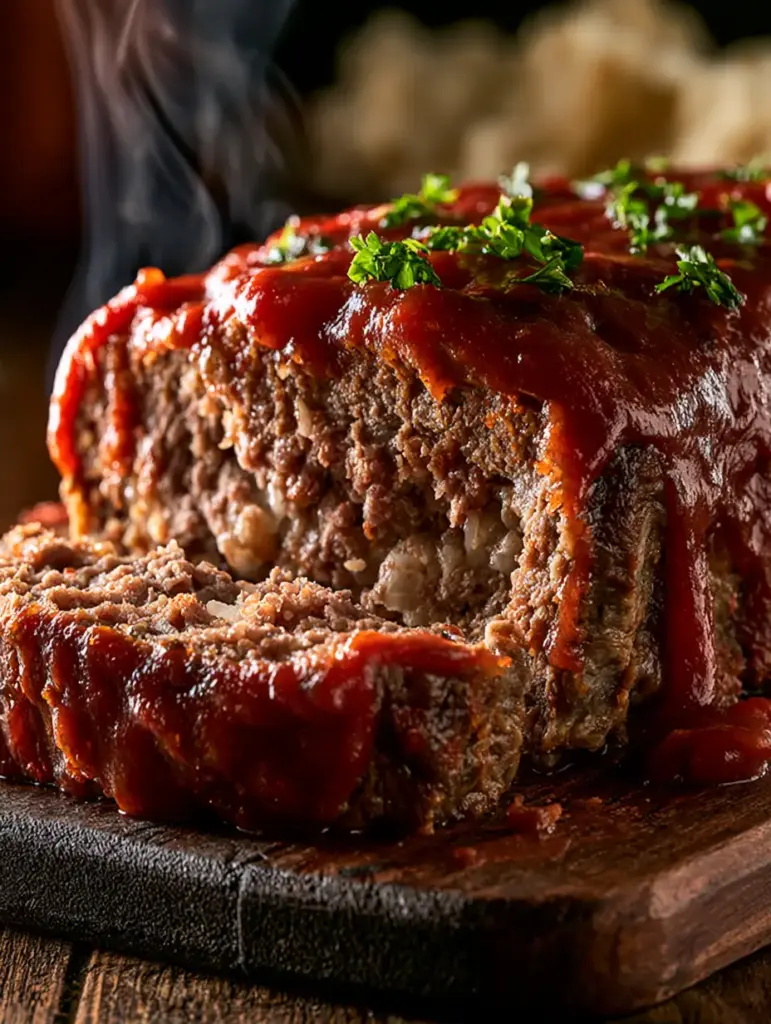
Shape the mixture into a rectangular loaf on your prepared baking sheet. Ensure the surface is relatively smooth to allow the glaze to cascade evenly later. Bake at 350°F (175°C) for 40 minutes.
You should hear a gentle sizzling sound and see the surface beginning to turn a light golden brown. This initial bake sets the structure before we add the heavy moisture of the glaze.
The Glazing Mastery
Whisk together the ketchup, brown sugar, and vinegar in a small bowl. Remove the meatloaf from the oven and generously coat the top and sides with the glaze. Use a brush to ensure it looks thick and glistening.
Return to the oven for another 15-20 minutes. The glaze should transform into a deep ruby-red hue, becoming slightly tacky and caramelized around the edges.
Expert Tips for Success
- Rest Before Slicing: Allow the meatloaf to rest on the wooden cutting board for at least 10 minutes. This allows the juices to redistribute, ensuring a moist internal texture when cut.
- Internal Temperature: Use a meat thermometer to pull the loaf when it hits 160°F (71°C). This prevents overcooking the beef.
- The Steam Effect: To capture the “steam gently rising” visual, slice the meatloaf immediately after the 10-minute rest while the internal temperature is still high.
- Fresh Garnish: Only add the remaining fresh parsley seconds before serving to keep the green color vibrant against the red glaze.
How to Store and Reheat Leftovers
Store any remaining amish meatloaf in an airtight container in the refrigerator for up to 3-4 days. The flavors often deepen overnight, making for excellent cold sandwiches the next day.
To reheat, place a slice in a skillet with a splash of water and cover with a lid. This steams the meat, preserving the moisture and keeping the glaze glistening rather than drying it out in a microwave.
What to Serve With This Comfort Classic
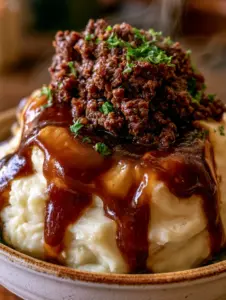
This recipe is traditionally served with a side of creamy, buttery mashed potatoes, which provides a soft-focus background of comfort. You can elevate the meal further by trying our ultimate comfort meatloaf with cheesy mashed potatoes variation.
If you enjoy these homestyle flavors, you might also love our homestyle Amish meatloaf with sweet glaze tips for slow cooking. For a different twist on hearty bakes, consider our savory kielbasa cheesy potato bake as a side dish alternative.
Frequently Asked Questions
Yes, quick oats are a common Amish substitution for breadcrumbs. They provide a similar structural bind and keep the meatloaf very moist.
The combination of breadcrumbs, milk, and eggs creates a ‘panade’ that binds the meat. Letting the loaf rest for 10 minutes before slicing is also crucial for the structure to set.
Apply the glaze during the last 15-20 minutes of baking. The heat caramelizes the sugars, creating that thick, glistening, ruby-red appearance seen in professional food photography.
Amish meatloaf is traditionally characterized by its simpler, heartier ingredients and a distinctively sweet and tangy tomato-based glaze, often using brown sugar and vinegar to balance the savory beef.
Sautéing the onions ensures they are fully tender and sweet by the time the meat is cooked. Raw onions often remain crunchy, which disrupts the succulent, uniform texture of the slice.
The Ultimate Amish Meatloaf Recipe Card
Amish Meatloaf with a Sweet and Tangy Glaze: A Traditional Comfort Classic
Ingredients
Equipment
Method
- Sauté diced onions in butter over medium heat until translucent and tender. Set aside to cool.
- Whisk eggs, milk, salt, pepper, and garlic powder. Stir in breadcrumbs and onions.
- Gently fold ground beef and half the parsley into the mixture until just combined. Shape into a loaf on a baking sheet.
- Bake at 350°F (175°C) for 40 minutes until structural integrity is set.
- Whisk glaze ingredients, coat the loaf generously, and bake for another 15-20 minutes until the glaze is ruby-red and glistening.
Notes
Use a rimmed baking sheet instead of a loaf pan for better browning.
Conclusion: Bringing the Amish Tradition Home
This amish meatloaf is more than just a recipe; it is a lesson in culinary balance. The harmony between the savory, moist beef and the sweet, ruby-red glaze creates a meal that is both humble and extraordinary. By following these forensic steps, you ensure a result that is as visually stunning as it is delicious.
If you loved this recipe, please leave a comment below and share your results! Don’t forget to follow us on Pinterest for more homestyle inspiration and tag us in your beautiful food photos.