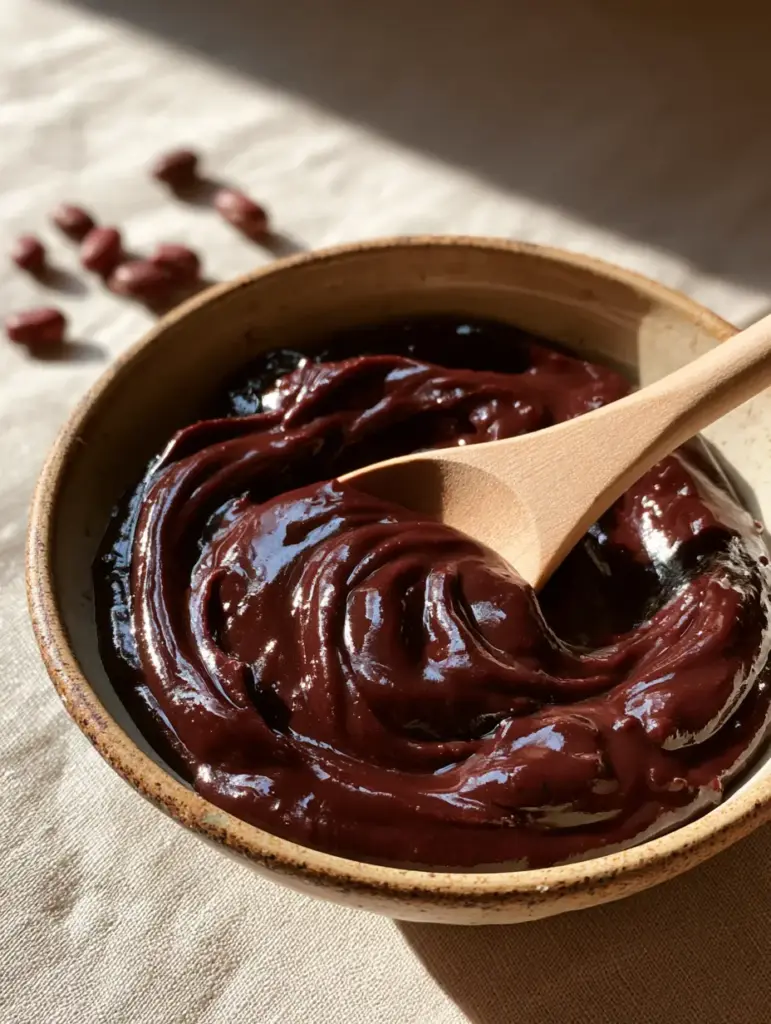
There is something undeniably captivating about the sight of fresh red bean paste captured in the soft, golden glow of morning sunlight. Imagine a rustic dark ceramic bowl, filled to the brim with a glossy, dark burgundy puree that ripples with deep, beautiful swirls where a light-colored wooden spoon has just been dipped. The texture is thick, creamy, and possesses a silky sheen that beckons you to take a taste.
This isn’t just a condiment; it is the soul of traditional Japanese confectionery. Whether you are an enthusiast of wagashi or simply looking for a nutrient-dense, plant-based sweetener, mastering the art of homemade Anko is a culinary milestone. By following this guide, you will learn how to transform humble dried adzuki beans into a luxurious spread that rivals the best pastry shops in Kyoto.
In this deep dive, we will explore the science of legume hydration, the importance of the “tanjir” (first boil) to remove tannins, and the precise moment to introduce organic cane sugar to achieve that iconic glossy finish. We will be creating the “Koshian” style—a fine, smooth paste that feels like velvet on the tongue, just as depicted in our visual blueprint.
The Irresistible Appeal of Authentic Homemade Anko
- Unmatched Texture: Unlike store-bought versions that can be chalky, this recipe results in a thick, creamy consistency with a high-gloss finish.
- Controlled Sweetness: Using organic cane sugar allows for a clean, rounded sweetness that doesn’t overpower the earthy notes of the adzuki beans.
- Visual Elegance: The deep burgundy hue provides a stunning contrast against a light linen napkin or a rustic ceramic bowl, making it a centerpiece for any dessert spread.
- Versatility: This smooth puree serves as the perfect filling for everything from traditional mochi to modern cream puffs or even a unique topping for air fryer bananas.
Essential Elements for the Perfect Red Bean Paste
To achieve the forensic accuracy of our visual blueprint, each ingredient must be selected and treated with care. Here is what you will need for this dark burgundy masterpiece.
Dried Adzuki Beans: You will need 1.5 cups (300g) of high-quality dried adzuki beans. These small, reddish-brown legumes are the foundation of the recipe and provide the characteristic earthy flavor.
Organic Cane Sugar: We use 1 cup (200g) of organic cane sugar to provide sweetness. Cane sugar is preferred over white sugar for its slight molasses undertone, which deepens the burgundy color of the final paste.
Sea Salt: A mere 1/4 tsp (1.5g) of fine sea salt is critical. It doesn’t make the paste salty; rather, it acts as a flavor enhancer that makes the sweetness “pop” and rounds out the bean’s natural profile.
Filtered Water: You will need approximately 6 cups (1.4L) for the soaking and simmering process. Pure water ensures that no mineral off-flavors interfere with the delicate bean aroma.
Culinary Tools for a Professional Finish
To recreate the intimate, handheld photo quality of our blueprint, you need the right tools to handle the heat and the texture.
Heavy-Bottomed Pot: A Dutch oven or a heavy stainless steel pot is ideal for even heat distribution, preventing the sugar from scorching during the final reduction.
Fine Mesh Strainer or Nut Milk Bag: For the Koshian style, you must remove the bean skins. A fine sieve is essential for achieving that smooth, swirl-ready consistency.
Light-Colored Wooden Spoon: As seen in our visual guide, a wooden spoon is best for stirring gently without bruising the beans or scratching your cookware.
High-Speed Blender (Optional): If you prefer a modern shortcut to the traditional sieving method, a blender can help pulverize the beans into a silky puree before the final cook-down.
The Step-by-Step Evolution of Glossy Red Bean Paste
Hydration and the Primary Boil
Start by rinsing your 1.5 cups (300g) of adzuki beans under cold water. Place them in a large bowl and cover with triple the amount of water, allowing them to soak for at least 8 hours or overnight. This ensures the beans cook evenly to the core.
After soaking, drain the beans and place them in your pot. Add enough fresh water to cover them by two inches. Bring to a rolling boil for 5 minutes. This is the “tannin-removal” stage; the water will turn dark and slightly bitter. Drain the beans again and rinse them—this is the secret to a clean-tasting red bean paste.
The Slow Simmer for Tenderness
Return the beans to the pot and add 4 cups (960ml) of fresh water. Bring to a boil, then reduce the heat to a low simmer. Cover the pot partially. You want to simmer the beans until they are so tender they can be easily smashed between two fingers with zero resistance.
Check the water level periodically. The beans should always be submerged. This process usually takes 60 to 90 minutes depending on the age of your beans. Listen for the gentle rhythmic bubbling; this is the sound of the bean starch breaking down into a creamy base.
Refining the Texture to a Puree
Once the beans are tender, it is time to create that smooth, dark burgundy puree. If you are going traditional, press the beans through a fine-mesh sieve into a bowl, discarding the skins. For a more modern approach, transfer the beans and a small amount of the cooking liquid into a high-speed blender and process until completely smooth.
The resulting liquid should look like a thick, purple-tinted cream. If you want a result that looks exactly like our Midjourney prompt, ensure there are no lumps or visible skin fragments at this stage.
The Final Reduction and Sweetening
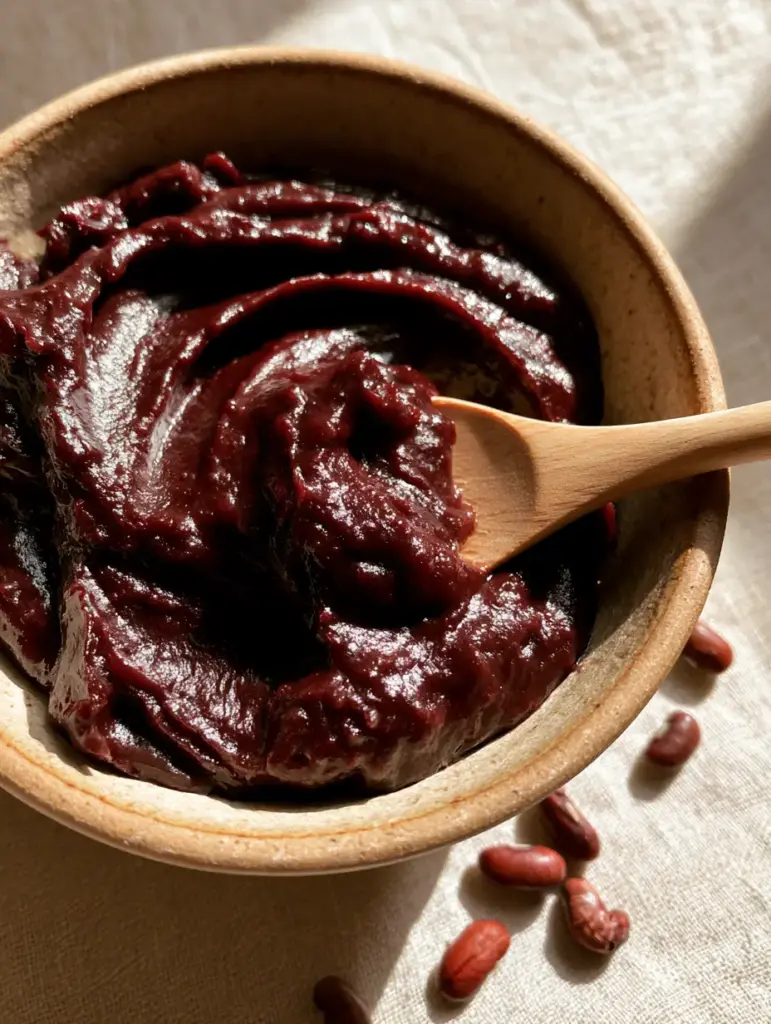
Return the smooth puree to the heavy pot and stir in the 1 cup (200g) of organic cane sugar and the pinch of sea salt. Cook over medium-low heat, stirring constantly with your light-colored wooden spoon. As the water evaporates, the sugars will caramelize slightly and the paste will take on a glossy, reflective sheen.
Watch for the visual cue: the spoon should leave a clear trail at the bottom of the pot that doesn’t immediately fill back in. The paste will thicken significantly as it cools, so stop cooking when it is slightly softer than your desired final result. You should see those beautiful, deep swirls forming as you stir.
Expert Tips for Success
- The Skin Test: If you find the skins are still tough after 90 minutes, add a pinch of baking soda to the simmering water to help break down the cellulose.
- Gloss Factor: If your paste looks dull, you can stir in 1 tbsp (15ml) of neutral oil or corn syrup at the very end to enhance the light-reflecting properties seen in the morning sunlight photo.
- Prevent Scorching: As the red bean paste thickens, it becomes prone to “spitting” and burning. Lower your heat to the absolute minimum and stir rhythmically.
- Salt Balance: Never skip the sea salt. It provides the necessary contrast to the cane sugar, preventing the paste from tasting “one-note.”
Storage, Reheating, and Freezing Advice
Freshly made Anko is a preservative-free product. Store your paste in an airtight container in the refrigerator for up to 5 days. You will notice the texture firms up as it chills; simply stir it vigorously to regain that creamy suppleness.
For long-term storage, red bean paste freezes beautifully. Portion it into freezer-safe bags, flattening them out to remove air. It will stay fresh for up to 3 months. To use, thaw overnight in the fridge and give it a quick stir before serving.
Creative Ways to Enjoy Your Red Bean Paste
While delicious on its own, this paste is a versatile building block for many desserts. You can use it as a sophisticated layer in poke cakes for an Asian-fusion twist, or fold it into the batter of almond ricotta cookies for added moisture and color.
For a breakfast treat, spread a thick layer over toasted brioche and top with a buttery crumble topping. The earthy burgundy paste also pairs exceptionally well with the floral notes of an Earl Grey panna cotta, creating a dessert that is as visually stunning as it is delicious.
Frequently Asked Questions
Absolutely! You can cook the soaked beans in a pressure cooker for about 15-20 minutes. However, you still need to reduce the paste with sugar on the stovetop to get the glossy finish.
You can, but the flavor and color will not be as vibrant or deep as using dried beans. If using canned, rinse them thoroughly and skip the soaking and initial boiling steps.
Yes, soaking ensures the beans hydrate to the core, which leads to even cooking and a much creamier final texture without hard bits.
Tsubuan is a chunky paste where the beans are kept whole or roughly mashed, while Koshian is a smooth, fine puree where the skins have been removed by sieving.
Glossiness comes from the concentration of sugar. If it looks dull, you likely haven’t reduced it enough on the stove, or you might need to add a touch more sugar or a teaspoon of neutral oil.
The Ultimate Smooth Red Bean Paste Recipe
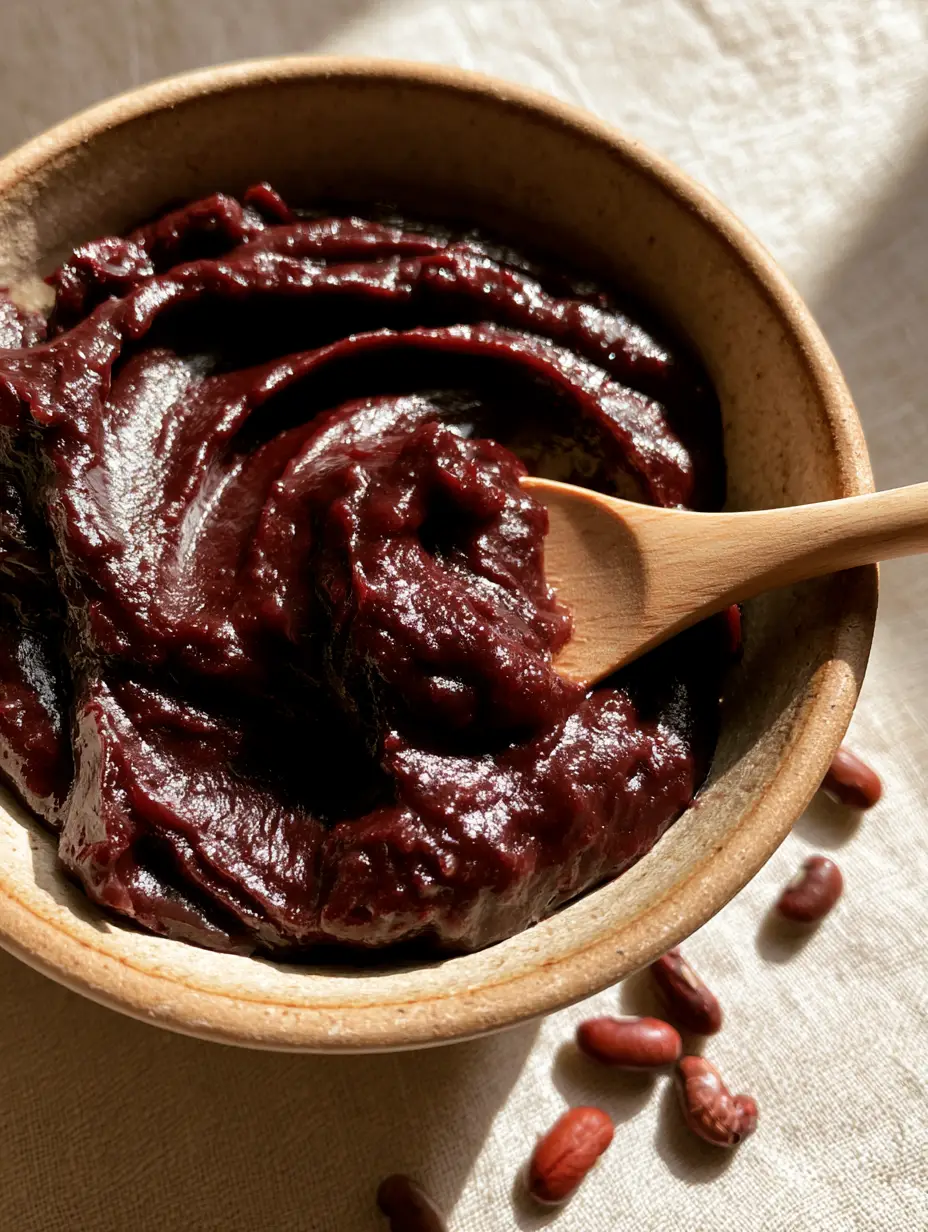
Red Bean Paste Recipe: How to Make Silky Smooth Homemade Anko
Ingredients
Equipment
Method
- Rinse adzuki beans and soak in filtered water for at least 8 hours or overnight until fully hydrated.
- Drain beans, place in pot with fresh water, and boil for 5 minutes. Drain and rinse to remove bitter tannins.
- Add 4 cups (960ml) water to beans. Simmer for 60-90 minutes until beans are soft enough to smash easily.
- Press cooked beans through a fine-mesh strainer to remove skins, creating a smooth dark burgundy puree.
- Return puree to pot with sugar and salt. Cook over medium-low heat, stirring with a wooden spoon until thick, glossy swirls form.
Notes
For a glossier finish, stir in 1 tsp of neutral oil at the end.
Closing & Call to Action
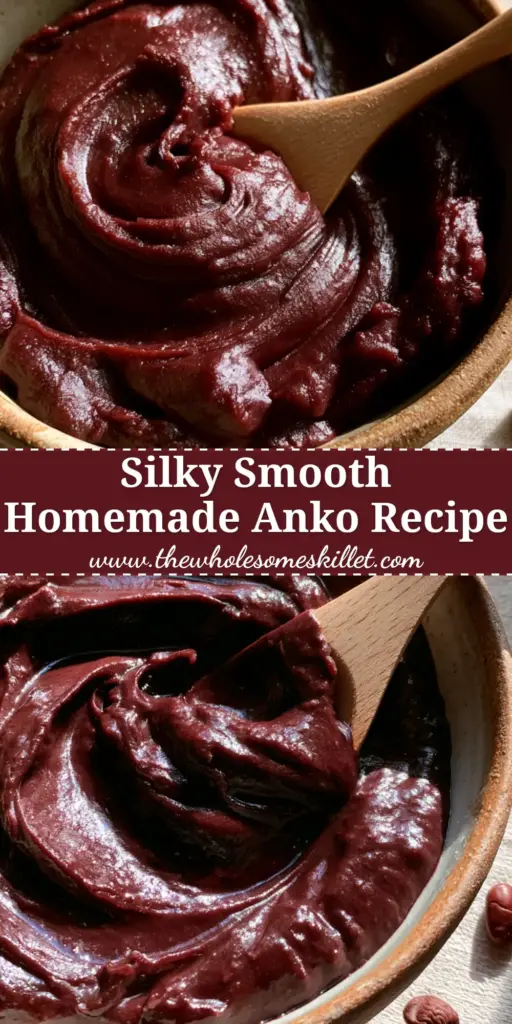
Making your own red bean paste is a rewarding journey that transforms simple pantry staples into a glossy, gourmet delight. The deep burgundy swirls and silky texture are proof of the care and patience you’ve put into your cooking. Whether you’re filling pastries or enjoying it by the spoonful, this Anko is sure to impress.
Did you achieve that perfect glossy sheen? We’d love to hear about your results! Leave a comment below and share your photos with us. Don’t forget to follow thewholesomeskillet on Pinterest for more rustic, whole-food inspiration. Happy cooking!