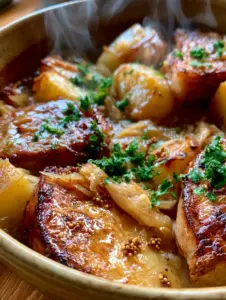
There is a specific kind of magic that happens when humble ingredients like cabbage and rice are transformed into a glistening, gourmet masterpiece. These stuffed cabbage rolls are the epitome of comfort food, offering a visual and sensory experience that feels like a warm hug on a ceramic plate. When you pull these from the oven, the first thing you notice is the steam rising in delicate ribbons, carrying the aroma of sweet tomatoes and savory meat.
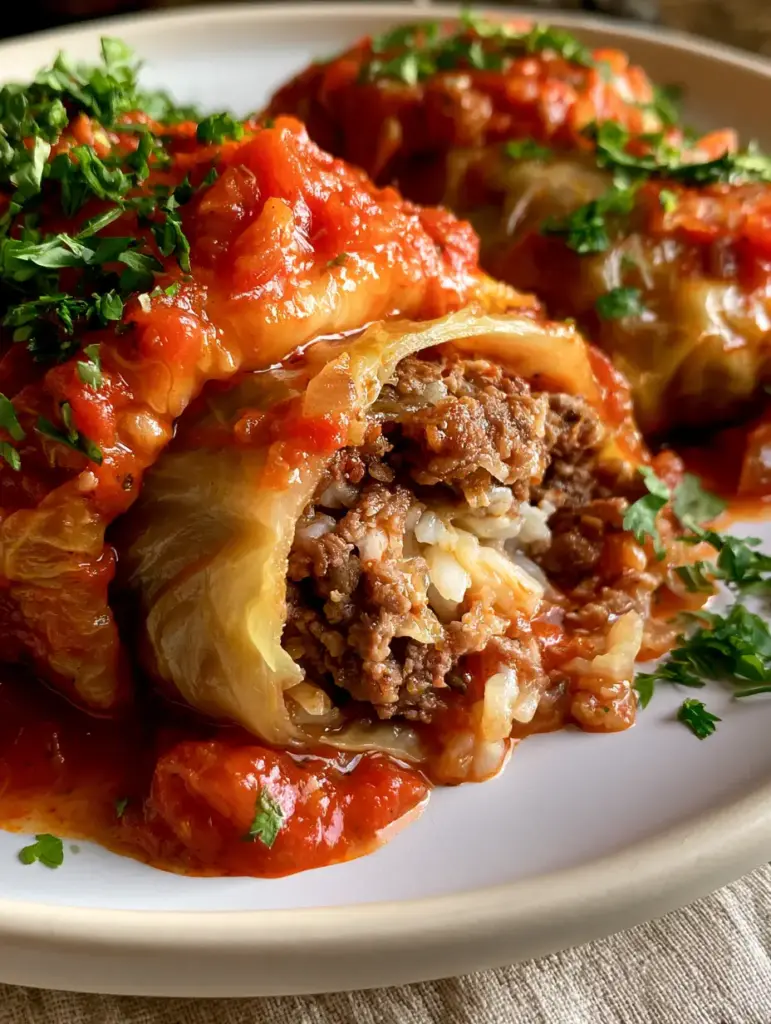
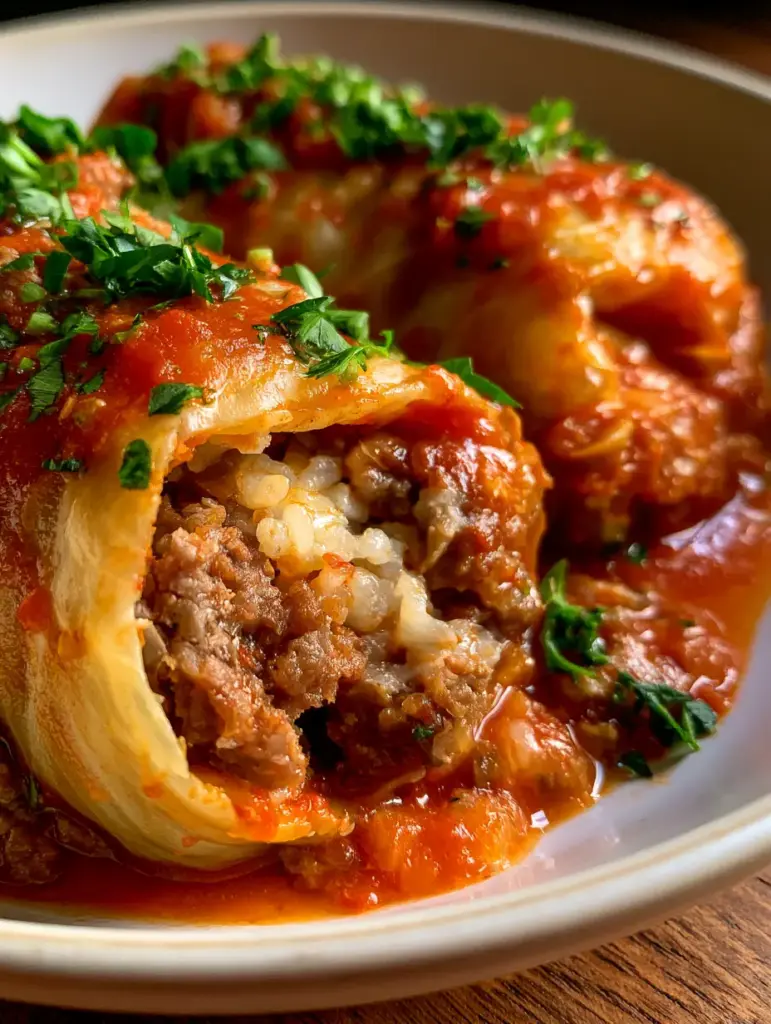
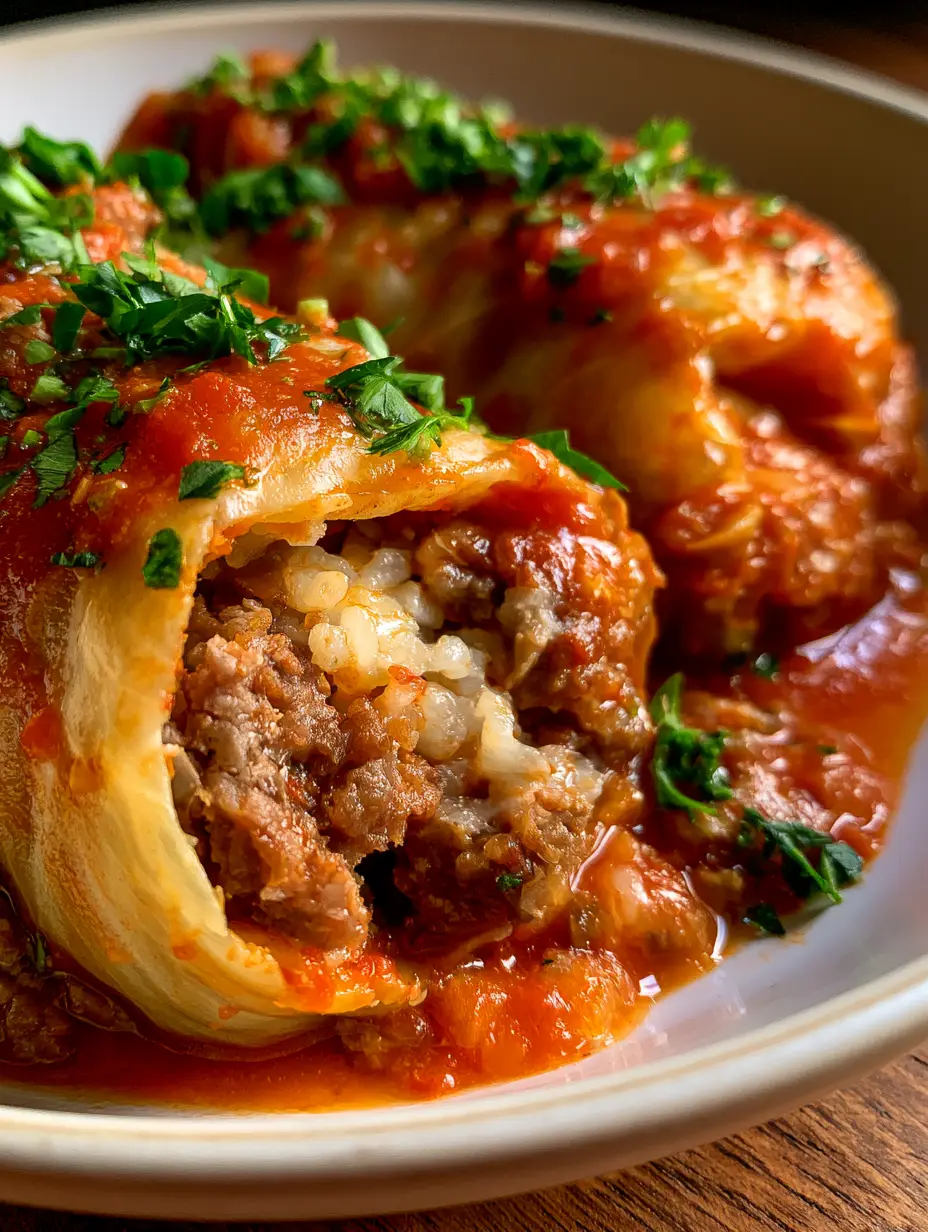
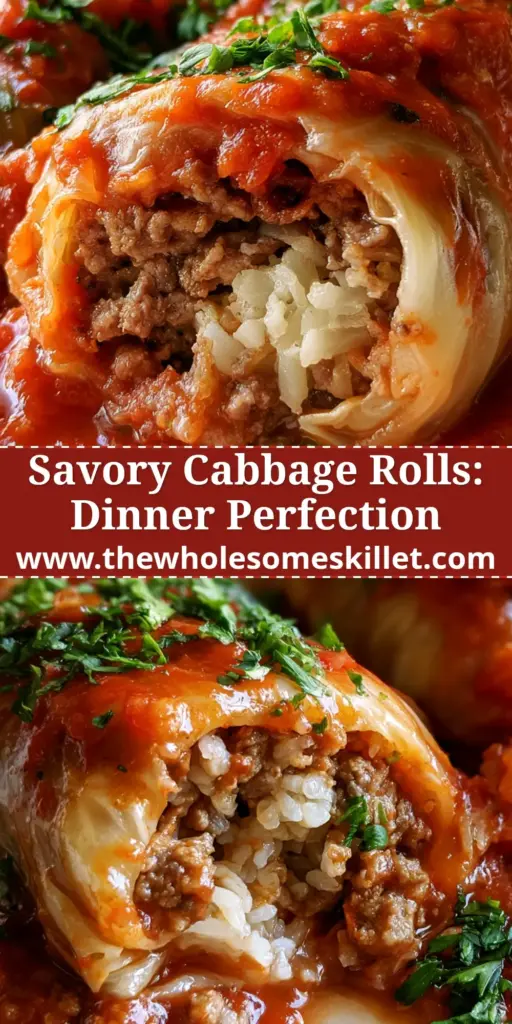
Imagine slicing into a roll and seeing the distinct, beautiful layers: the translucent, tender cabbage giving way to a heart of seasoned beef and perfectly fluffy white rice. The bright red tomato sauce doesn’t just sit on top; it coats the rolls in a rich, glossy sheen that invites you to take the first bite. Finished with a shower of vibrant green fresh parsley, this dish looks as good as a handheld smartphone photo taken in soft, natural morning light.
Whether you grew up calling them Golabki, Halubtsi, or simply cabbage rolls, this recipe honors the traditional techniques while ensuring a result that meets modern culinary standards. We are focusing on textural integrity—ensuring the cabbage is tender but not mushy, and the meat is savory without being dense. Let’s dive into the architecture of the perfect roll.
Why These Stuffed Cabbage Rolls Are a Total Game-Changer
- Textural Perfection: The contrast between the soft, braised cabbage leaves and the distinct, fluffy grains of white rice creates a sophisticated mouthfeel.
- Visual Brilliance: The rich, bright red tomato sauce provides a stunning backdrop for the vibrant green parsley, making this a centerpiece-worthy dinner.
- Symphony of Flavors: We balance the natural sweetness of the cabbage with a savory meat blend and a sauce that hits the perfect notes of acidity and depth.
- Meal Prep Hero: Like many braised dishes, these rolls taste even better the next day as the flavors continue to meld and intensify.
Essential Components for the Ultimate Savory Filling
To achieve the glistening result seen in our visual blueprint, every ingredient must serve a specific culinary purpose. We don’t just throw things in a bowl; we build layers of flavor.
Green Cabbage (1 Large Head): Look for a head that feels heavy for its size. The leaves act as the structural vessel, becoming tender and translucent during the long braise.
Ground Beef (1.5 lbs / 680g): I recommend an 80/20 lean-to-fat ratio. The fat is essential for moisture, ensuring the interior of the roll remains juicy and savory.
Long-Grain White Rice (1 cup / 200g): The rice must be par-cooked to ensure it finishes as “fluffy white rice” inside the roll rather than a hard pebble or a starchy paste.
Yellow Onion (1 medium, finely diced): Sautéing the onion before adding it to the meat ensures there are no sharp, raw bites and adds a foundational sweetness.
Garlic (3 cloves, minced): A necessary aromatic that provides depth and bridges the gap between the beef and the tomato sauce.
Large Egg (1): This acts as our invisible binder, holding the meat and rice together so the roll maintains its shape when sliced.
Tomato Sauce (28 oz / 800g): Choose a high-quality, smooth sauce. We will enhance it with a touch of vinegar and sugar to achieve that “bright red” visual pop.
Beef Broth (1 cup / 240ml): This provides the liquid needed for steaming the rolls inside the oven, preventing the sauce from becoming too thick or burning.
Fresh Parsley (1/2 cup / 15g, chopped): The vibrant green garnish is not just for looks; it provides a hit of freshness that cuts through the richness of the beef.
Kosher Salt and Black Pepper: Scientifically required to enhance the natural flavors of the beef and cabbage; never skip seasoning the filling and the sauce separately.
Must-Have Tools for Cabbage Roll Success
Achieving the “handheld smartphone photo” quality requires the right equipment to handle the delicate cabbage leaves and the long simmering process.
A Large Stockpot: You need enough room to submerge an entire head of cabbage to blanch the leaves evenly.
A Heavy-Bottomed Dutch Oven: This is the gold standard for braising, as it distributes heat evenly and prevents the bottom rolls from scorching.
Long Tongs: Essential for removing the hot cabbage leaves from the boiling water without tearing them.
Sharp Chef’s Knife: You will need this to trim the thick ribs off the cabbage leaves, which is the secret to a roll that is “tender” all the way through.
Mastering the Art of the Cabbage Roll: Step-by-Step Instructions
Phase 1: Prepping the Cabbage Leaves
Begin by bringing a large pot of salted water to a boil. Remove the tough outer leaves of the cabbage and use a paring knife to cut a deep square around the core.
Submerge the whole head in the boiling water for about 3-5 minutes. As the outer leaves soften and become translucent, use your tongs to gently peel them off one by one. Place the softened leaves on a baking sheet to cool.
Once cooled, use your knife to shave down the thick center vein of each leaf. This ensures the stuffed cabbage rolls are easy to bite through and allows for a much tighter, professional-looking roll.
Phase 2: Crafting the Savory Meat and Rice Filling
In a skillet over medium heat, sauté your finely diced onions in a tablespoon of oil until they are soft and golden. Add the garlic for the last 30 seconds until fragrant.
In a large mixing bowl, combine the ground beef, par-cooked white rice, sautéed aromatics, egg, salt, and pepper. Use your hands to mix gently until just combined—over-mixing can lead to a dense, rubbery filling.
Test a small piece of the filling by frying it in the skillet; this allows you to adjust the seasoning before you commit to rolling all the leaves.
Phase 3: The Rolling Technique
Lay one cabbage leaf flat on your work surface. Place about 3 tablespoons (45g) of the meat mixture near the stem end of the leaf. Fold the sides in, then roll forward tightly, just like a burrito.
If you enjoy this technique of wrapping savory fillings, you might also love my crispy crab and cream cheese egg rolls for a different textural experience.
Phase 4: The Braise and The Sauce
In your Dutch oven, spread a thin layer of the tomato sauce on the bottom. Arrange the cabbage rolls seam-side down in tight rows. This prevents them from unfurling during the cooking process.
Whisk together the remaining tomato sauce, beef broth, and a pinch of sugar. Pour this over the rolls until they are generously coated. Cover the pot with a tight-fitting lid.
Bake at 350°F (175°C) for 60 to 90 minutes. You are looking for the cabbage to be completely tender and the internal meat to reach 160°F (71°C). When you lift the lid, a cloud of aromatic steam should greet you.
Expert Tips for Visual and Culinary Excellence
- The “Steam” Factor: To get that inviting warmth seen in the prompt, let the rolls rest for 10 minutes after cooking. This allows the juices to redistribute so they stay moist when sliced.
- Glistening Sauce: If your sauce looks dull, stir in a teaspoon of butter right before serving. The fat emulsifies with the tomato acid to create a high-gloss finish.
- Fluffy Rice Secret: Never use fully cooked rice in the filling. It will turn to mush. Par-cooking (boiling for only 7-8 minutes) allows the rice to absorb the meat juices while maintaining its structure.
- Color Balance: Always add the fresh parsley at the very last second. The heat from the rolls will cause the parsley to wilt and lose its “vibrant green” color if added too early.
Preserving Your Masterpiece: Storage and Reheating
These rolls are famous for their longevity. You can store them in an airtight container in the refrigerator for up to 4 days. The cabbage continues to soften, and the rice absorbs more of the savory tomato essence.
To reheat, place the rolls in a covered dish with a splash of water or extra sauce. Microwave on medium power or heat in a 325°F (165°C) oven until steaming hot. Avoid high heat, which can toughen the meat.
For freezing, place individual rolls on a parchment-lined tray to freeze solid, then transfer to a freezer bag. They will stay fresh for up to 3 months. Thaw overnight in the fridge before reheating.
What to Serve with Stuffed Cabbage Rolls
To balance the richness of the beef and the acidity of the tomato sauce, you need sides that offer a different textural profile. A side of sauteed cabbage with crispy bacon provides a lovely crunch that contrasts with the tender rolls.
If you want to lean into the hearty, comforting nature of the meal, consider serving these alongside a kielbasa cheesy potato bake or even a slow cooker pierogi casserole for a full Eastern European feast.
For a lighter option, a simple cucumber salad with dill and sour cream works wonders to cleanse the palate between bites of the rich, glistening rolls.
Frequently Asked Questions
Absolutely. You can layer the rolls and sauce in a slow cooker and cook on Low for 6-8 hours or High for 3-4 hours. The result will be extremely tender, though you may need to thicken the sauce slightly before serving.
Yes, you should par-cook the rice for about 7-8 minutes. If you use raw rice, it will absorb too much moisture from the meat, potentially leaving the beef dry or the rice undercooked. Par-cooking ensures the rice is fluffy and perfectly textured.
The secret is twofold: first, shave down the thick center rib of the cabbage leaf so it rolls easily. Second, always place the rolls seam-side down in the pot and pack them tightly together so they support each other during the simmer.
Standard green cabbage is the best choice because it is sturdy enough to hold the filling but becomes wonderfully tender and translucent after braising. Savoy cabbage is a beautiful alternative with crinkly leaves, though it is slightly more delicate.
Long cooking times can sometimes dull the color of tomato sauce. To maintain a vibrant, glistening red, ensure you use a high-quality sauce and avoid overheating. A small pinch of sugar helps maintain the color and balance the acidity.
The Ultimate Savory Stuffed Cabbage Rolls Recipe
Stuffed Cabbage Rolls with Savory Ground Beef and Fluffy Rice
Ingredients
Equipment
Method
- Submerge the cored cabbage head in boiling salted water. Remove leaves one by one as they become tender and translucent.
- Shave down the thick center rib of each leaf with a sharp knife to ensure a flexible, tender roll.
- Combine beef, par-cooked rice, sautéed onions, garlic, egg, salt, and pepper in a bowl. Mix gently by hand.
- Place filling in the center of a leaf, fold in the sides, and roll tightly. Place seam-side down in the Dutch oven.
- Pour the tomato sauce and beef broth mixture over the rolls. Cover and bake at 350°F (175°C) for 60-90 minutes until meat is cooked through and cabbage is glistening.
Notes
Add a teaspoon of butter to the sauce at the end for an extra glistening, professional finish.
Closing & Call to Action
These stuffed cabbage rolls are more than just a meal; they are a testament to the beauty of slow-cooked, thoughtful cuisine. From the glistening bright red sauce to the steam rising off the plate, every element is designed to provide comfort and satisfaction. The cross-section of tender meat and fluffy rice is a culinary sight to behold.
Did you make these? I would love to hear how they turned out! Leave a comment below and tell me about your favorite childhood food memories. Don’t forget to follow me on Pinterest for more visually stunning and delicious recipes. Please share this post with your friends who appreciate a good handheld smartphone photo of a perfect dinner!