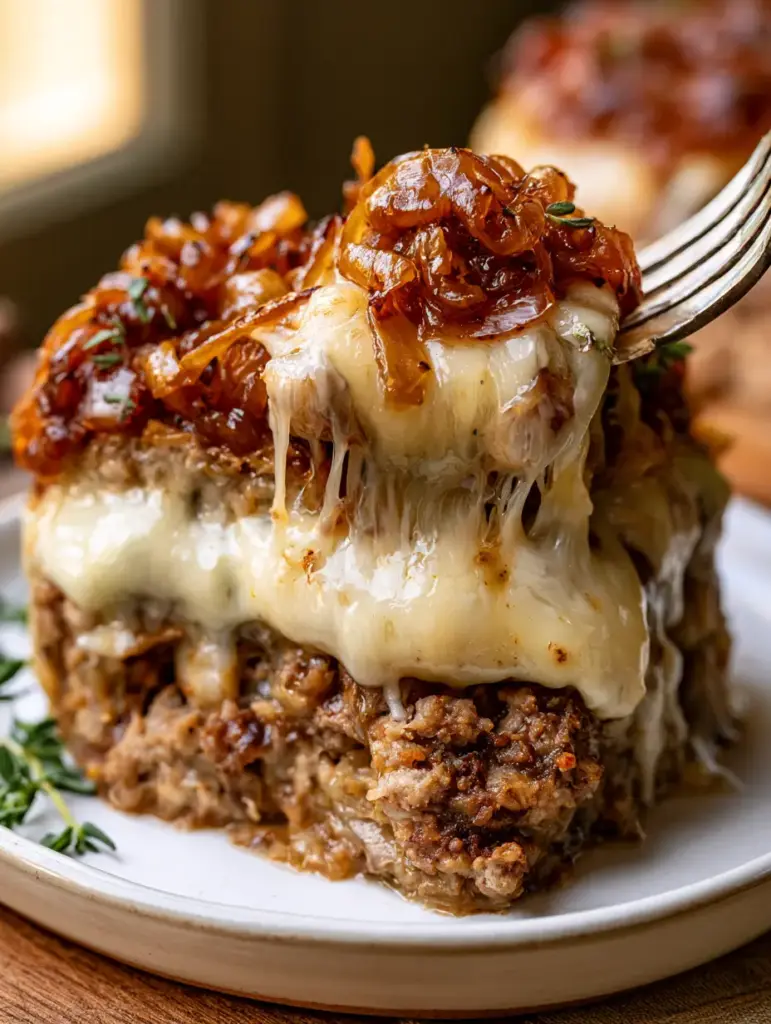
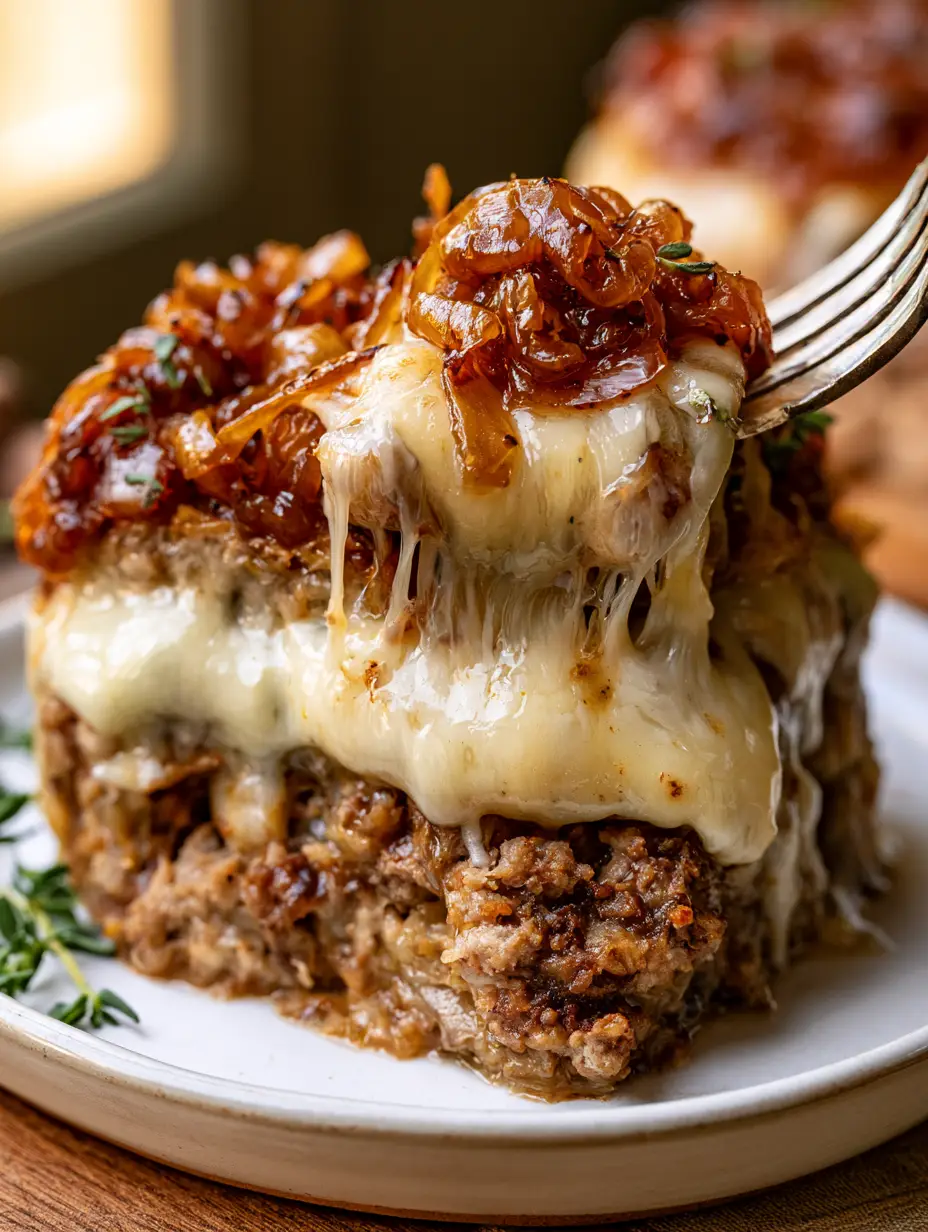
Imagine the deep, savory satisfaction of a traditional French onion soup combined with the hearty, nostalgic comfort of a family-style dinner. This french onion meatloaf is exactly that—a culinary bridge between a bistro classic and a home-cooked staple. Every slice offers a symphony of textures, from the juicy, herb-flecked beef to the thick, molten layer of Gruyere cheese that stretches with every forkful.
The star of the show, however, is the crown of glossy, golden-brown caramelized onions that rest atop the melted cheese. As you prepare this dish, your kitchen will fill with the irresistible aroma of slowly browning onions and fresh thyme, signaling a meal that is both sophisticated and incredibly soul-warming. Whether you are hosting a dinner party or seeking the ultimate weeknight indulgence, this recipe delivers on every sensory promise.
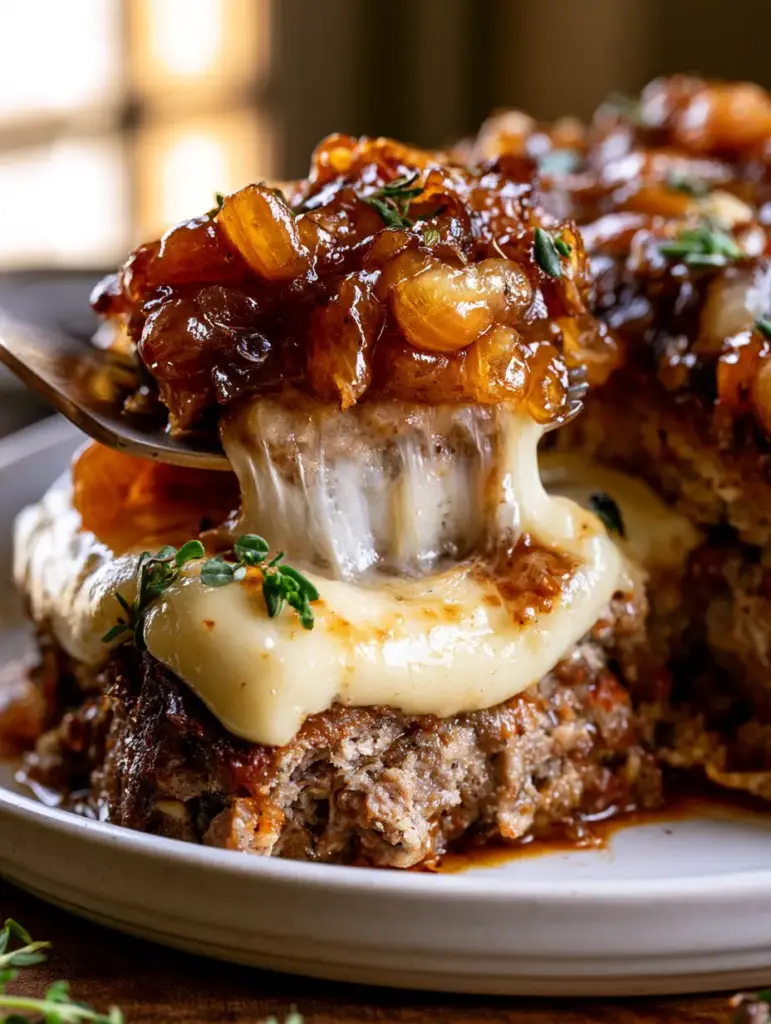
Capturing the perfect bite involves a thick layer of stretchy cheese and a generous heap of sweet onions. It is a visual and flavor-packed masterpiece that elevates the humble meatloaf into something truly extraordinary. If you have ever enjoyed the flavors of French onion in a bake, you will know exactly how transformative these ingredients can be.
Why You Will Crave This Savory Meatloaf Masterpiece
- The Iconic Cheese Pull: By using a thick layer of high-quality Gruyere, we achieve that restaurant-style elasticity that makes every slice a visual delight.
- Deep Umami Profile: The combination of beef, caramelized onions, and Worcestershire sauce creates a complex flavor depth usually reserved for slow-simmered soups.
- Perfectly Juicy Texture: Our panade method ensures the meatloaf remains tender and moist, never dry or crumbly, even after reheating.
- Visual Sophistication: Garnished with fresh thyme sprigs, this dish looks as good as it tastes, making it perfect for your next social media food post.
The Essential Components for a Savory French Onion Meatloaf
To achieve the specific visual and flavor results of this french onion meatloaf, we must select ingredients that perform under heat. Each element plays a functional role in the structural integrity and taste profile of the final dish.
Ground Beef and Pork: We recommend a blend of 80/20 ground beef and ground pork. The beef provides the structure and iron-rich flavor, while the pork adds necessary fat for a succulent, juicy interior.
Yellow Onions: You will need at least three large yellow onions (about 700g). These are the best for caramelization because of their high sugar content and ability to hold their shape during a long, slow cook.
Gruyere Cheese: This is the non-negotiable “French” element. 2 cups (200g) of freshly grated Gruyere provide the nutty, salty flavor and the specific melting point required for that thick, stretchy layer seen in the blueprint.
Fresh Thyme: 1 tbsp (4g) of leaves stripped from the stem adds a bright, earthy contrast to the heavy, savory notes of the meat and cheese. It is the essential green garnish that completes the visual.
The Panade (Breadcrumbs and Milk): 1/2 cup (120ml) of whole milk mixed with 3/4 cup (45g) of Panko breadcrumbs creates a paste that keeps the meat proteins from tightening too much during cooking.
Invisible Foundations: You will also need 2 tbsp (30ml) of olive oil for searing the onions, 1 tsp (6g) of kosher salt for seasoning, and 1 tbsp (15ml) of Worcestershire sauce to enhance the beefy depth.
The Culinary Path to Perfect French Onion Meatloaf Layers
Success with this recipe lies in the timing. We cannot rush the onions, nor can we overmix the meat. Follow these professional steps to ensure your french onion meatloaf matches the visual blueprint perfectly.
Step 1: The Art of Slow Onion Caramelization
In a large skillet over medium-low heat, add your olive oil and butter. Thinly slice the yellow onions and add them to the pan with a pinch of salt. The salt helps draw out moisture, accelerating the breakdown of the cell walls.
Cook the onions for 30–40 minutes, stirring occasionally. You are looking for a deep, glossy, golden-brown hue. If the pan looks dry, add a tablespoon of water or beef stock to deglaze the brown bits (fond) from the bottom—this is where the flavor lives!
Step 2: Preparing the Savory Meat Base
In a small bowl, combine your milk and breadcrumbs, letting them sit for 5 minutes until a paste forms. In a large mixing bowl, combine the beef, pork, panade, Worcestershire sauce, half of your fresh thyme, and one egg. Season generously with salt and black pepper.
Gently mix the ingredients with your hands until just combined. Overworking the meat will result in a dense, tough loaf. You want the proteins to be loosely bound so they retain their natural juices.
Step 3: Shaping and First Bake
Preheat your oven to 375°F (190°C). Form the meat mixture into a rectangular loaf on a parchment-lined baking sheet or in a ceramic dish. Ensure the top is relatively flat to provide a stable base for the cheese and onions later.
Bake the meatloaf for 45–50 minutes. The internal temperature should reach 150°F (65°C) at this stage. We remove it slightly early to account for the final melting and broiling phase.
Step 4: The Layering Process and The Final Melt
Remove the loaf from the oven. Spread a thick, even layer of the shredded Gruyere cheese across the entire top surface. Be generous; this is what creates the “cheese pull” effect. Top the cheese with your prepared caramelized onions, spreading them to the edges.
Return the dish to the oven or under the broiler for 5 minutes. Watch closely! You want the cheese to be bubbling and molten, and the onions to be glistening. Remove and garnish immediately with the remaining fresh thyme leaves.
Expert Tips for a Visual and Textural Triumph
- Freshly Grated is Best: Avoid pre-shredded cheese in bags. These are coated in potato starch to prevent clumping, which interferes with the smooth, stretchy melt we want for our french onion meatloaf.
- Temperature Control: Use a meat thermometer to ensure the center reaches 160°F (71°C) total after the final rest. This guarantees food safety without sacrificing juiciness.
- The Resting Period: Let the meatloaf rest for 10 minutes before slicing. This allows the juices to redistribute and the cheese to set slightly, ensuring you get clean, hearty slices.
- Onion Patience: If your onions are browning too fast, lower the heat. True caramelization is a chemical reaction (the Maillard reaction) that cannot be faked with high heat.
Creative Pairings and Serving Suggestions
This french onion meatloaf is a rich, decadent main course that pairs beautifully with sides that can soak up the savory juices. For a complete comfort meal, serve a thick slice alongside creamy mashed potatoes. The starchiness of the potatoes balances the richness of the Gruyere perfectly.
If you prefer a lighter side, a crisp green salad with a sharp vinaigrette helps cut through the fat. For those who love the “French Dip” flavor profile, consider serving this with a small ramekin of beef au jus, similar to what you might find with slow cooker french dip sandwiches.
For a unique twist, you could even serve leftovers sliced thin on toasted brioche, echoing the flavors of a savory onion tart but with the added heartiness of the meatloaf.
Storage, Reheating, and Freezing Secrets
Storage: Store leftovers in an airtight container in the refrigerator for up to 3–4 days. The flavors of the caramelized onions actually deepen the next day.
Reheating: To maintain the moisture, reheat slices in the oven at 325°F (160°C) covered with foil. A splash of beef broth in the dish will create steam and prevent the meat from drying out.
Freezing: You can freeze the cooked meatloaf (without the cheese and onion topping) for up to 3 months. Thaw overnight in the fridge and add fresh cheese and onions during the reheating process for the best results.
Yes! Caramelized onions can be made up to 3 days in advance and stored in the refrigerator. This saves about 40 minutes of prep time on the day you bake the meatloaf.
The secret is using a panade—a mixture of breadcrumbs and milk. This creates a gel that keeps the meat proteins apart, resulting in a moist and tender texture.
As written, it contains breadcrumbs. However, you can easily make it gluten-free by using certified gluten-free breadcrumbs and ensuring your Worcestershire sauce is gluten-free.
Gruyere is the best choice because it offers a nutty, rich flavor and a superior melt. If you cannot find Gruyere, a high-quality Swiss or Fontina cheese can be used as a substitute.
The Ultimate French Onion Meatloaf Recipe
French Onion Meatloaf: The Ultimate Comfort Food Mashup
Ingredients
Equipment
Method
- Melt butter in a skillet over medium-low heat. Add sliced onions and cook for 30-40 minutes until deep golden brown and glossy.
- Mix breadcrumbs and milk in a small bowl until a paste forms.
- In a large bowl, gently mix beef, pork, panade, egg, Worcestershire, and half the thyme. Shape into a loaf.
- Bake meatloaf at 375°F (190°C) for 45-50 minutes.
- Top with shredded Gruyere and caramelized onions. Broil for 5 minutes until cheese is molten and stretchy.
Notes
Allow the meatloaf to rest for 10 minutes before slicing to lock in juices.
Closing & Call to Action
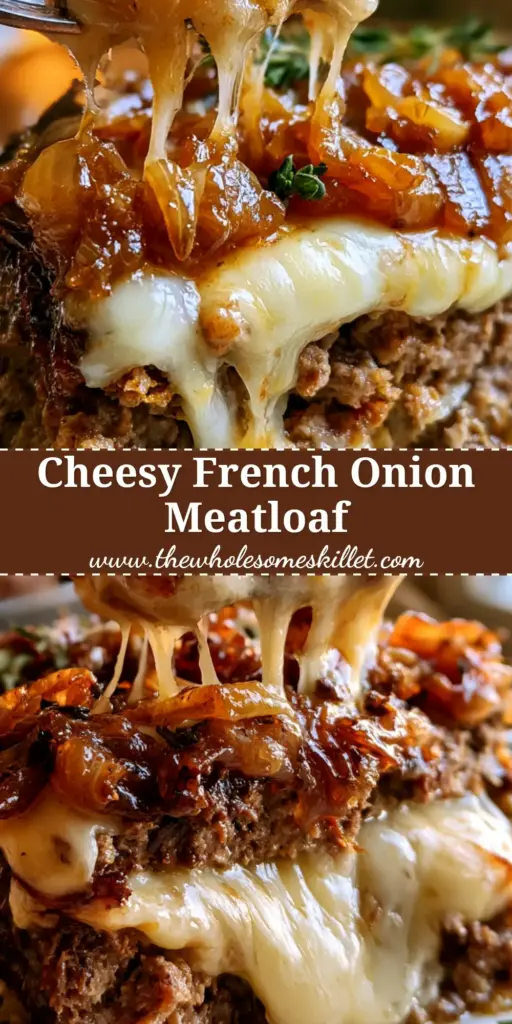
This french onion meatloaf is more than just a dinner; it is an experience of textures and classic flavors. The sweetness of the onions, the saltiness of the Gruyere, and the savory beef create a meal that your family will request again and again. If you enjoyed this recipe, please leave a comment below and let us know how your cheese pull turned out!
Don’t forget to share your beautiful creations on social media and follow us on Pinterest for more elevated comfort food inspiration. If you’re looking for another twist on these flavors, check out our French onion chicken orzo bake. Happy cooking!