There is something inherently sophisticated about the combination of bright citrus and deep, velvety cocoa. This chocolate dipped orange shortbread recipe takes that classic pairing and elevates it into a sensory masterpiece. Imagine a biscuit that is so buttery it practically dissolves on your tongue, only to be met by the snap of high-quality dark chocolate and the aromatic zing of fresh orange zest.
Whether you are looking for the perfect addition to a holiday cookie tray or a refined treat to enjoy with your afternoon tea, these cookies hit every note. The visual contrast of the vibrant orange against the glossy chocolate, finished with a sparkle of sea salt, makes them look like they walked straight out of a high-end patisserie. In this guide, I will walk you through the scientific nuances of shortbread physics to ensure you get that perfect, tender crumb every single time.
Why You Will Crave These Scalloped Shortbread Biscuits
- The Perfect Snap and Melt: By utilizing a specific butter-to-flour ratio, we achieve a biscuit that is structurally sound enough to dip but tender enough to crumble delightfully upon the first bite.
- Aromatic Citrus Infusion: We don’t just add zest; we massage it into the sugar to release the essential oils, ensuring the orange flavor is baked into the very DNA of the cookie.
- Textural Contrast: The addition of coarse sea salt flakes provides a sharp counterpoint to the rich dark chocolate, echoing the flavor profiles of a gourmet salted caramel chocolate fudge.
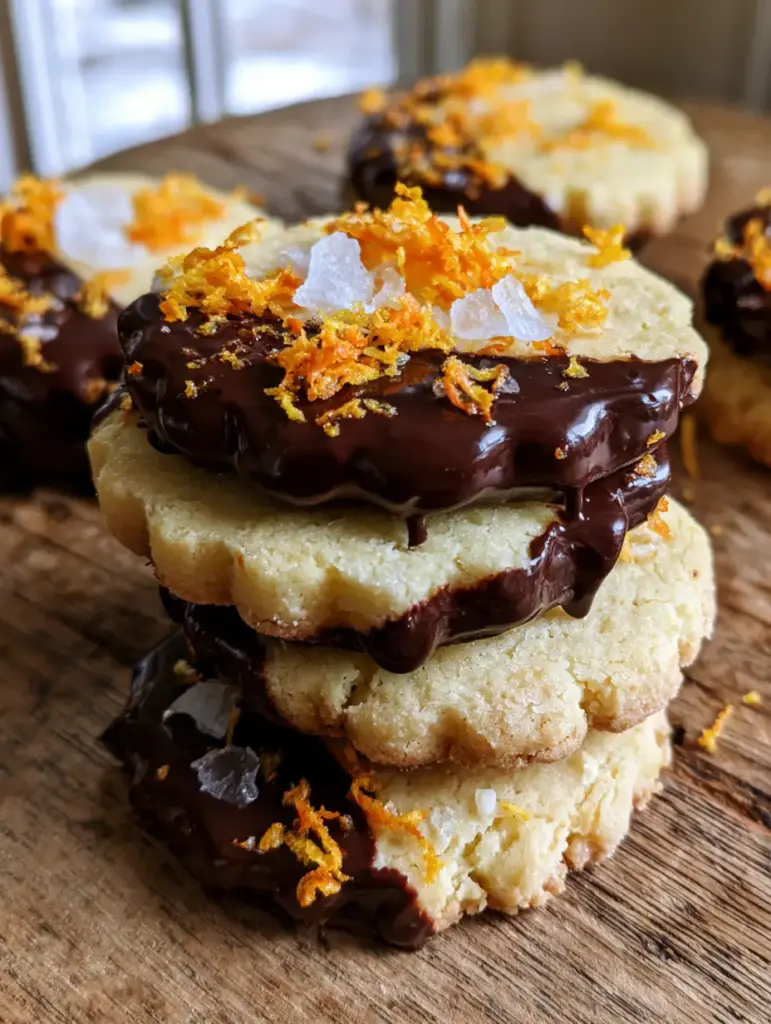
- Visually Stunning Edges: Using a scalloped-edge cutter creates ridges that catch the melted chocolate, creating a beautiful, professional aesthetic that is perfect for gifting.
The Essential Pantry Items for Buttery Shortbread Success
To achieve the specific “crumbly, tender texture” described in our visual blueprint, each ingredient must be selected and treated with care. Shortbread is a minimalist’s cookie, meaning there is nowhere for low-quality ingredients to hide.
Unsalted Butter: 1 cup (227g) of high-quality European-style butter, softened to 65°F (18°C). This provides the fat content necessary for the short, sandy texture that defines elite shortbread.
Granulated Sugar: 1/2 cup (100g) of fine white sugar. Sugar does more than sweeten; it interferes with gluten development, ensuring the chocolate dipped orange shortbread remains tender rather than tough.
Fresh Orange Zest: 2 tbsp (12g) of freshly grated zest from organic Navel or Valencia oranges. The oils in the zest provide a natural aromatic lift that extracts cannot replicate.
Pure Vanilla Extract: 1 tsp (5ml). This acts as a background flavor enhancer, bridging the gap between the butter and the bright citrus notes.
All-Purpose Flour: 2 cups (240g). We use a moderate protein flour to provide enough structure to hold those beautiful scalloped edges without becoming bready.
Cornstarch (Optional but Recommended): 2 tbsp (16g). This “secret” ingredient further lowers the protein content of the flour, resulting in a true melt-in-your-mouth experience similar to a white chocolate cranberry cookie.
Fine Sea Salt: 1/2 tsp (3g) for the dough. This balances the sweetness and enhances the citrus notes throughout the biscuit.
Dark Chocolate: 6 oz (170g) of high-quality dark chocolate (60-70% cacao). This will be melted into a thick, glossy pool for dipping the cooled biscuits.
Coarse Sea Salt Flakes: 1 tsp (5g) for finishing. These large flakes provide a visual sparkle and a localized burst of flavor that cuts through the chocolate’s richness.
Tools for Achieving That Perfect Scalloped Edge
To recreate the “macro shot detail” of our visual blueprint, you need the right tools. A standard round cutter won’t capture the rustic elegance we are aiming for.
First, you will need a fluted or scalloped-edge biscuit cutter. This creates the decorative ridges that look so striking when half-dipped in chocolate. A 2.5-inch (6cm) diameter is standard for a classic shortbread size.
A microplane or fine zester is essential for the orange. You want tiny, vibrant flecks of zest that distribute evenly through the dough without adding large, chewy pieces of pith. Finally, ensure you have parchment paper or a silicone baking mat to prevent sticking and ensure a clean, pale golden bottom on every cookie.
How to Master This Chocolate Dipped Orange Shortbread
Infusing the Sugar with Fresh Citrus
In a large mixing bowl, combine the granulated sugar and the 2 tablespoons (12g) of fresh orange zest. Use your fingertips to rub the zest into the sugar for about 2 minutes. You will notice the sugar becomes damp and turns a pale orange color as the essential oils are released. This simple step is the difference between a good cookie and a professional chocolate dipped orange shortbread.
Mixing the Tender, Crumbly Dough
Add the softened butter to the citrus sugar. Using a hand mixer or stand mixer fitted with the paddle attachment, cream the mixture on medium speed until light and fluffy—about 3 minutes. Add the vanilla extract and mix briefly. Sift in the flour, cornstarch, and fine sea salt. Mix on the lowest speed just until the flour disappears. Over-mixing at this stage develops gluten, which would ruin the “crumbly, tender texture” we are aiming for.
The Secret to Sharp Scalloped Edges
Turn the dough out onto a sheet of parchment paper. Roll it to a consistent 1/2-inch (1.25cm) thickness. Use your scalloped-edge cutter to stamp out the shapes. Pro Tip: Place the entire sheet of cut dough in the refrigerator for at least 30 minutes before baking. Chilling the fats ensures the scalloped edges stay sharp and don’t spread into amorphous blobs in the oven.
Baking to a Pale Golden Glow
Preheat your oven to 325°F (160°C). Arrange the chilled cookies on a baking sheet, leaving 1 inch (2.5cm) of space between them. Bake for 15-18 minutes. Look for a visual cue: the centers should be set and the very edges should just be starting to turn a pale, sandy gold. Do not let them brown significantly; shortbread should remain light in color to maintain its delicate flavor.
The Art of the Perfect Chocolate Dip
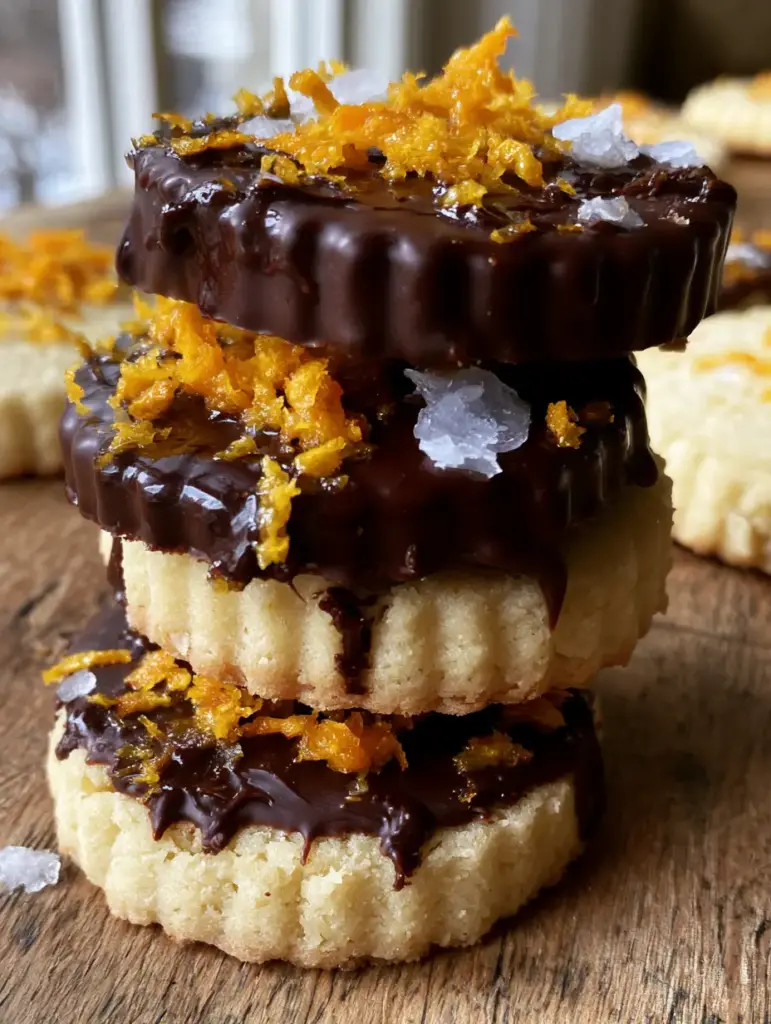
Once the cookies are completely cool, melt your dark chocolate in a microwave-safe bowl in 30-second increments, stirring until “thick and glossy.” Hold a cookie by one edge and dip it halfway into the chocolate at an angle. Let the excess drip off—this creates the “chocolate drip detail” seen in our macro photos. Place the cookie on parchment paper and immediately sprinkle with fresh orange zest and a few flakes of coarse sea salt while the chocolate is still wet.
Expert Pastry Chef Secrets for Shortbread
- Watch the Temperature: If your butter is too oily or melted, the cookies will be greasy. It should be soft enough to indent with a finger but still hold its shape.
- Sift Your Flour: For that ultra-fine crumbly texture, sifting the flour and cornstarch is non-negotiable. It removes lumps and aerates the dry ingredients.
- Temper Your Expectations (and Chocolate): If you want the chocolate to stay snappy at room temperature, consider tempering it. Otherwise, keep these cookies in a cool spot so the chocolate remains set.
- Freshness Matters: Since the orange is a primary flavor, use the freshest fruit possible. If the orange feels soft or looks dull, the oils won’t be as vibrant.
Preserving the Crunch: Storage and Freezing
These chocolate dipped orange shortbread cookies are incredibly shelf-stable due to their low moisture content. They can be stored in an airtight container at room temperature for up to 5 days. If your kitchen is warm, the chocolate may soften, so a cool pantry is best.
For longer storage, these cookies freeze beautifully. Place them in a single layer on a tray to freeze the chocolate solid, then transfer to a freezer-safe bag for up to 3 months. Thaw at room temperature for an hour before serving to regain that perfect buttery snap.
What to Serve Alongside These Zesty Treats
These cookies are rich, so they pair best with beverages that offer a bit of acidity or bitterness. A dark roast coffee or a cup of Earl Grey tea (which shares the citrus notes of bergamot) is a match made in heaven. If you are hosting a dessert party, consider serving these alongside a rich flourless chocolate cake for a study in chocolate textures.
If you’re looking for a kid-friendly pairing, a glass of cold milk or a bowl of vanilla bean ice cream topped with homemade chocolate syrup complements the orange notes perfectly. They also make a fantastic garnish for a chocolate raspberry ganache tart.
Common Shortbread Troubleshooting
While you can use 1/2 teaspoon of extract, the fresh zest provides essential oils and a vibrant visual appeal that extract cannot match. For the best flavor, stick with fresh zest.
It is not strictly necessary, but cornstarch softens the protein in all-purpose flour, creating a more delicate, ‘short’ texture that melts in your mouth.
Melt the chocolate slowly in short bursts and stir frequently. For a professional finish, using chocolate with a high cocoa butter content or properly tempering the chocolate will ensure a glass-like sheen.
This usually happens if the butter was too warm or if the dough wasn’t chilled long enough. Make sure to chill the cut dough for at least 30 minutes before baking to solidify the fats.
Tough shortbread is a sign of over-mixing the dough after adding the flour. Gluten develops when flour is worked; mix only until the flour is just incorporated for a tender texture.
The Ultimate Chocolate Dipped Orange Shortbread Recipe

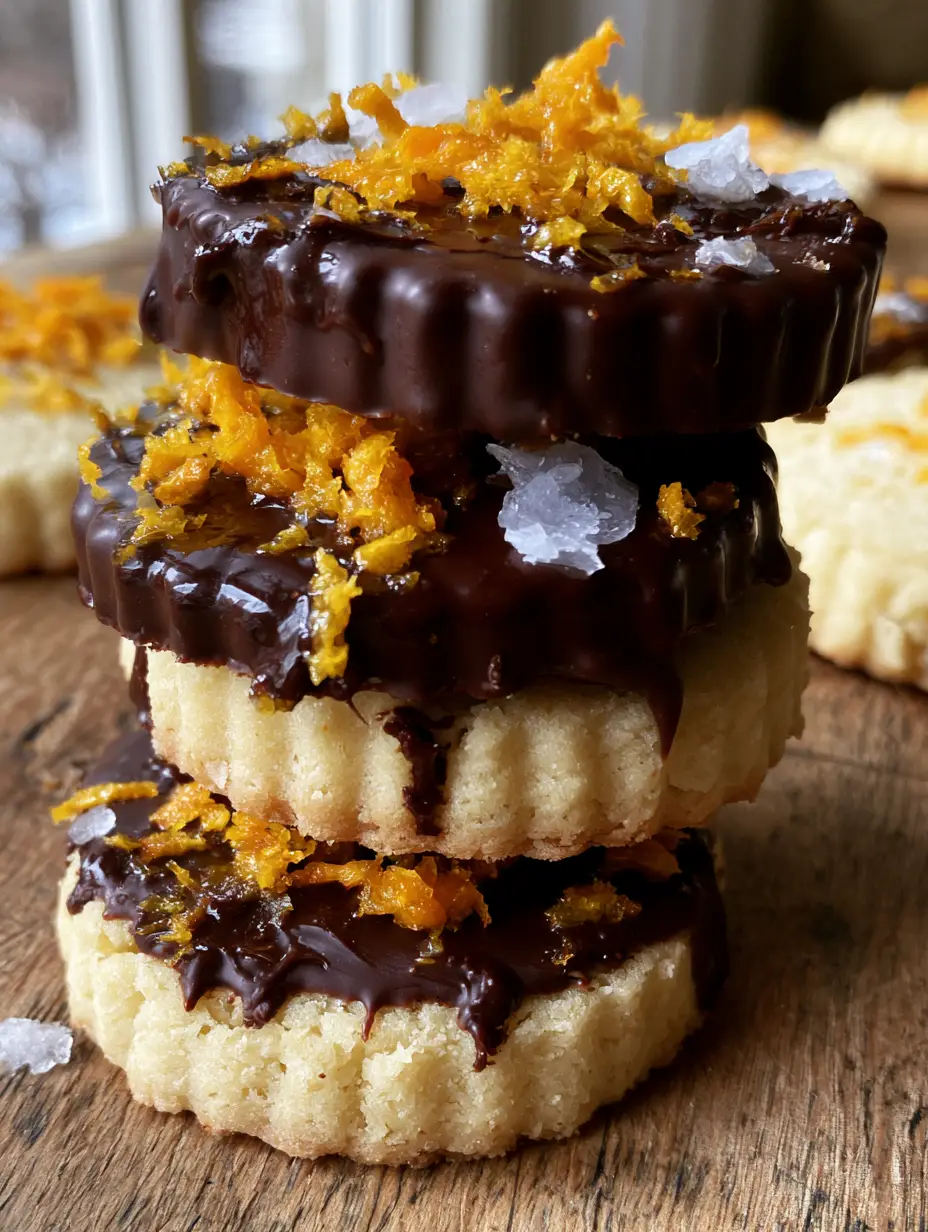
Chocolate Dipped Orange Shortbread with Sea Salt
Ingredients
Equipment
Method
- Rub the orange zest into the granulated sugar until fragrant and damp.
- Cream the softened butter and citrus sugar until light and fluffy (approx 3 minutes). Mix in vanilla.
- Sift in flour, cornstarch, and fine sea salt. Mix on low speed just until a dough forms.
- Roll dough to 1/2-inch thickness. Cut with a scalloped-edge cutter and chill for 30 minutes.
- Bake at 325°F (160°C) for 15-18 minutes until set and pale golden.
- Melt dark chocolate until glossy. Dip cooled cookies halfway, then sprinkle with extra zest and coarse sea salt flakes.
Notes
Use high-quality European butter for the best flavor.
Closing & Call to Action
Mastering the chocolate dipped orange shortbread is a rite of passage for any home baker. It’s a recipe that relies on technique and quality over complex ingredients. The result—a stack of buttery, scalloped cookies with a glossy chocolate finish—is as rewarding to look at as it is to eat. The combination of the crumbly biscuit, the citrus aroma, and the salt-crunched chocolate is truly unforgettable.
If you enjoyed this recipe, please leave a comment below and let me know how your scalloped edges turned out! Don’t forget to follow us on Pinterest for more culinary inspiration and share your creations by tagging @thewholesomeskillet. Happy baking!